US Sailboat Production Hits Zero for Vessels over 25 Feet
The 2026 Newport Boat Show reveals a stark shift in marine manufacturing, with domestic sailboat output vanishing and powerboats surging.
Key points
- 2026 marks the first year no American-built sailboats over 25 feet were produced.
- Three European builders produce 90% of global sailboats using efficient assembly lines.
- Sailboat market share dropped from 40% in 1979 to 3% today, while pontoon boats rose to 25%.
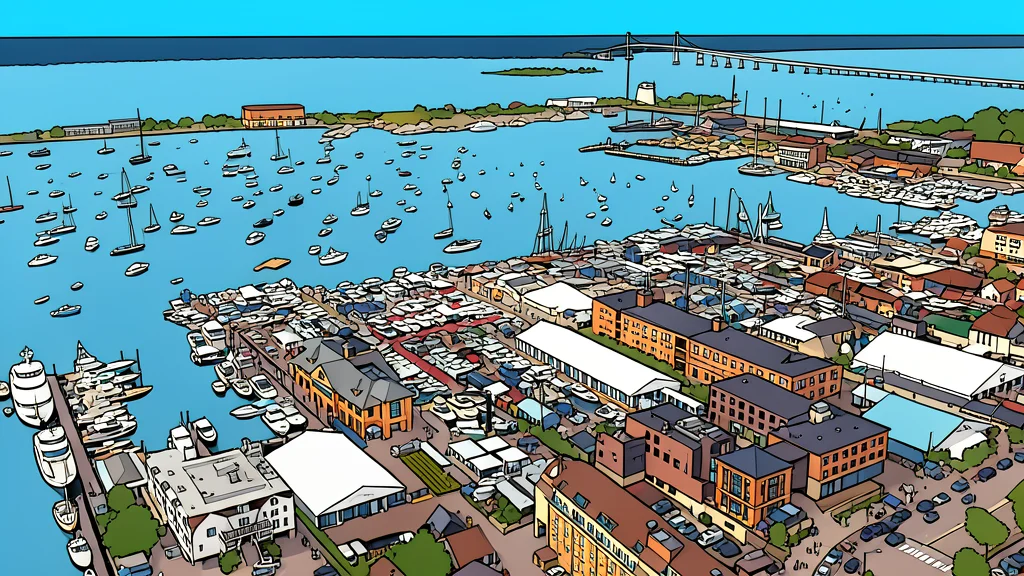
At the 2026 Newport International Boat Show, a quiet shift reshaped the dock. Bump Wilcox of New Wave Yachts stood before a single Dehler, Hanse, or Sabre vessel. It was the only one. The display marked the first year no American-built sailboats over 25 feet entered the market.
The water in Newport felt different than in 1979. Back then, sails dominated the horizon. Today, pontoon boats take up a quarter of the floor space. Sailboats have shrunk to three percent of total business. The physical presence of wind-driven craft has thinned to a whisper.
Assembly lines crush hand-built craft
Three giants control ninety percent of global sailboat output. Beneteau, Jeanneau, and Hanse build on assembly lines. They move fast. Every other builder works alone. They shape each hull by hand. This slow method costs more. It takes far longer.
A 2005 Sabre 386 required seven thousand labor hours. A new Hanse 388 needs only sixteen hundred. The older boat sold for over four hundred thousand dollars. The newer one costs under two hundred thousand. Tariffs cannot bridge that gap. American builders face a double price penalty.
Regulations and demographics drive change
Safety rules restrict open-air fiberglass work. Builders must use enclosed resin infusion bags. This process is expensive. Some states ignore these rules to support local shipyards. Europe lames in third-world countries. Hanse lames in Poland. Germany only handles final assembly.
Buyers have changed too. Baby boomers hold most of the wealth. They are over seventy. Their houses are paid off. They cannot pull heavy sails up and down. They want power. They want speed. Sailing requires strength they no longer have.
Powerboats fill the empty space
Powerboats offer quick access to the water. No complex rigging is needed. The industry ramped up production during the pandemic. The shortage is gone. Production remains high. Prices have soared.
A twenty-five-foot center console now costs two hundred fifty thousand dollars. One outboard engine costs thirty-five to forty thousand dollars. That engine could power a Toyota or Honda car. The whole car costs less than the engine. Yet buyers keep coming.
Sailing endures. It has existed for thousands of years. Enthusiasts still gather in offices to talk about wind and water. The industry may be shrinking. The love for the sea remains constant. Scuttlebutt Sailing News reports on this shifting tide.