Celtic Fans Turn Fury Toward Boardroom
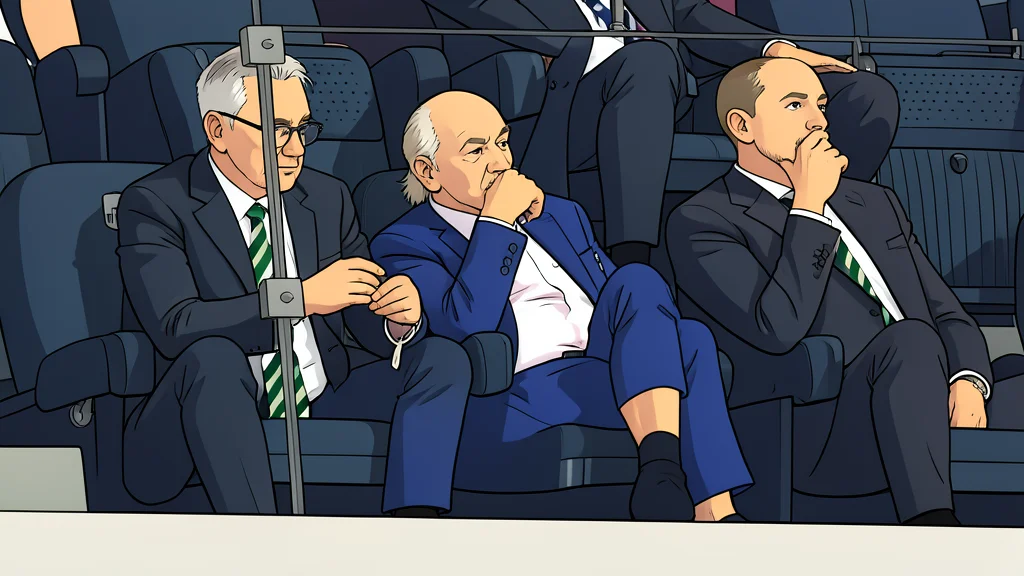
The silence in Ibrox was heavy, a physical weight pressing down on the green seats. Celtic Supporters Ltd has shifted its aim from the pitch to the boardroom.
The air inside Ibrox on that September afternoon felt thin, stretched tight by the final whistle. Celtic had crumbled, their shape dissolving against the relentless pressure of Rangers in a Premier Sports Cup quarter-final that ended in humiliation. The players trudged off, heads bowed, the green of their kits dull against the grey of the sky. It was a performance that left no room for excuses, a stark display of technical debt that had accumulated over months of mismanagement. The fans, watching from the terraces, felt the sting of defeat not just in their hearts but in the pocket, knowing the cost of such failure is measured in lost revenue and eroded pride.
Celtic Supporters Ltd, a fan-shareholder group gaining significant traction, did not wait for the dust to settle. They launched a fresh volley of criticism, but this time the trajectory was aimed squarely at the board. Their message was clear: the players and manager are carrying the weight of a structural failure that originates in the decision-making chambers of the club. The group argued that the quality gap in the squad is not a coaching issue, but a recruitment and strategy flaw born in the boardroom. They pointed to the massive financial outlay on new signings, noting that despite the money, the team remains hollow in vital areas. This is a direct indictment of the custodians of the club, a call to account that echoes loudly in the corridors of Celtic Park.
European dreams slip away
The pain runs deeper than a single cup match. The memory of the Champions League playoff against LASK in Linz still stings, a bitter taste left in the mouth of the entire fanbase. Celtic had held a commanding four-nil aggregate lead, a position that should have secured their place in the elite. Instead, they threw it all away, a collapse that cost the club the forty million pounds associated with European football. That loss was not a fluke; it was a symptom of the same lack of depth and quality that was exposed at Ibrox. The fan group sees this as a watershed moment that the board ignored, a chance to reset the trajectory of the club that was squandered in a meeting room.
The connection between the two defeats is undeniable. The same players who faltered in Austria were the ones who struggled in Glasgow. The same tactical rigidity, the same lack of creative spark, the same defensive frailty. Celtic Supporters Ltd argues that the board’s failure to address these issues is a deliberate choice, a prioritization of other interests over competitive success. They cite statements from the club’s leadership, suggesting that European football is not viewed as a priority, a stance that is baffling to a club of Celtic’s stature and history. This is not just about one bad game; it is about a pattern of neglect that has allowed the club to drift away from its potential.
Same names, same room
The language used by the fan group is sharp and direct. They posted on social media, their words cutting through the usual corporate fog. They spoke of results being downstream of decisions, and decisions being downstream of the people who make them. The repetition of the phrase “same names, same room, same mistakes” was a deliberate drumbeat, a rhythmic accusation that highlighted the stagnation at the top. They questioned the interim chairmanship, noting the ambiguity of who actually holds the power. In any other public limited company, such a string of poor decisions would trigger a board review. At Celtic, the fan group argues, the status quo remains unchallenged, the same faces occupying the same seats, making the same errors.
The power dynamics at Celtic Park are complex and often opaque. While Michael Nicholson holds the title of CEO, the fan group asserts that the real decision-making power lies elsewhere. They point to the influence of Dermot Desmond, a minority shareholder and non-executive director, who they claim wields an authoritarian grip over the club’s direction. This concentration of power, they argue, stifles innovation and accountability. The board is not seen as a collective body making informed choices, but as a single entity imposing its will. This lack of transparency and shared responsibility is what frustrates the supporters, who feel locked out of the process that determines their team’s fate.
A call for change
Celtic Supporters Ltd is not merely venting; they are making a case for structural change. They are asking a simple question: when will change finally transpire? They see the current structure as a barrier to success, a framework that has allowed for too many wrong calls to go unchecked. The fan group represents a growing voice within the supporter base, a collective demand for accountability and transparency. They are not asking for revolution, but for a return to the principles that have made the club successful in the past. The message is clear: the players are not the problem, the board is. The time for excuses is over, and the time for action is now. The green seats in the stadium are empty, but the voice of the fans is loud, demanding a new direction for the club.