Dowman Faces Arteta's Hard Truth on Earning Minutes
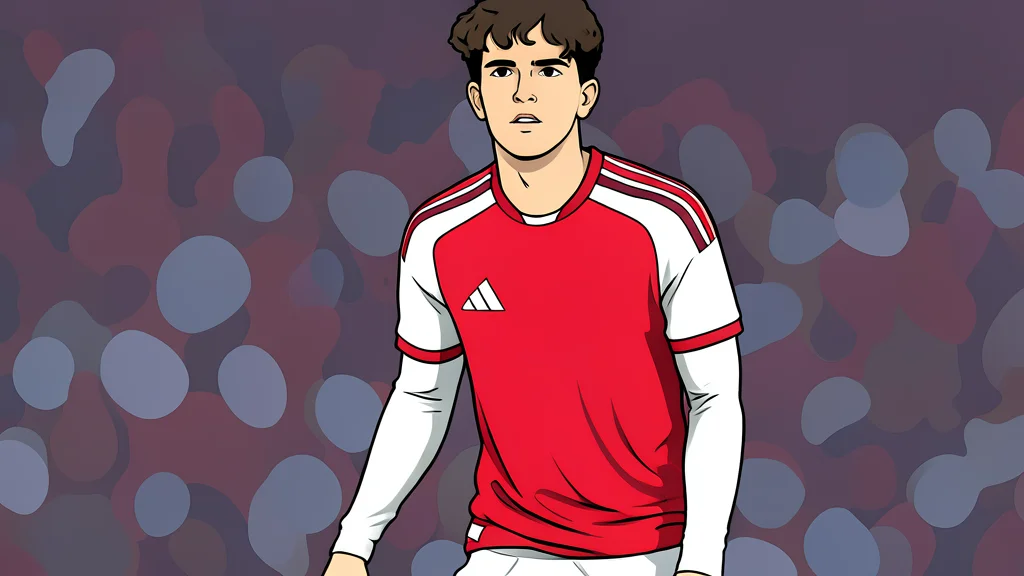
The 16-year-old starlet was left out of the Sunderland win, a stark reminder that talent alone does not guarantee a place on the pitch.
The grass at the training ground is wet, the air thick with the scent of cut turf and rain. Max Dowman stands in the shadows of the dugout, watching the senior squad run drills. He is sixteen, a name etched in history as the Premier League’s youngest scorer, yet today he is just another body in the queue. The moment is quiet, heavy with unspoken words. The ball thumps against boots. The silence breaks only with the sharp whistle of the coach.
Mikel Arteta’s message is not cruel, but it is cold. There is no special status for the boy who scored against Everton last season. The rules are the same for everyone. You earn your place, or you sit. The warning hangs in the air, a tangible weight pressing against the ribs. Dowman’s eyes are fixed on the pitch, searching for a sign that the door is still open. It is. But the key is no longer in his hand.
The bench becomes a distant memory
For the first four games of the season, Dowman sat on the substitutes' bench. His name was in the team sheet, a promise of potential. Then came the victory at Sunderland, and his name vanished. The omission was not a punishment, but a calculation. The squad list is full, and the spots are fewer. Dowman was moved down to the Under-21 side, where the stakes feel different, the grass less manicured, the eyes less scrutinized.
In that lower tier, the Gunners fell to Chelsea. The defeat stung, but it was a small wound compared to the larger one of exclusion. Dowman’s talent is undeniable, yet it has not been enough to secure a first-team appearance this campaign. The gap between youth and seniority is wide, and it is filled with bodies, with competition, with the relentless machinery of a top-flight club. He is part of that machine, but he is not yet the gear that drives it.
Talent must fight for its place
Arteta’s words were direct, stripped of diplomatic fluff. "Max will have his chance. He will have his minutes and he will have to earn them like anybody else." The manager does not mince words. He sees the talent, yes, but he also sees the depth. The attack is crowded, the options plentiful. There is no room for sentimentality, no space for the past to dictate the present. The future is earned, not inherited.
The arrival of Christos Tzolis in the summer window tightened the screws. The Greek forward brings experience, brings a different kind of threat. The battle for spots in attack has become a war, and Dowman is on the losing end of it for now. This is not a rejection of his potential, but a test of his resilience. The door is ajar, and he must push it open with his own strength, his own determination, his own feet on the ball.
Depth reshapes the squad dynamics
Arsenal’s attacking depth is a double-edged sword. It guarantees quality, but it also guarantees competition. Ethan Nwaneri, the club’s youngest-ever player, found his path elsewhere, moving on loan to Borussia Dortmund for the second consecutive season. Last year it was Marseille, this year it is the Bundesliga. The lesson is clear: to stay in the first team, you must be indispensable. To be indispensable, you must be ready, every single day.
Arteta has called for more spots on the bench, arguing that twenty is not enough for a squad of this caliber. The Premier League is unlikely to listen, knowing that such a change would benefit the giants. For now, the limit remains. The players must adapt. Dowman’s next chance may come at Ipswich Town, in the Carabao Cup, where rotation is likely. The stage is set, the lights are bright. All he has to do is step into it and prove he belongs.