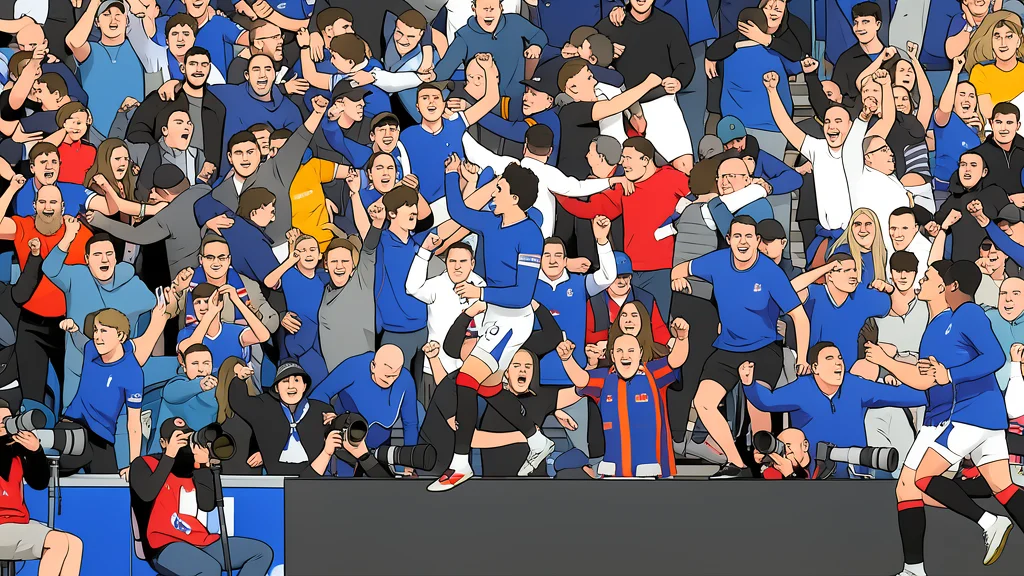
Lineker Questions Sesko's Bench Role in Manchester Derby

Gary Lineker and Alan Shearer criticize Manchester United's delayed introduction of Benjamin Sesko, arguing the Slovenian striker deserved a starting spot.
The ball sits heavy in the air, drifting over heads that fail to rise to meet it. In the silence between the whistle and the next kick, the confusion settles like dust on the Etihad pitch. Manchester United’s attack stalled, a mechanical grind without a focal point to break the deadlock. Gary Lineker watched the sequence unfold on The Rest Is Football, his voice carrying the weight of a man who knows exactly how a forward should occupy space. The question hung in the broadcast studio, sharp and unyielding: why is the only true nine on the bench?
Benjamin Sesko sat on the bench for the fourth consecutive match. His legs were still warm from the Champions League victory over Sabah, where he had struck twice, yet the manager kept him in reserve. Michael Carrick held his hand, watching the clock tick past the sixty-minute mark. The team was down to ten men, trailing by a goal, and the attacking threat remained a ghost. It was not until the sixty-seventh minute that Sesko finally stepped onto the grass, his boots finding the mud of the penalty box just as the game began to slip away.
A Forward Held in Reserve
The tactical puzzle became visible to any viewer with eyes. Matheus Cunha drifted in the ten, a creator rather than a finisher. Bryan Mbeumo hugged the right flank, his runs parallel to the touchline. Marcus Rashford mirrored him on the left, leaving the central channel open and vulnerable. Lineker pointed out the void, noting the lack of a physical presence to hold up play or head in crosses. The squad lacked a target, a man to pin defenders back and create space for the wingers to cut inside.
Sesko’s recent form should have forced the issue. His header against Everton was a moment of pure instinct, a strike that broke the deadlock. He followed it with a goal against Sabah, proving his edge in high-pressure environments. Yet, the pattern persisted. His Premier League appearances had not yet reached the thirty-minute mark this season. Each substitution was a late intervention, a reactive measure rather than a proactive strategy. The fans, watching from the stands or their living rooms, could feel the frustration building with every minute Sesko remained seated.
Critics Demand a Shift in Strategy
Alan Shearer joined the critique, echoing the sentiment that had already taken root. He argued that Sesko deserved more time on the pitch, suggesting the substitution should have happened at least ten minutes earlier. The former striker understood the value of a fresh pair of legs in the final stages of a game. But by the time Sesko arrived, the momentum had shifted. The energy of the crowd, the rhythm of the play, all had moved against United. The window for impact had narrowed, leaving little room for the Slovenian to make a decisive difference.
The discussion on Yahoo Sports and other platforms reflects a broader concern. Fans are questioning the logic behind the selection. Is it a lack of confidence in Sesko’s ability to start? Or is it a rigid adherence to a system that has failed to produce results? The answers remain elusive, hidden behind the manager’s tactical board. What is clear is that the current approach is costing United points. The next match will test whether Carrick is willing to listen to the voices of those who know the game best.