Morton's 1979 Hampden Heartbreak Against Aberdeen
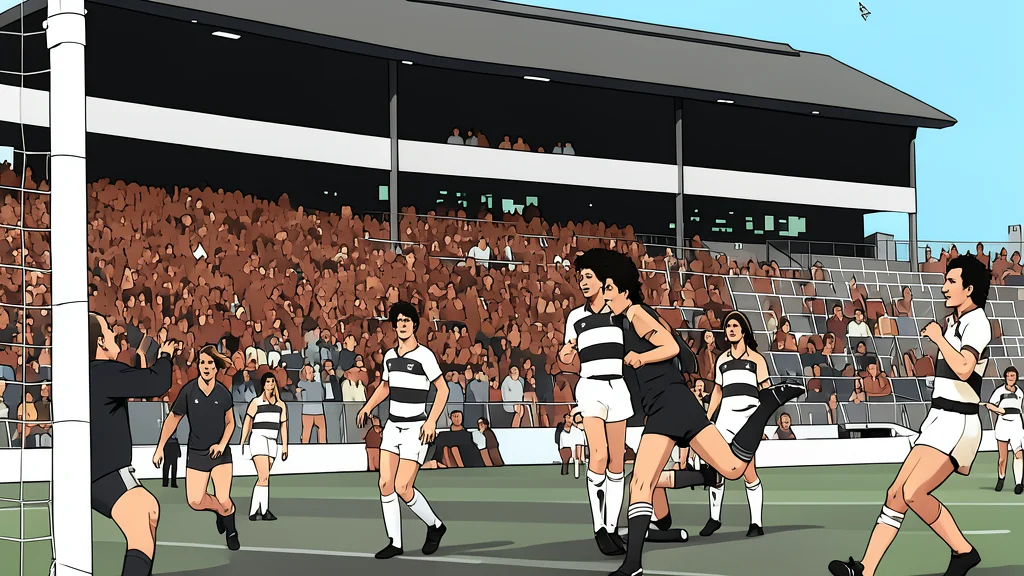
Under a heavy grey sky, the grass at Hampden Park waited for a team that carried the weight of decades. The air was thick with expectation, yet the match itself would deliver only silence and sorrow for the visitors from Greenock.
The bus stopped, and the players stepped out into the cold December air. They were in splendid form, their spirits high after a fourteen-game unbeaten run that saw them sit joint-top of the Premier Division. Benny Rooney’s side had beaten Alex Ferguson’s Aberdeen twice that season, a feat that suggested dominance. Yet, as they walked toward the tunnel, the shadow of history loomed large. Their last major cup final appearance was in 1963, a distant memory captured in grainy black-and-white highlights. Sixty years of frustration hung over the Greenock men like the overcast sky above the stadium.
Inside, the atmosphere was tense. The crowd, numbering just under 12,000, was predominantly composed of Morton fans, two-thirds of the total attendance. The stands were not full, a disappointing figure for a semi-final, but the noise was palpable. Dundee United waited for the winner, having thrashed Hamilton Accies 6-2 the previous weekend on a pitch described as a paddy field. For Morton, this was the moment to break the cycle. They had the form, the confidence, and the recent success against the Dons. But football is a cruel game, and confidence can evaporate in the blink of an eye.
A Flawless First-Half Performance
Aberdeen took the game by the scruff of the neck. From the first whistle, they controlled the tempo, dictating the flow of play with a precision that Morton could not match. The Greenock men, who had been so sharp in the league, seemed frozen. They could scarcely string two passes together, losing the battle for possession. The Telegraph reported that the players produced their worst first-half performance of the season, badly needing someone to take control and bring composure. Instead, they were second best, struggling to find their rhythm in the wide-open spaces of Hampden.
The break came in the fourteenth minute. A free-kick by Garner caused confusion in the Morton defense. Mark McGhee, a former Morton striker, rose unchallenged to head the ball past Roy Baines. The net bulged, and the silence from the Morton end was deafening. The occasion seemed to get to them. They were outplayed, outclassed. McGhee’s goal was a statement of intent, a reminder of the gulf in quality on the day. Morton had beaten Aberdeen twice in the league, but this was different. This was a cup semi-final, and the pressure was crushing.
Injury Strikes the Heart
Worse was to follow in the forty-second minute. John McNeil, arguably one of Morton’s better players that day, was badly injured. Knee ligament damage forced him to be stretchered off the pitch, a grim sight for the home fans. Jim Tolmie came on in his place, but the damage was done. The injury was a physical blow, but the psychological one was deeper. Morton’s composure shattered. They had close shaves, not least when Neil Orr brilliantly recovered the ball from McGhee after selling Baines short with a pass-back. But these moments of brilliance were isolated, unable to stem the tide of Aberdeen’s dominance.
The half-time whistle blew, and Morton trailed 1-0. The dressing room must have been a place of quiet despair. They had come so far, with such high hopes. The industrial action that limited TV coverage to a few minutes of silent film added to the sense of isolation. This was a game for the fans in the stands, and they were watching their team fall short. The confidence that had built over the season seemed to have dissipated in the freezing air of Hampden Park. They had the form, but they lacked the fire.
A Legacy of Near Misses
This was not the first time Morton had stumbled at the semi-final stage. In the sixties, they lost to Celtic in the League Cup and to Hearts and Celtic in the Scottish Cup. Each defeat added to the weight of expectation. The 1979 semi-final was a chance to change that narrative, to finally break through. But Aberdeen, with their flawless performance, ensured that the streak continued. For Morton, it was another frustrating day, another missed opportunity. They had the talent, the form, and the support, but on the day, it was not enough.
The match ended in defeat, and the dream of a cup final was dashed. The players walked off the pitch, heads bowed, the weight of history pressing down on them. For the fans, it was a day to remember for all the wrong reasons. They had seen their team in splendid form, only to watch them crumble under the pressure. The 1979 semi-final at Hampden Park remains a poignant chapter in Morton’s history, a reminder of how close they came, and how far they still had to go. The grass was wet, the sky was grey, and the hearts of the Greenock faithful were broken.