Murillo Recounts Forced Exit and Personal Rift with De Zerbi

Amir Murillo details the personal friction with Roberto De Zerbi that led to his departure from Marseille before the Europa League opener.
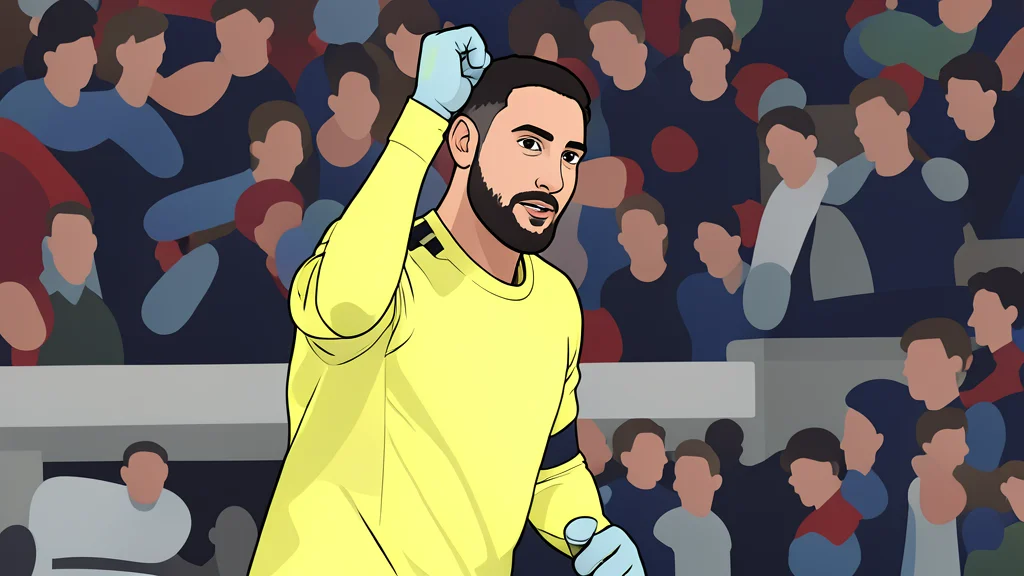
The air in the press conference room feels heavy with unspoken history. Amir Murillo, the thirty-year-old Panamanian defender, sits with his hands clasped, the weight of a recent transfer hanging in the silence. He is not here to discuss tactics or the upcoming Europa League group stage match. He is here to dismantle a narrative that has lingered since February. The camera lenses flash, capturing the tension in his posture, a physical manifestation of a conflict that transcends the pitch.
Murillo’s voice is steady, but the words carry the edge of a boundary crossed. He rejects the notion that his departure was a tactical or performance-based decision. Instead, he points to a deeper, more personal fracture. "Everyone saw that I'd had a problem with the manager," he states, his gaze fixed on a point beyond the microphones. It was not about the club, nor the team. It was a lack of respect, a forced exit that propelled him straight to Beşiktaş JK, leaving behind a relationship that had soured into something personal.
A Personal Fracture Beyond Tactics
The rift between Murillo and Roberto De Zerbi was not born on the training ground. It festered in the private corridors of decision-making, where respect is the currency of trust. Murillo describes the situation as a direct affront to his dignity. "They practically forced me to leave the club," he recalls, the words sharp and precise. There was no negotiation, no mutual agreement. It was a directive, a finality imposed from above that stripped the player of his agency within the dressing room.
This dynamic shifted the power balance in the team. What should have been a collaborative environment became a hierarchical one, where the manager’s personal judgment outweighed collective goals. Murillo felt isolated, his value questioned not by his performance on the grass, but by a subjective assessment that left no room for dialogue. The result was a severance that was less a transfer and more an expulsion, driven by a personal vendetta that overshadowed footballing merit.
The Ripple Effect on Club Dynamics
The fallout from this personal dispute rippled through the squad. Players who witnessed the tension felt the shift in atmosphere, a subtle undercurrent of distrust that affected team cohesion. The manager’s decision to sideline or remove a key defender was seen by some as an overreach, a blurring of professional boundaries. This internal friction did not go unnoticed by supporters, who began to question the leadership style that prioritized personal animosity over team stability.
As Murillo prepared to face his former teammates, the emotional weight of the situation was palpable. The match was not just a sporting contest; it was a validation of his decision to leave. By standing firm in his account of the events, he reclaimed his narrative, asserting that his departure was a response to a breach of respect, not a failure of ability. The stadium lights would soon illuminate the pitch, but the real battle had already been fought in the quiet moments of the press conference.
De Zerbi’s Uncertain Path Forward
Roberto De Zerbi’s tenure at Olympique de Marseille ended abruptly, a few hours before the Europa League opener. His move to Tottenham Hotspur was seen as a fresh start, but the echoes of his time in France followed him. The record of four wins, four draws, and five defeats since his arrival suggests a struggle to find the same level of control and cohesion he sought in Marseille. The personal conflict with Murillo remains a blemish on his managerial legacy, a reminder that leadership is as much about human relations as it is about tactics.
As reported by Yahoo Sports, the situation highlights the delicate balance between authority and respect in professional football. De Zerbi’s future at Tottenham hangs in the balance, dependent on his ability to navigate similar interpersonal challenges. The story of Murillo and De Zerbi serves as a cautionary tale, illustrating how personal grievances can derail even the most well-intentioned managerial projects. In the end, the respect of the player is the foundation upon which successful teams are built, and its absence can lead to a swift and decisive collapse.