Sullivan Leads Youth Surge as USMNT Starts 2030 Push

The green pitch glows under electric light. Cavan Sullivan, sixteen and sharp, steps into the fray as the national team’s new era ignites with a roster steeped in MLS grit and European promise.
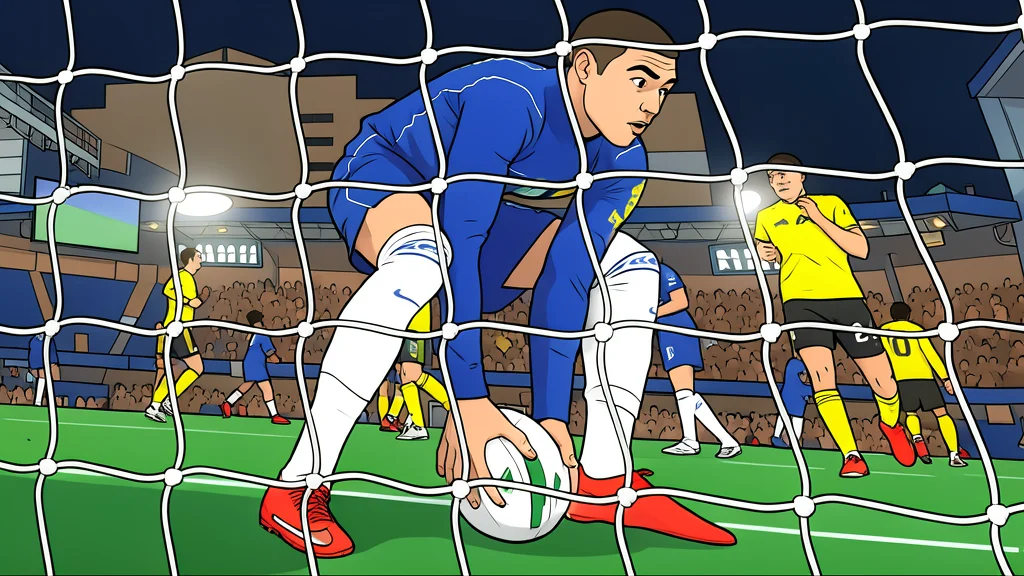
The air in Orlando hums with static before the first touch. Cavan Sullivan, a sixteen-year-old spark from Philadelphia, stands on the edge of the box, eyes fixed on the ball. He is the youngest voice in a room of giants, but his presence cuts through the noise. Behind him, the Philadelphia Union’s breakout season echoes in his posture, a blend of raw talent and disciplined structure. This is not just a call-up; it is a declaration. The United States men’s national team has turned its gaze toward 2030, and the foundation is being laid by players who know the smell of the turf and the weight of expectation.
Mauricio Pochettino’s 28-man roster reflects a deliberate shift. Twelve MLS players anchor the squad, their legs heavy with club minutes but their minds sharp for international duty. The expanded September and October window offers four friendlies, a strategic pause designed to respect the club calendar while forging national unity. The schedule moves from the humid air of Florida to the crisp nights of Minnesota, a journey that mirrors the team’s ambition: to travel, to test, to endure. The ball rolls. The cycle begins.
Youth and Experience Collide
Nine MLS newcomers bring fresh eyes to the camp. Sullivan is joined by fellow Union homegrown stars Neil Pierre and Frankie Westfield, their youth a counterweight to the seasoned presence of veterans like Chris Brady and Miles Robinson. The contrast is stark. Pierre, eighteen, and Westfield, twenty, move with the urgency of those who have not yet seen the world stage. They are flanked by Julian Hall and Adri Mehmeti from New York, and Brooklyn Raines and Peyton Miller from New England. Each carries a story of local triumph, a narrative written in neighborhood leagues before the floodlights arrived. Their energy is a current, pushing against the tide of established order.
Yet the roster is not solely a showcase for the young. It is a bridge. Players like Ricardo Pepi and Zavier Gozo, now playing in Europe, bring a different texture. Gozo’s move to Crystal Palace, a reported record transfer, signals a new market value for American talent. Berhalter’s shift to Middlesbrough adds a layer of tactical depth. These are not just athletes; they are assets in a global game, their every touch scrutinized by a world that watches closely. The blend of domestic grit and international exposure creates a chemistry that is volatile, potent, and ready to ignite.
A Strategic Roadmap Unfolds
Pochettino’s new deal secures his tenure through 2030, offering a stable hand for a long journey. The Argentine coach, initially given a short runway to prepare for 2026, now has the time to build a legacy. The recent World Cup run, where the team won their group and secured a knockout victory for the first time since 2002, provided a template. The defeat to Belgium was a bruise, but the foundation remained. Now, the focus shifts. The friendlies against Peru, Chile, Mexico, and Canada are not mere formalities. They are rehearsals for a future where the United States aims to be a permanent force, not a fleeting participant.
The Global Stage Awaits
The pitch is a stage, and the actors are ready. From the humid nights in Orlando to the cold air in St. Paul, the team will test its mettle. The presence of MLS players, many of whom are homegrown alums, ensures a cultural continuity that transcends borders. They know the game, they know each other, and they know the cost of failure. As the 2030 cycle begins, the ball is in the air, suspended for a moment in the light. Then, it drops. The chase begins.