Clay Court Stakes Rise for German Tennis Team

The red dust settles after Zverev's win, but Croatia's equalizer leaves the Davis Cup tie hanging by a thread.
The clay bites deep under Alexander Zverev’s sneakers as he seals the opening point. Six games to four, then a tiebreak that snaps like a dry twig. He stands over the net, chest heaving, the New York victory still fresh in his mind. Germany leads 1-0. The air is thick with anticipation, the crowd a low hum of potential. But the moment slips away as quickly as it arrived.
Daniel Altmaier fights with grit, but Dino Prizmic is relentless. The second set collapses under the pressure, 3-6. The score is now 1-1. The tension shifts from excitement to anxiety. It is no longer about momentum; it is about survival. The team looks to the doubles pair, the veterans who have kept this national team afloat through countless storms.
Veterans Step Into the Spotlight
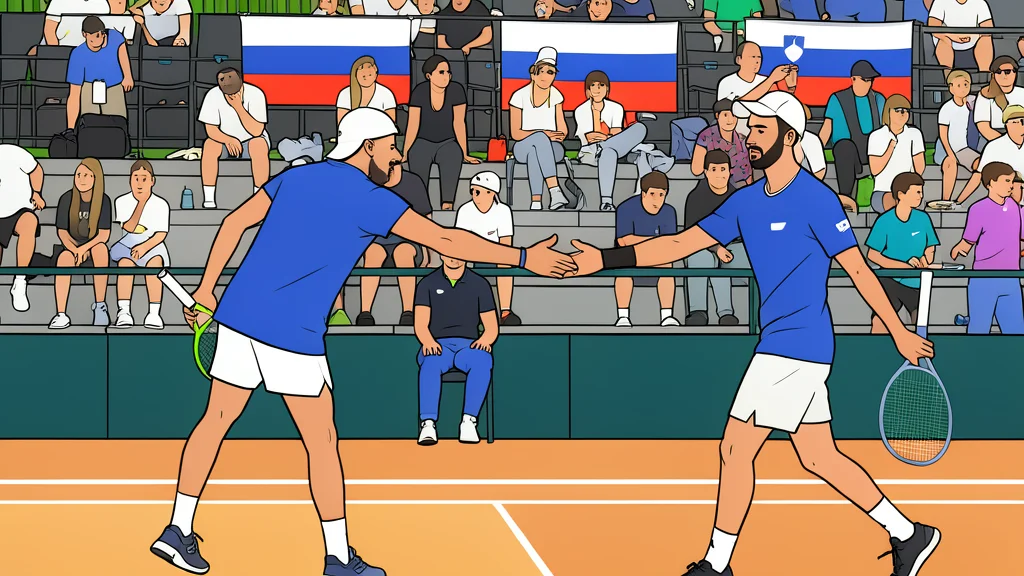
Kevin Krawietz and Tim Pütz move onto the court with the calm of men who have seen this before. Their chemistry is a quiet language, spoken in synchronized footwork and precise volleys. They face Nikola Mektic and Matej Pavic, a Croatian duo known for their tenacity. The stakes are not just points; they are a ticket to the Final 8 in Bologna. Every serve is a declaration of intent.
The match unfolds in bursts of energy. The ball whips through the air, a white blur against the red backdrop. Krawietz and Pütz rely on their experience to navigate the pressure. They do not seek flashy winners; they seek consistency. Each point won is a brick in the wall of their defense. The crowd watches, holding its breath, knowing that this pair often carries the weight of the team on their shoulders.
High Stakes in Bologna
The winner of this tie earns a place in the Final 8, scheduled for late November in Italy. It is a rare prize, a chance to compete for the world title against the best nations. For the loser, the season ends in disappointment. They will return to the qualification rounds next year, fighting to keep their place in the elite group. The contrast between triumph and obscurity is stark and unforgiving.
Captain Michael Kohlmann watches from the sidelines, his face a mask of concentration. He knows the history of this competition, the heartbreaks and the glories. He trusts his players, especially the doubles team. The decision to include Zverev, despite his recent Grand Slam success, was a calculated risk. Now, that risk must be rewarded. The team is united, bound by the shared goal of advancing.
Watching the Tie Unfold
Fans can follow the action through tennis.de, where the matches are streamed for free. There is no free-to-air broadcast, but the digital platform offers a clear view of every rally. The live ticker on ran.joyn.de provides real-time updates, capturing the nuances of the game that statistics often miss. It is a way to stay connected to the drama, to feel the pulse of the match as it unfolds.
The schedule is tight, with matches starting in the afternoon and continuing into the evening. The first match on Sunday is set for noon, with the decisive singles matches following in the early afternoon. The timing allows for a full day of tennis, a marathon of skill and endurance. As the sun dips below the horizon, the lights flicker on, illuminating the court for the final push.
According to GN sports/tennis, the outcome of this tie will define the year for German tennis. It is a test of character, a moment where pressure becomes performance. The players are ready, the court is prepared, and the world is watching. The next point could change everything, or it could mean nothing. In the Davis Cup, it always means something.