Shelton Calls for Clock on Second Serve After Zverev Ritual

A tennis ball rests on the hard court, a white line cutting through the silence. The tension of a final is not just in the swing, but in the wait.
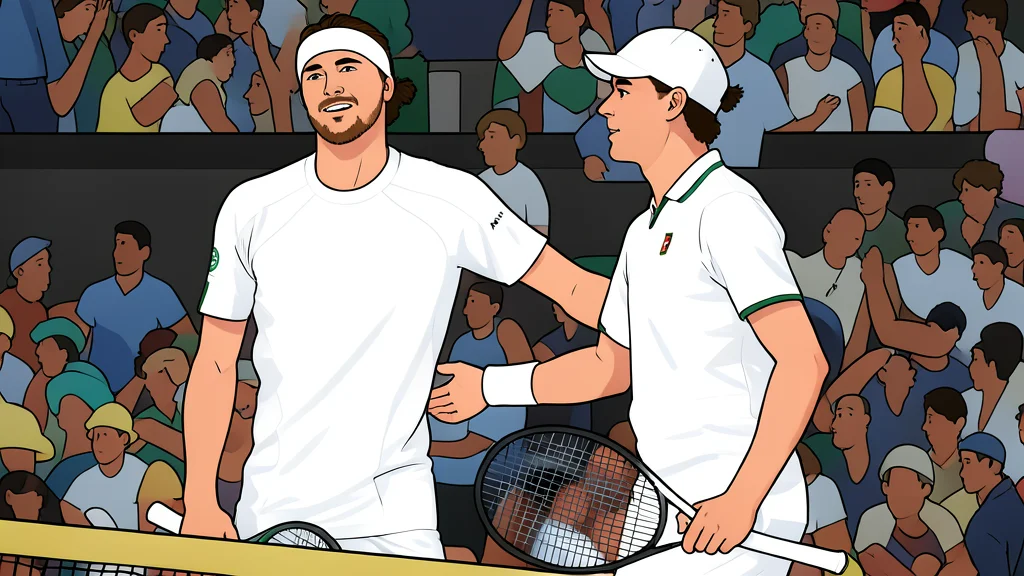
The air in the final court hung heavy with the scent of rubber and sweat. Ben Shelton stood on the baseline, knees bent, muscles coiled like a spring under immense pressure. Across the net, Alexander Zverev began his ritual. One bounce. Two. Five. The rhythm was hypnotic, a slow metronome counting down seconds that felt like hours. Shelton’s posture remained rigid, a statue in a landscape of motion, waiting for a serve that refused to arrive.
The silence stretched. Twenty bounces. Twenty-five. The umpire’s voice cut through the quiet, instructing the American to hold his position. Shelton’s frustration simmered just beneath the surface, a heat that would soon boil over in the post-match interview. He wanted to move, to loosen the tension in his shoulders, to breathe without the weight of expectation pressing down on his spine. But the rules demanded stillness, a penalty for being alive in a moment that required only patience.
A Ritual That Breaks the Pace
Zverev’s pre-serve routine has become a talking point, a friction point in the tournament. The German top seed, known for his precision, uses this time to settle his mind. For others, it is a drain on energy. The 25-second shot clock governs the first serve, a tight leash on time. But the second serve exists in a legal vacuum, a space where time is elastic, where patience is tested to its breaking point.
Shelton argued that no athlete should be forced to maintain a state of high alert for such a duration without a clear temporal boundary. He described the physical toll of holding a ready position, the tension that builds in the legs and the mind. It is a small detail, easily overlooked by the casual observer, but for the players, it is a significant disruption to the flow of the game.
The Call for Regulatory Change
In the aftermath of his defeat, Shelton spoke with a clarity that bordered on urgency. He urged tennis authorities to consider a limit on the second serve, a rule that would protect the integrity of the match from being eroded by prolonged delays. He did not propose a specific solution, but the need for one was evident in his tone. The current system, he suggested, is flawed, a gap in the rulebook that allows for an uneven distribution of time and focus.
The incident was not isolated. Other competitors had expressed similar frustrations over the previous weeks. The pattern was clear: Zverev’s routine, while legal, was disruptive. It challenged the traditional understanding of serve timing, pushing the boundaries of what is considered acceptable in professional tennis. The debate it sparked is a reminder that the rules of the game are not static, but evolve in response to the needs and experiences of the players.
A Victory Etched in History
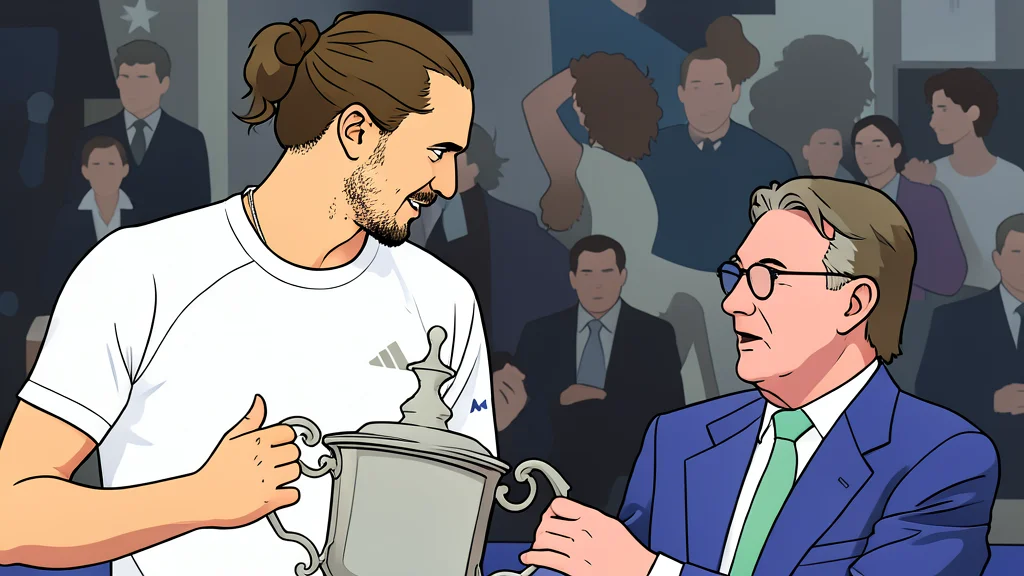
Despite the controversy, Zverev secured his second major title of the year, a testament to his consistency and resilience. His victory over Shelton, 6-3, 7-6, 5-7, 6-2, ended American hopes for a home male champion since Andy Roddick’s triumph in 2003. The final was a battle of styles, of pace and power, of patience and precision.
As reported by Yahoo Sports, the match highlighted the complex dynamics of professional tennis, where the smallest details can have the greatest impact. The controversy over the ball-bouncing ritual is likely to linger, a footnote in the history of the tournament, but a significant one for those who understand the nuances of the sport.