The Weight of Silence on Zverev's Clay

Alexander Zverev stands at the net, the U.S. Open trophy heavy in hand, while a quiet tension hums beneath the applause. The narrative surrounding his breakthrough season is no longer just about points won, but about the unresolved questions that linger in the air.
The stadium air in New York feels thick, charged with the residual electricity of a final match. Alexander Zverev extends his hand across the net, the motion a ritual of sportsmanship that usually marks the end of a battle. But this time, the handshake hangs suspended in a different kind of gravity. The crowd’s roar is a physical force, a wall of sound that should drown out everything else. Yet, in the quiet corners of the broadcast booth and the editorial desks, a different conversation takes place. It is not about the forehand that sealed the title or the serve that broke the opponent’s rhythm. It is about the shadow that has followed the German star across continents, a presence that refuses to dissolve despite the silver hardware now on his shelf.
This is the paradox of the modern tennis viewer. We watch the geometry of the shot, the fluidity of the footwork, the sheer athletic dominance. We see a player who has claimed his second major in ninety days, a feat that speaks to a level of consistency rarely seen in the sport. And yet, the lens is fractured. The image of the champion is overlaid with a history that was never fully adjudicated in a public court. The result is a collective hesitation, a pause before the applause, a glance that lingers a beat too long. The ball bounces on the clay, a white sphere against the red earth, a simple object that now carries a weight far beyond its two and a half ounces.
Ambivalence in the Broadcast Booth
During the final moments of the match, the commentary track offered a stark window into this internal conflict. John McEnroe, a voice known for its sharpness and directness, remained silent on the allegations that have dogged Zverev’s career. Instead, as the players prepared to shake hands, McEnroe directed his words toward Carlos Alcaraz and Jannik Sinner, wishing them a full recovery. It was a pivot that felt deliberate, a way to acknowledge the broader context of the season without directly addressing the specific controversy surrounding the winner. The intent remains opaque, known only to the man who spoke it. Was it a subtle nod to the players Zverev did not face? Or was it a conscious decision to leave the unresolved matter unspoken? The ambiguity itself became part of the narrative, a silent question mark hanging over the victory.
This silence is not unique to McEnroe. It is a shared stance among many in the media and among fans. The desire to celebrate athletic excellence clashes with the discomfort of ignoring serious accusations. To speak of the titles without acknowledging the past feels like a dereliction of duty. To speak of the past without acknowledging the titles feels like an erasure of the present achievement. There is no clean conversion chart, no simple formula to balance these competing truths. The result is a fragmented viewing experience, where the joy of the win is tempered by a lingering unease, a cloud that does not disperse with the final point.
The Unresolved Question of Guilt
At the heart of the debate lies a legal and moral gray area. Zverev was accused of domestic violence by two former partners, allegations that were never proven in a public trial. The case was settled out of court, a legal mechanism that avoids a finding of guilt or innocence. For some, this settlement is an indelible stain, a mark that no amount of on-court success can wash away. For others, the absence of a guilty verdict means the matter is moot, a closed chapter that should be respected. Most observers find themselves in the middle, caught between these two poles. They feel the discomfort, the lack of clear resolution, and the insufficiency of grounds for a ban, yet they also recognize the gravity of the original claims.
The facts, as reported by GN sports/tennis (en-US) and other outlets, remain consistent: no conviction, no public trial, a settlement. This legal reality creates a vacuum that emotion and opinion rush to fill. Fans are divided, some refusing to watch the player, others viewing him as a martyr who has endured a witch hunt. The dichotomy is sharp, leaving little room for nuance. Yet, the nuance is precisely where the complexity lies. It is not a binary choice between guilt and innocence, but a space of unresolved tension where personal beliefs about justice, privacy, and accountability collide.
Patterns of Behavior and Reputation
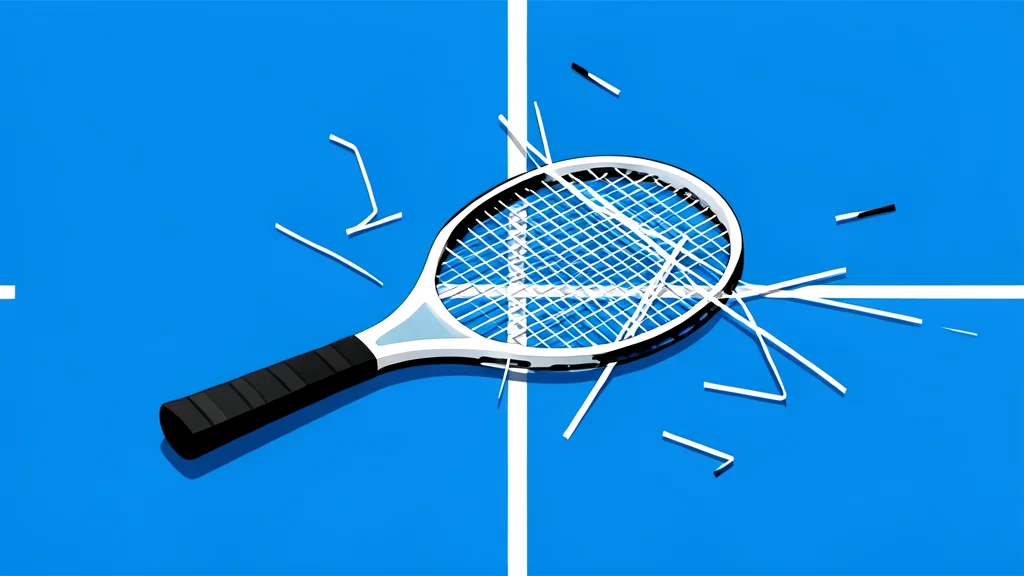
Beyond the legal specifics, there is a pattern of behavior that has shaped Zverev’s public image. In February 2022, at the Mexico Open, he was ejected after attacking an umpire’s chair with his racket. The incident, sparked by displeasure with the outcome of a doubles match in Acapulco, offered a glimpse into a side of the player that contradicts the controlled, professional persona often seen on the tour. It was a moment of raw impulse, a lapse in self-control that stood in stark contrast to the precision of his serve. For critics, this incident provides context for the allegations, suggesting a deeper issue with anger management and power dynamics. For defenders, it is an isolated incident, a mistake made in a moment of frustration.
The accumulation of these events has created a reputation that is difficult to shake. It is not just about the tennis, but about the person behind the shots. The cloud over his breakout season is not a single storm, but a weather system, a collection of events and allegations that have coalesced into a persistent atmosphere. It affects how he is viewed, how he is discussed, and how his achievements are received. The white ball on the clay court is a symbol of purity and fairness, a standard that is hard to apply when the human element is so fraught with unresolved questions. The game continues, the points are scored, the titles are won, but the shadow remains, a constant companion in the chase for greatness.