US Team that Won 2017 Billie Jean King Cup Now Scattered
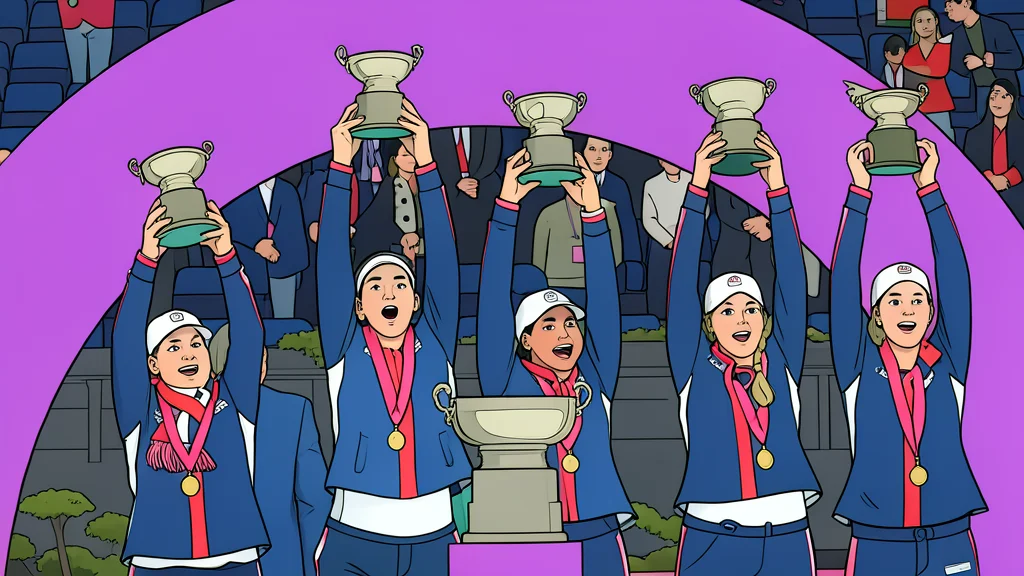
Four years after Minsk, the 2017 US Billie Jean King Cup squad is split between retirement and injury, leaving a record 18 titles in the rearview mirror.
Key points
- The USA last won the Billie Jean King Cup in 2017, beating Belarus 3-2 in Minsk.
- CoCo Vandeweghe and Shelby Rogers have retired, while Alison Riske is currently inactive.
- Sloane Stephens, a 2017 champion, is currently ranked number 135 in the world.
The dust of the Chizhovka Arena has settled, but the echo of that 2017 victory still hangs in the league's history books. The United States holds the crown with 18 Billie Jean King Cup titles, a number no other nation has touched. Yet the trophy sits idle in a cabinet, untouched since that final against Belarus. The gap has stretched into a void. In April, Belgium dismantled the current squad in a qualifying match, ending the USA's run. It is the first time since the format shifted to a single-site round-robin in 2021 that the Americans have missed the finals. The silence on the court is louder than the cheers that once filled Minsk.
The 2017 team was a mosaic of resilience and raw power, led by captain Kathy Rinaldi. They clawed out a 3-2 win, a grueling battle that secured the first title in 17 years. The narrative was one of grit, with players stepping up when the odds were stacked. That unity has since fractured. The players who stood together on the podium are now scattered by life’s inevitable curves. Some have hung up their rackets for good. Others sit on the sidelines, recovering or resting. The collective memory remains, but the physical presence is gone.
Retirement and the fading glow
CoCo Vandeweghe, the spark that ignited the 2017 final, has closed her career. She called it quits after the 2023 US Open, leaving behind a legacy that included a 2018 doubles title with Ashleigh Barty and a career high of number nine in singles. Her retirement marks the end of an era for the team’s doubles backbone. Shelby Rogers followed suit, ending her journey at the 2024 US Open. She peaked at number 30 and reached the quarterfinals of her home Grand Slam in 2020. Now, both are part of the past tense, their names etched in the record books but absent from the current roster.
Alison Riske occupies a different kind of silence. The three-time WTA champion and former world number 18 is currently inactive. Her 2017 contribution was pivotal, helping Rinaldi become the first female captain to lift the trophy since Billie Jean King in 2000. Riske’s career included a run to the US Open quarterfinals, a testament to her consistency. Now, her status is defined by absence rather than action. The team that once relied on her steady hand now looks to a new generation to fill the void she left behind.
Sloane Stephens and the long recovery
Sloane Stephens remains on the tour, but the shadow of her 2017 US Open triumph looms large. She defeated Madison Keys in that final, a moment of pure American glory. The following year, she lost the French Open final, a bitter pill that underscored the volatility of her career. Today, she sits at number 135 in the WTA rankings. Her recent form has been inconsistent, with a second-round exit at the US Open and a quarterfinal loss at the Guadalajara Open. The fire is still there, but the fuel is running low. The contrast between her 2017 peak and her current reality is stark.
The 2017 final was a chess match of high stakes. Vandeweghe dominated the singles, defeating Aliaksandra Sasnovich and a young Aryna Sabalenka. Sabalenka, now a WTA number one, edged past Stephens in a tense encounter. Sasnovich took the fourth match, keeping Belarus alive. But the decisive blow came in doubles. Vandeweghe and Rogers combined to dismantle the Belarusian pair, securing the title in a hard-fought conclusion. That synergy is what the current team lacks. The individual talents are there, but the collective rhythm is missing.
A legacy defined by absence
The United States tennis program stands at a crossroads. The record 18 titles are a monument to past excellence, but they do not guarantee future success. The 2017 team was a snapshot of a specific moment in time, a convergence of talent and timing. That moment has passed. The players who made it possible are now defined by their post-playing lives. The challenge for the current squad is not just to match the past, but to build a new identity. The trophy remains, a silent witness to what was and what could be.
As the next qualifying rounds approach, the weight of history is a heavy burden. The USA must find a way to bridge the gap between the 2017 triumph and the present day. The players who made that victory possible are now part of the lore, their stories told in retrospect. The future belongs to those who can harness the energy of that final in Minsk. The silence of the empty court is a reminder that titles are earned, not inherited. The work begins now, on the clay, under the lights.