Janel Grant Claims Empathy for Vince McMahon After Legal Closure
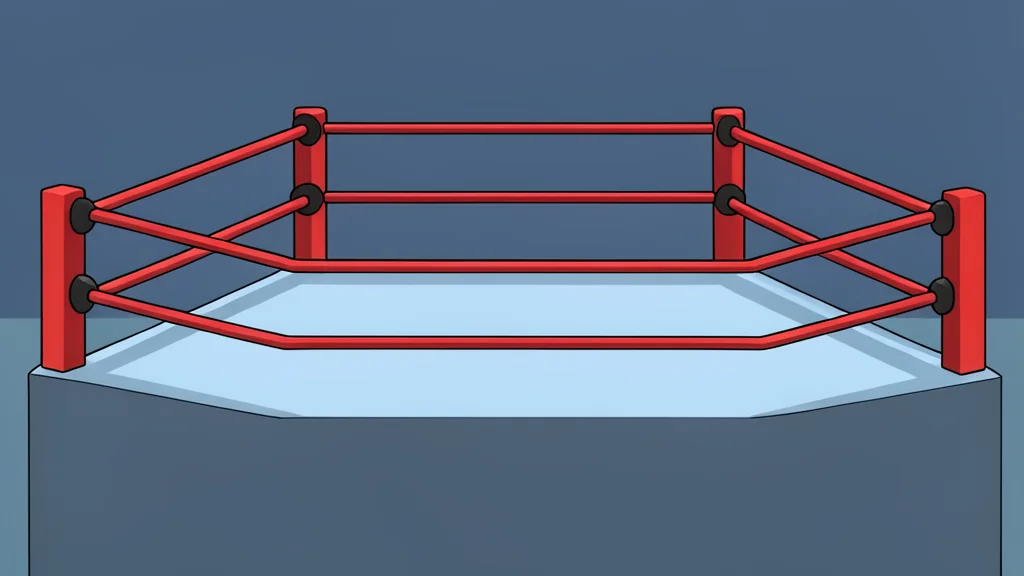
Following the end of her lawsuit, Janel Grant describes her complex feelings toward Vince McMahon as a mixture of forgiveness and empathy.
Key points
- Janel Grant describes feeling forgiveness and empathy toward Vince McMahon after their legal dispute ended in private arbitration.
- Grant shifts her focus from personal grievance to the decision-makers and events that triggered the 2022 scandal and anonymous emails.
- The former WWE employee received the 2026 Advocacy in Action Award from the CT Alliance to End Sexual Violence earlier this year.
The legal machinery has ground to a halt, and in the sudden quiet, Janel Grant hears something unexpected: a release. The months-long battle that defined her public existence has closed its books, leaving behind a silence she is learning to inhabit. It is not the empty void of defeat, but a spacious room where the heavy, jagged rocks of resentment have been swept away, leaving the floor clear for a different kind of thought to settle.
This shift in perspective has been captured in recent discussions reported by Wrestling Inc., where Grant offers a stark, humanizing view of her former adversary. She does not speak of victory or revenge, but of a delicate, almost fragile peace. The narrative has turned inward, moving away from the courtroom’s cold fluorescence and into the messy, subjective landscape of personal memory, where the lines between perpetrator and victim blur into a complex tapestry of shared trauma.
Empathy emerges from the silence
Grant describes her current state as one of forgiveness, a word she chooses with deliberate weight. It is not a grand gesture of absolution, but a practical removal of a burden. She explains that the anger, once a constant hum in the background of her life, has ceased to occupy space in her mind. Instead, a strange, counterintuitive empathy has taken its place. It is a feeling born not from forgetting the pain, but from recognizing the profound, shared devastation that the unraveling of the McMahon empire has caused for everyone involved, including the man at its center.
She acknowledges the extreme polarity of her emotions, holding the memory of alleged torment alongside a recognition of the chaos that engulfed her accuser. This duality is disorienting, a cognitive dissonance that refuses to resolve into a simple binary of good and evil. It is a reminder that human experiences are rarely linear, often tangled in the same web of consequence. Grant’s empathy is not a judgment of his actions, but an acknowledgment of the shared wreckage left behind by the storm.
Focus shifts to decision-makers
With the personal grievance set aside, Grant’s attention turns to the broader architectural failure that allowed the situation to unfold. She identifies the series of events and the specific decision-makers who facilitated the anonymous emails and the subsequent media frenzy. These are the true objects of her scrutiny, the invisible hands that shaped the narrative and drove the chaos. It is a shift from the personal to the systemic, from the individual to the institutional.
The focus on these figures reveals a frustration with the opaque machinery of corporate governance. Grant points to the complex web of individuals who influenced the outcome, suggesting that the blame cannot rest solely on one pair of shoulders. It is a call for accountability that extends beyond the spotlight, reaching into the boardrooms and backrooms where the real decisions were made. This shift in focus underscores the complexity of the scandal, highlighting the many layers of responsibility involved.
Context of the legal battle
The current moment of reflection follows a turbulent legal journey that began with the 2022 Wall Street Journal revelations. Those reports of hush money payments triggered a cascade of consequences, leading to McMahon’s resignation and a protracted legal battle. Grant’s lawsuit, filed two years later, detailed serious allegations of sexual assault and trafficking, adding a deeply personal dimension to the corporate scandal. The case eventually moved to private arbitration, bringing the public phase of the conflict to a close.
Throughout this period, Grant has remained a central figure in the discourse, her experiences shaping the narrative of accountability in professional wrestling. Her recent recognition with the 2026 Advocacy in Action Award by the CT Alliance to End Sexual Violence highlights her role as a voice for victims, even as she navigates the complex aftermath of her own case. The award stands as a testament to her resilience and her commitment to advocating for others, a counterweight to the personal turmoil she has endured.