American Airlines Pilots Union Questions CEO Leadership Amid Performance Lag
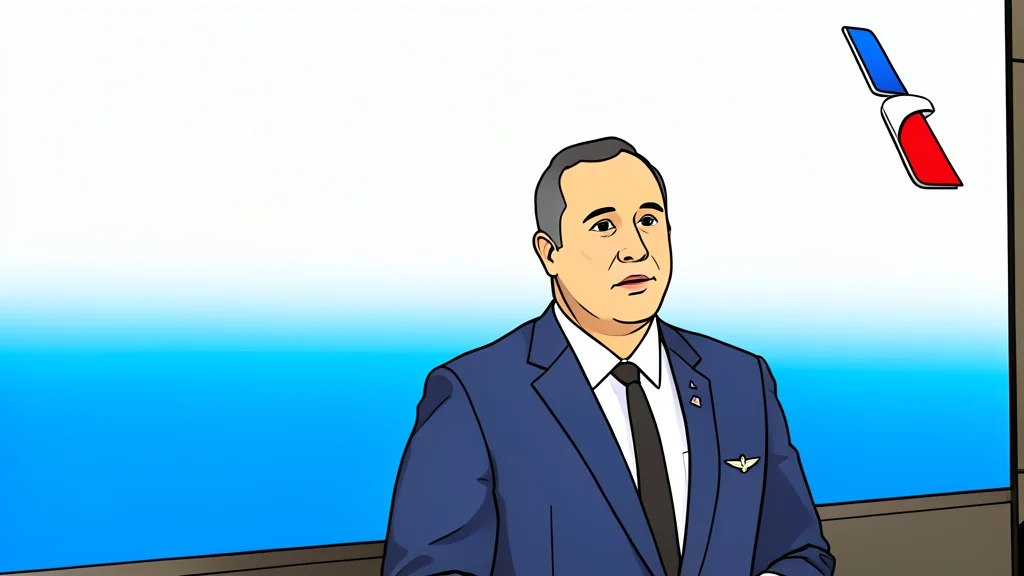
Allied Pilots Association president critiques management strategy as earnings trail rivals, despite significant capital investments in fleet and infrastructure.
The Allied Pilots Association has issued its strongest public criticism to date of American Airlines' executive leadership, questioning whether current management can close the widening performance gap with United Airlines and Delta Air Lines. Capt. Nick Silva, the union president representing the carrier's pilots, stated that the talent pool for airline executives is limited and suggested the board should consider whether a new leader is needed to accelerate the turnaround.
This friction follows a unanimous vote of no confidence by the Association of Professional Flight Attendants, which represents over 25,000 crew members. The public dispute marks a significant escalation in tensions that began in January after American Airlines reported fourth-quarter earnings that significantly underperformed its major competitors. The union's stance suggests that operational and financial strategies under CEO Robert Isom, who has led the company since 2022, are failing to restore employee pride or competitive standing.
Financial underperformance drives union discontent
American Airlines faces a distinct margin gap compared to its peers, a fact highlighted in recent earnings reports sourced from GN markets/earnings (en-US). While the company has announced substantial capital commitments, including a $4 billion investment in DFW International Airport’s new Terminal F and a leader role in reimagining Terminal C, these infrastructural upgrades have not yet translated into superior profitability. The Citi co-branded credit card deal, projected to generate approximately $10 billion in fees by 2030, is viewed as a long-term revenue stabilizer rather than an immediate fix for current operational inefficiencies.
Silva acknowledged that the airline is making meaningful investments in customer-facing products, yet he characterized the current workplace environment as lacking the professional pride seen in previous years. He noted that while gate agents and flight attendants perform their duties with high competence, the overall corporate culture has shifted negatively. The union’s position is that the gap between the airline's potential and its current execution requires a leadership intervention that can align operational efficiency with employee morale.
Strategic investments aim to close revenue gap
In an effort to address revenue shortfalls, American Airlines has accelerated modernization efforts across its fleet. The carrier plans to retrofit more than 500 Airbus narrowbody aircraft with Starlink high-speed internet to enhance in-flight connectivity. Additionally, the airline recently deployed its first retrofitted Boeing 777-300ER on long-haul international routes, featuring expanded premium seating configurations. These moves are part of a broader strategy to reintroduce seat-back screens to the majority of the fleet and expand its Admirals Club lounge network at the Dallas-Fort Worth hub.
Management maintains that these initiatives are part of a clear strategy to improve performance and deliver long-term value to stakeholders. In a statement, the company affirmed its commitment to regular dialogue with union partners and emphasized that it is making meaningful investments across the business. However, the pilots' union remains skeptical, arguing that these capital expenditures, while necessary, were delayed and do not offset the immediate need for decisive strategic leadership to outperform rivals.