Ford Kuga PHEV Recall Cuts Electric Range by 12 Percent
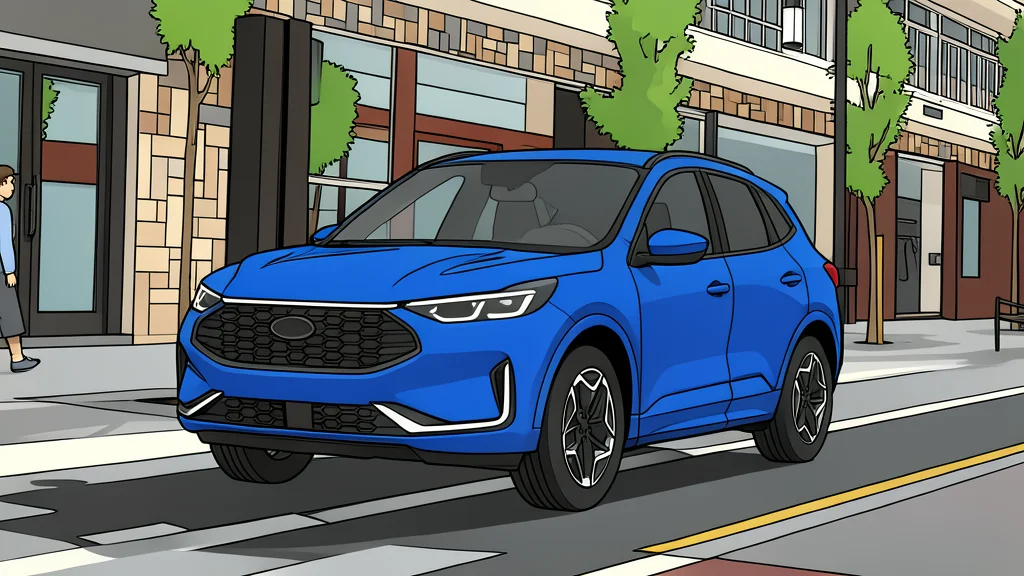
Ford’s latest Kuga PHEV remedy limits battery usage rather than replacing cells, reducing usable electric range significantly for owners across Europe.
Ford has initiated the installation of recall 25SC4 for the Kuga PHEV, a corrective action addressing battery cells prone to short-circuiting and fire. The remedy does not involve replacing the battery pack; instead, it applies a software update to the battery energy control module that restricts the usable capacity of the 14.4 kWh system. Ford’s official correspondence to owners indicates an average reduction in electric range of approximately 12 percent, though individual vehicles may experience greater losses depending on pack age and charging conditions.
The affected vehicles are pre-facelift Kuga PHEVs with 225 hp output and a WLTP-rated electric range of 56 km. Under the new software constraints, this nominal range drops to roughly 49 km on Ford’s fleet average, but owner-reported data suggests a more severe impact. Drivers in the Netherlands and Germany have documented usable capacity losses between 20 and 30 percent, effectively shrinking the 56 km baseline to as little as 39 km. This reduction alters the vehicle’s utility for daily commuting, limiting full-electric operation to shorter segments of the day.
Software Limits Usable Battery Capacity
The core of the fix is a rewrite of the battery management logic. The suspect cells, which Ford’s recall filing identifies as having potentially damaged separators, remain in the vehicle. The updated module increases the buffer of retained capacity as the pack ages, preventing the use of the most vulnerable portion of the battery. This approach avoids the logistical and financial burden of swapping thousands of battery packs but results in a permanent reduction of available energy. The update is installed at dealerships and is not delivered over-the-air.
Ford maintains that the 12 percent figure represents a calculated fleet average and cannot be derived from single charging sessions. The company notes that natural degradation in five- to six-year-old packs contributes to variability. However, legal representatives for affected owners argue that real-world data shows usable capacity dropping to 80 percent or lower, with longer charging times and faster range depletion. The discrepancy between the official estimate and owner measurements remains a point of contention, with Ford citing the complexity of individual cell conditions.
Recall Scope and Historical Context
This campaign covers 166,989 Kuga PHEVs worldwide, including 56,040 units in Germany, built between August 2019 and November 2023. Seven thermal incidents have been reported, with no injuries. It is the third battery-related recall for this model, following a full pack replacement campaign in 2020 and a charging restriction notice in 2025. The Kuga PHEV has now faced ten recalls in six years, encompassing engine, transmission, and software issues. In the United States, the equivalent Escape and Lincoln Corsair models face similar defects in Samsung SDI cells, with Ford estimating about one percent of packs are affected.
The Kuga PHEV was Europe’s best-selling plug-in hybrid in 2021, 2022, and 2023, making it a significant portion of the used vehicle market in Germany, the Netherlands, and Belgium. The recall timeline has been delayed, with the fix reaching dealers in late August 2026, two months after Ford’s mid-year promise. The company extended the high-voltage warranty to ten years or 240,000 km across Europe in March 2025, a move that acknowledges the long-term reliability concerns associated with these specific battery cells.
Market Impact on Used Vehicles
The reduction in electric range directly affects the value proposition of the used Kuga PHEV. Buyers who purchased the vehicle for a 50 km daily commute now face a range that may fall short of that requirement, especially in winter or at higher speeds. The shift from a full-day electric vehicle to a half-day one changes the operational economics for owners, potentially increasing reliance on the petrol engine and associated fuel costs. This outcome underscores the trade-off between retaining defective hardware and ensuring safety, a decision that has drawn criticism from consumer groups and legal firms representing affected drivers.