Compressed Gas Storage Projects Expand Without Economic Gains
New large-scale demonstrators in China and North America prove engineering feasibility but fail to improve cost competitiveness against batteries and pumped hydro.
Recent commissions of large-scale compressed-gas storage facilities in China, the US, and Europe confirm that the technology is moving from theoretical concepts to physical reality. The Huai’an plant in China, with a capacity of 600 MW and 2.4 GWh, alongside Hydrostor’s 500 MW Willow Rock project in California, marks a significant step beyond laboratory rigs. However, the deployment of these first-of-a-kind units does not signal a shift in market economics. The fundamental cost structures remain high, and the technology has not yet demonstrated the manufacturing efficiencies required to compete with mature storage alternatives.
While these projects validate the engineering capabilities of firms like Hydrostor and Highview Power, they do not yet prove commercial viability at scale. The existence of a single large machine does not resolve the issues of capital cost, mechanical complexity, and operational burden that have plagued earlier attempts, such as Energy Vault’s gravity storage in Rudong. Grid operators still face a choice between these emerging gas-based systems and established technologies that offer lower costs and higher efficiencies.
Thermodynamic Complexity Drives High Capital Costs
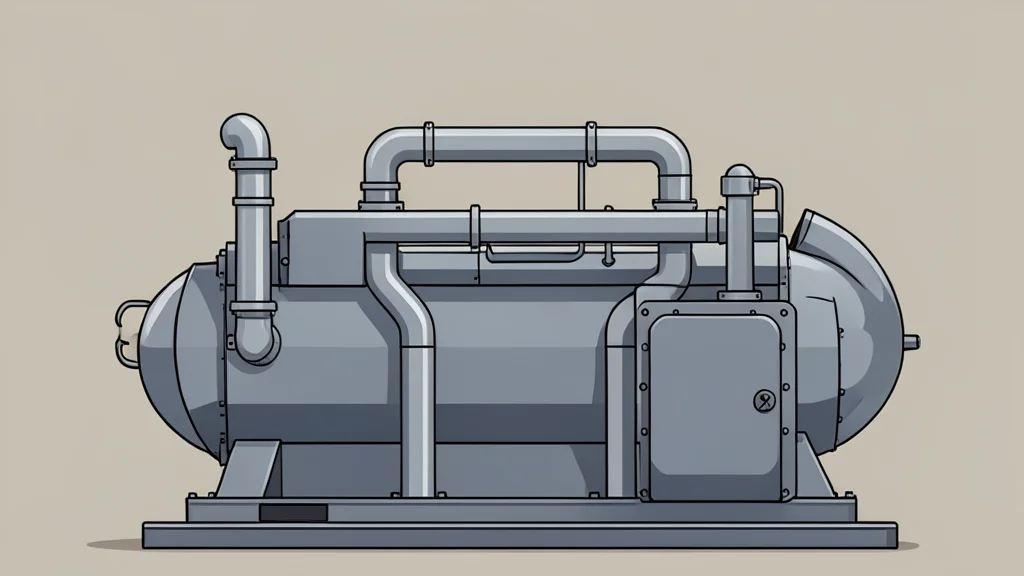
The physical requirements of compressed gas storage create inherent cost drivers that are difficult to mitigate through engineering alone. Compressing gas generates significant heat, necessitating extensive thermal storage, heat exchangers, and complex piping systems to capture and reuse this energy. This adds substantial weight to the civil and mechanical engineering burden. Liquid-air storage faces similar challenges, requiring cryogenic refrigeration and insulated tanks to manage the phase transition of air. Even Energy Dome’s use of carbon dioxide, which allows for more manageable condensation temperatures, still results in a complex process plant requiring multiple compression and expansion stages.
These systems lack the manufacturing repetition that characterizes the battery industry. Unlike lithium-ion cells, which benefit from global supply chains and rapid cost reductions, compressed gas storage relies on custom-built infrastructure for each site. The IEA notes that battery storage prices have dropped significantly, reaching one-third of their 2020 levels. In contrast, gas-based systems carry the capital intensity of heavy infrastructure without the economies of scale found in modular electronic components.
Efficiency Gaps Persist Against Pumped Hydro
Round-trip efficiency remains a critical weakness for compressed gas storage compared to established alternatives. Pumped hydro systems, which also require significant civil engineering, achieve round-trip efficiencies of approximately 80% by utilizing the elevation of water. Compressed gas systems, despite advanced heat recovery techniques, generally operate below this benchmark. The energy lost during compression, storage, and expansion phases reduces the net energy output, making the technology less attractive for grid applications where efficiency directly impacts operational costs.
Hydrostor’s Willow Rock project illustrates the trade-offs involved in adapting the technology for new geologies. By excavating hard-rock caverns and using water to maintain pressure, the company broadens siting options beyond traditional salt caverns. However, this approach increases the complexity of the underground infrastructure. The California Energy Commission’s certification highlights the regulatory and engineering hurdles that remain. Without a clear path to reducing these operational burdens, the technology struggles to justify its premium over simpler, more efficient storage methods.
Market Scaling Remains Uncertain
The current landscape features a handful of serious demonstrators rather than a scaling industry. Highview Power’s 50 MW liquid-air plant and Energy Dome’s 20 MW CO₂ battery in Sardinia represent progress in diversifying storage architectures. Yet, these projects are isolated cases that do not yet demonstrate a manufacturing experience curve. The gap between proving a concept and achieving cost parity with batteries or pumped hydro remains wide. Investors and grid planners must weigh the engineering achievements against the persistent economic disadvantages.
As noted by GN auto stocks/utilities: gas storage, the sector is facing a critical juncture where technical validation must translate into commercial competitiveness. The physics of gas storage create inherent machinery requirements that are difficult to eliminate. Until these systems can leverage manufacturing efficiencies similar to those seen in the battery sector, they will likely remain niche solutions rather than the dominant storage architecture for modern grids.