Holtec Postpones $750M IPO Citing Data Center Demand Doubts
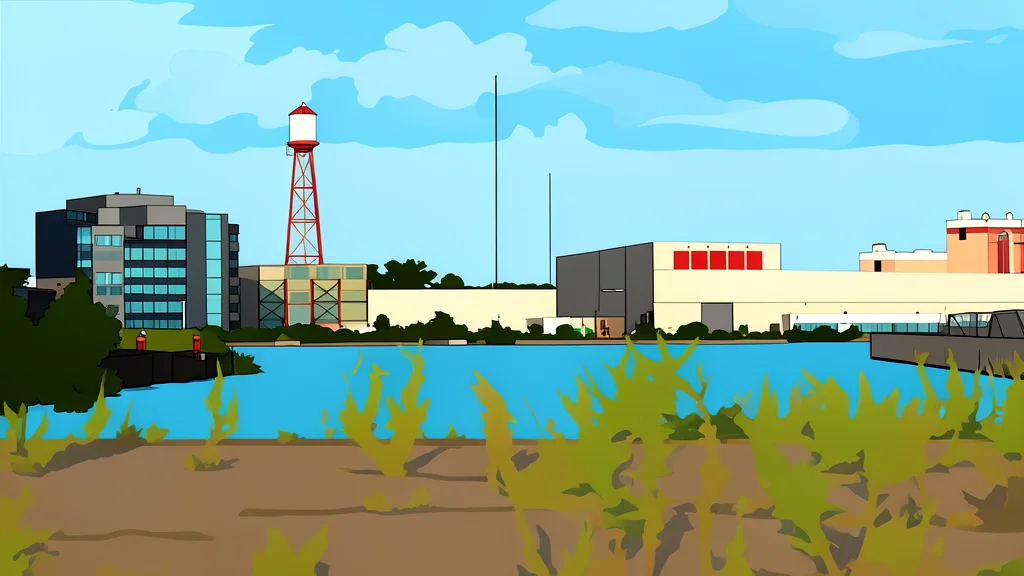
Holtec Nuclear Corp has halted its initial public offering plans, attributing the decision to volatile market sentiment and political pushback against data center infrastructure that drove earlier nuclear enthusiasm.
Holtec Nuclear Corp, the Camden-based firm specializing in advanced nuclear technology, has suspended its plans to raise more than $750 million through an initial public offering. The company cited deteriorating market conditions as the primary driver for the postponement, a move that halts what was expected to be one of the largest listings of the autumn season. This decision comes as the broader sector faces headwinds from shifting political dynamics regarding the energy demands of artificial intelligence data centers.
Founder and CEO Krishna P. Singh acknowledged that investor sentiment has cooled due to the perceived link between nuclear power and data center construction. Singh noted that Holtec’s business is often viewed as directly connected to these facilities, making the company vulnerable to the recent backlash against such projects. The uncertainty surrounding long-term power demand for AI applications has created a fragile foundation for new nuclear investments, prompting the company to delay its entry into public markets.
Political opposition reshapes market sentiment
The delay reflects a broader shift in the political landscape, where support for large-scale data center projects has waned. In Pennsylvania, both Democratic Governor Josh Shapiro and Republican opponent Stacy Garrity have moderated or reversed their previous endorsements of such infrastructure amid intense local opposition. This political uncertainty has directly impacted market confidence in the nuclear sector, as investors reassess the reliability of the demand narrative that previously fueled stock prices.
Market indicators confirm this softening trend. Shares of Constellation Energy, a key player in restarting nuclear assets, have declined from highs above $400 to the mid-$260s range. Similarly, the VanEck Uranium and Nuclear ETF, which holds significant exposure to companies like Constellation and uranium suppliers, has fallen from a peak of over $160 to trade below $110. These declines illustrate how the erosion of the data center demand thesis is affecting the entire nuclear value chain.
Holtec’s operational focus and IPO structure
Holtec employs approximately 4,150 people across its headquarters in Camden and manufacturing sites in Pittsburgh and Orrville, Ohio. The company is best known for decommissioning aging nuclear plants and removing spent fuel, but it is also developing small modular reactors (SMRs). These SMRs are designed to replace larger plants without interrupting power production, with the first two units scheduled for installation at the Palisades site in Michigan.
The postponed IPO was led by a consortium of major financial institutions, including J.P. Morgan, Goldman Sachs & Co., Citigroup, and Bank of America. Morgan Stanley and Cantor Fitzgerald also participated in the underwriting effort. Holtec plans to release a formal statement regarding the delay later this week, signaling that the timing for a public debut remains under review as market conditions evolve.
Sector volatility impacts peer valuations
The uncertainty affecting Holtec is not isolated but part of a wider correction in nuclear-related equities. The initial surge in demand for new nuclear capacity was largely driven by the promise of AI data centers, a narrative that has now faced significant political and public resistance. As local opposition grows and political leaders distance themselves from these projects, the financial viability of new nuclear builds is being re-evaluated by investors.
This shift has forced companies in the sector to rethink their capital raising strategies. The drop in ETF values and peer stock prices indicates a loss of confidence in the rapid growth trajectory previously assumed for the nuclear industry. For Holtec, this means the window for a high-profile IPO has narrowed, necessitating a pause to allow market sentiment to stabilize and for the company to present a clearer case for value independent of the volatile data center narrative.