Nigeria Plans to Scale Gas Output to Serve 70% of Africa

The Nigerian Upstream Petroleum Regulatory Commission outlines a strategy to leverage 215 TCF in reserves, aiming to double production to meet continental demand and fund energy transitions.
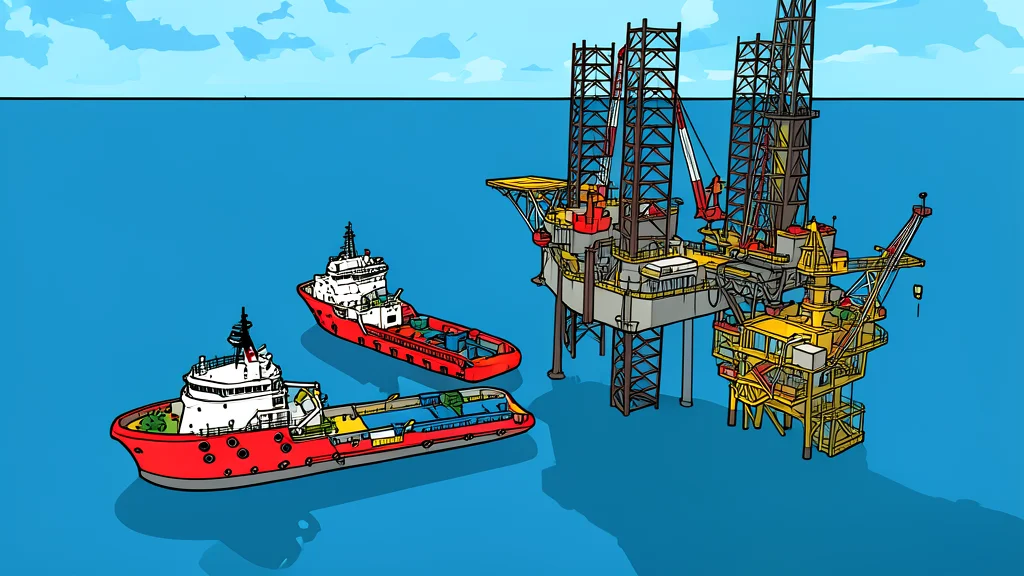
The Nigerian Upstream Petroleum Regulatory Commission (NUPRC) has set a target to supply 70 percent of Africa’s natural gas demand by significantly scaling up domestic production. Chief Executive Oritsemeyiwa Eyesan stated that Nigeria currently produces eight billion cubic feet of gas daily, a figure she described as a minimal extraction from the country’s estimated 215 trillion cubic feet of reserves. The commission views this resource base as the primary lever for addressing energy poverty and financing the continent’s energy transition.
To achieve this market share, the NUPRC intends to double or triple current output levels. Eyesan argued that such an expansion would allow Nigeria to satisfy rising domestic consumption while establishing itself as a primary supplier to regional markets. The strategy relies on treating natural gas as a strategic fuel for both immediate energy needs and long-term infrastructure development across West Africa.
Licensing rounds drive investor uptake
The commission is actively courting capital through regular licensing rounds, with the 2026 iteration scheduled for next month. This follows successful rounds in 2022, 2023, 2024, and 2025, where the most recent cycle saw investors acquire 37 of the 50 assets offered. The NUPRC has introduced federal incentives to lower entry barriers, aiming to transform the sector from a low-extraction environment into a commercially viable market for producers.
Infrastructure and pricing shape viability
Unlocking the full potential of the reserves requires resolving structural bottlenecks, particularly in domestic gas pricing and infrastructure expansion. Eyesan noted that government investment is beginning to expand the pipelines needed to move gas to domestic and regional markets. She emphasized that resolving pricing mechanisms is critical to creating a sustainable commercial environment, while extending infrastructure into neighboring West African countries will help displace high-polluting biomass fuels with lower-carbon alternatives.
Rejecting uniform net-zero mandates
The NUPRC has explicitly rejected the implementation of a single, uniform net-zero pathway for the continent. Eyesan argued that such a one-size-fits-all approach is impractical given the diverse resource endowments, economic conditions, and development priorities of African nations. Instead, the commission advocates for a gas-led transition that aligns with local industrial capabilities and energy security requirements, as reported by GN auto stocks/energy-stocks: natural gas demand.