OQ Gas Networks Commits to Three Pipeline Projects by 2027
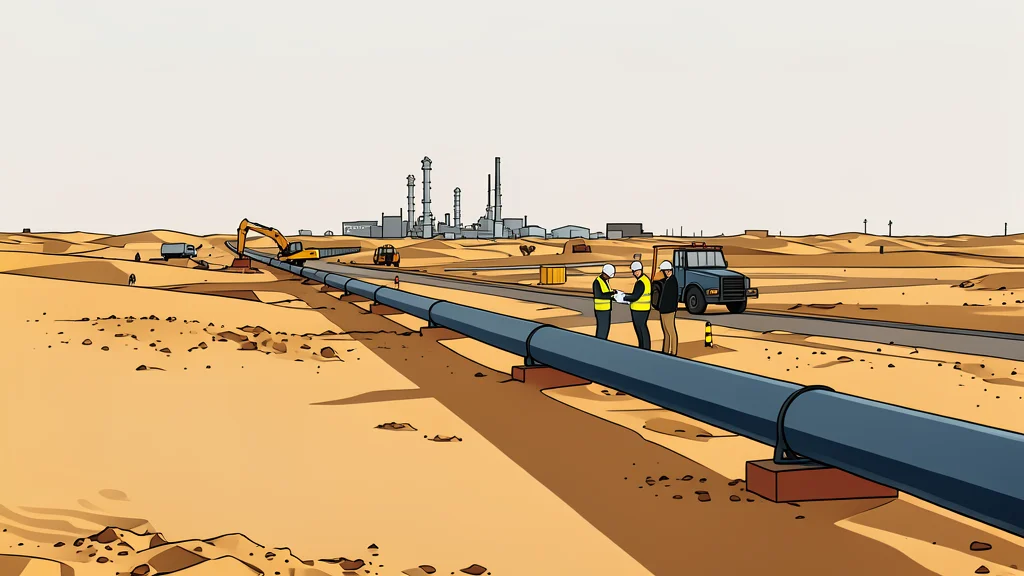
OQ Gas Networks is executing a concurrent build-out of three gas transmission lines to relieve bottlenecks in Oman's north and southeast, adding 217 miles of capacity under a multi-year infrastructure program.
Oman’s state-owned gas transmission operator OQ Gas Networks (OQGN) has committed to completing three distinct pipeline projects by the end of 2027. The infrastructure push is funded within a capital expenditure envelope of OMR 294 million, equivalent to approximately $764 million, allocated for the current Price Control period. The company’s leadership team, including CEO Eng. Mansoor Ali Al Abdali and Acting CFO Sultan Al Balushi, confirmed the timeline during a review of first-half 2026 performance. This simultaneous construction effort represents an aggressive expansion strategy aimed at closing the gap between rising industrial demand and existing network constraints.
Upon completion, the national gas transmission network will extend to 2,931 miles, marking an increase of 217 miles or roughly 8% in total length. The expansion is not merely additive but strategic, targeting specific geographic bottlenecks that currently limit economic output. By spreading new capacity across the north, mid-network, and southeast, OQGN aims to ensure that key economic hubs are no longer constrained by supply logistics. This move signals that industrial activity in Oman is outpacing the current infrastructure’s ability to deliver fuel efficiently.
Three pipelines address regional supply gaps
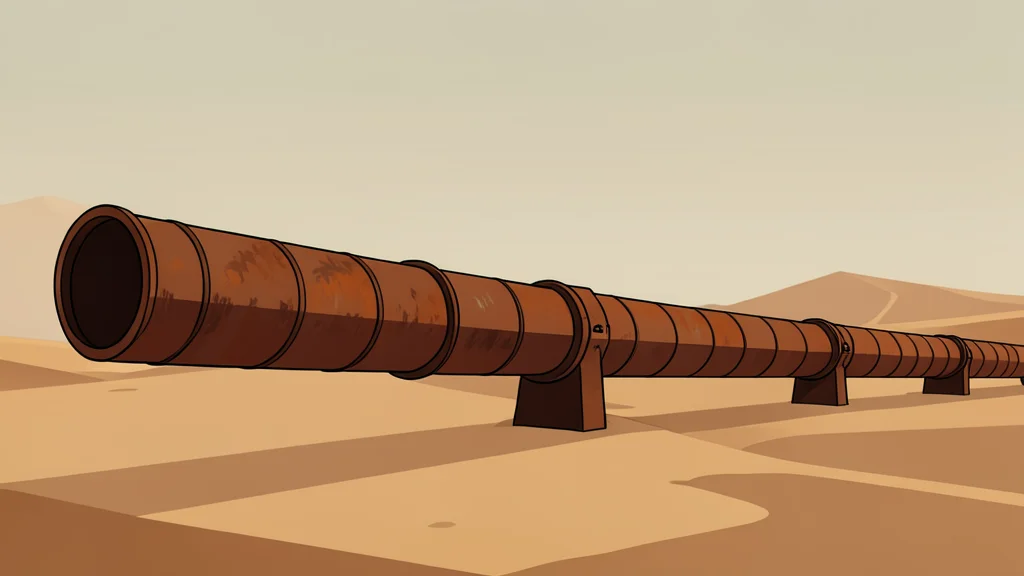
The Fahud–Sohar Loop Line is the largest component of this program, measuring 120 miles in length with a 42-inch diameter. Running parallel to existing infrastructure from the Fahud Compressor Station toward Suhar, this line is designed to add approximately 11 MMSCMD of transmission capacity. This addition is critical for the northern region, where industrial expansion in Suhar and Ibri has created a supply bottleneck. The new loop line directly alleviates the strain on the existing network, providing the necessary throughput for growing industrial clusters in that area.
The second project, the Budoor–Tayseer pipeline, is a 19-mile, 14-inch line intended to integrate the Budoor Tayseer Gas Plant into the national grid. Currently operating outside the main transmission network, this plant will gain approximately 2 MMSCMD of capacity once connected. While smaller in scale, this project enhances system flexibility and supply security for the mid-network region. The third project, the Duqm Growth pipeline, is an 8-mile, 32-inch line serving the Port of Duqm. Its wide bore is optimized for high-volume delivery to the gas-dependent industries clustering in southeast Oman, ensuring that the port’s industrial growth is not capped by fuel availability.
Financial scope and operational rationale
The total investment of OMR 294 million covers the full construction and commissioning of these three assets. OQGN’s executive team outlined the operational rationale during their performance review, emphasizing that running three major infrastructure builds concurrently is a response to acute demand pressures. The decision to proceed with simultaneous construction rather than sequential projects reflects the urgency to meet industrial needs before 2027. The financial commitment is tied directly to the Price Control period, ensuring that the infrastructure growth aligns with the regulatory and economic framework governing the gas sector in Oman.
The expansion targets specific pain points identified in the current network configuration. In the north, the supply constraint relative to industrial demand is the primary driver for the Fahud–Sohar loop. In the southeast, the Duqm Growth pipeline addresses the ceiling on growth imposed by the lack of new pipeline capacity. By connecting isolated assets like the Budoor Tayseer plant and expanding the southern corridor, OQGN is restructuring the network to handle higher volumes and provide greater redundancy. This approach ensures that the gas supply infrastructure supports the broader economic objectives of the Sultanate, particularly in regions designated for industrial development.
Network capacity increases by eight percent
The aggregate effect of these projects is a measurable increase in the physical capacity of the national gas network. The addition of 217 miles of new pipeline translates to a direct uplift in transmission capability, with the northern region seeing the most significant volume increase. The 11 MMSCMD addition from the Fahud–Sohar line is a substantial boost for an area already under strain, while the 2 MMSCMD from Budoor–Tayseer and the high-volume capacity of the Duqm line provide targeted relief. This expansion ensures that the network can support the projected industrial output of Oman’s key economic zones through 2027 and beyond.
OQGN’s execution of this program highlights the critical role of infrastructure in sustaining industrial growth. By proactively addressing bottlenecks before they severely impact production, the company is stabilizing the supply chain for gas-dependent industries. The completion of these projects by the end of 2027 will solidify Oman’s position as a hub for industrial activity, supported by a robust and expanded gas transmission network. The financial and operational details provided by the company’s leadership underscore the strategic importance of these investments in the current economic landscape.