Brazilian Rare Earths Narrows Monte Alto Focus After Drilling

Recent diamond drilling at the Monte Alto deposit in Bahia has extended the high-grade mineralised envelope, prompting Brazilian Rare Earths to refocus its development study on this concentrated hard-rock asset rather than the broader district.
Brazilian Rare Earths (ASX:BRE) has fundamentally altered the geometric and economic profile of its flagship Monte Alto project following a comprehensive diamond drilling campaign. The company shifted its strategic focus from a wide-area district assessment to a concentrated development case centered on the hard-rock deposit, driven by intercepts that significantly expand the known high-grade envelope. This pivot reflects a decision to prioritize grade density over surface area, a move that directly impacts the potential unit economics of the upcoming processing facility.
The revised approach anchors the project’s downstream strategy in a proposed refinery located at a Bahian petrochemical complex. By narrowing the scope of the development study, Brazilian Rare Earths aims to create a more testable and robust investment case. This strategic refinement is based on the premise that a smaller plant treating richer material will yield lower capital and operating costs compared to a larger facility processing dilute feed, a critical consideration for a company approaching a construction decision.
Drilling Extends High-Grade Mineralisation
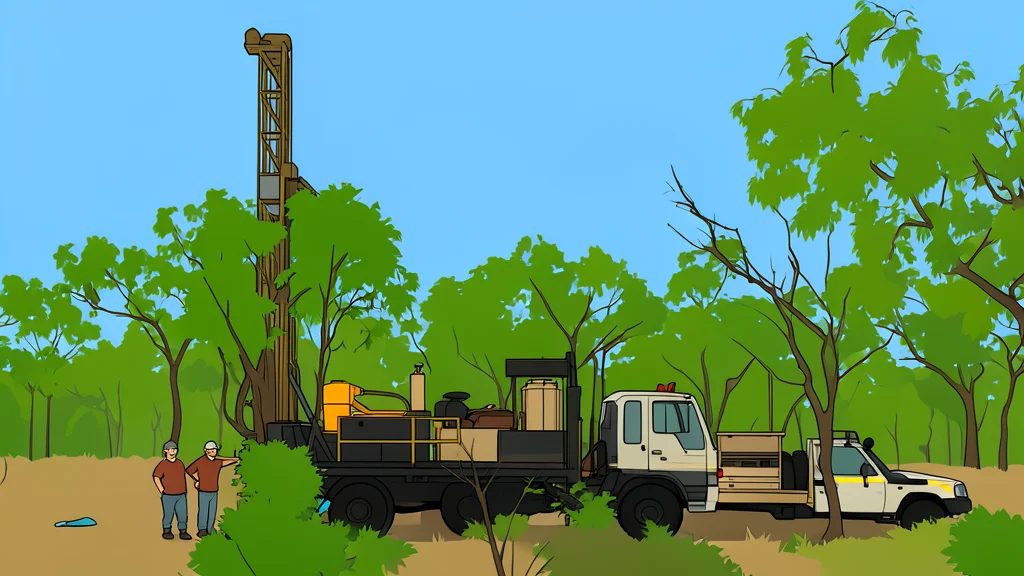
The mid-year drilling programme targeted southern and down-dip extensions of the known mineralisation at Monte Alto. The resulting intercepts reported grades at the upper end of global hard-rock rare earth standards, confirming that the mineralisation extends along strike and at depth rather than appearing as isolated pockets. This continuity is essential for constructing a viable mine plan, as it allows for the integration of high-grade zones into a coherent resource model.
Total metres drilled at the deposit now reach tens of thousands, providing the data density required to support a resource estimate with the confidence level necessary for a development study. According to material from GN auto stocks, this depth of exploration work moves the project beyond conceptual assessment, enabling more precise modelling of the orebody’s geometry and grade distribution. The expanded envelope ensures that the mine design can account for sustained high-grade feed over the deposit’s life.
Grade Leverage Reduces Processing Costs
Rare earth economics are heavily influenced by grade because downstream chemical processing is expensive per tonne. Higher grade feed reduces the total tonnage required to achieve a specific output of finished oxide, directly lowering costs for crushing, grinding, reagent consumption, and tailings management. This efficiency gain flows directly through the flowsheet, as unit costs are tied to tonnes treated rather than contained metal, making grade improvements a primary driver of profitability.
The capital structure also benefits from this concentration. A smaller processing plant designed to handle high-grade material requires less initial investment than a larger facility needed to process dilute ore. For Brazilian Rare Earths, this distinction is vital, as it aligns the project’s capital requirements with a more manageable financial scope. The hard-rock nature of the deposit, involving monazite and bastnsite, demands acid or caustic cracking at temperature, but the grade advantage helps offset the higher processing complexity compared to ionic clay deposits.
Refined Development Study Scope
The updated development study deliberately narrowed its scope to build a standalone case around the Monte Alto deposit and its associated refinery. This approach is designed to sharpen the project’s appeal by presenting a defined processing route and a single high-grade deposit, rather than an aggregate assessment of multiple assets at varying stages of definition. The market views this focused scoping work with appropriate caution, noting that early-stage assessments carry wide accuracy bands and long-horizon price assumptions, but the clarity of the standalone model provides a clearer basis for financial analysis.
By anchoring the downstream concept in a specific petrochemical complex, Brazilian Rare Earths leverages existing infrastructure to reduce logistical risks. The reset study serves to validate whether the grade advantage of the hard-rock deposit outweighs the additional capital and operational complexity its chemistry demands. This focused strategy allows stakeholders to evaluate the project’s viability based on concrete geological and economic data, moving the company closer to a definitive construction decision.