Dalaroo Maps 354 Structures at Greenland Blue Lagoon Project
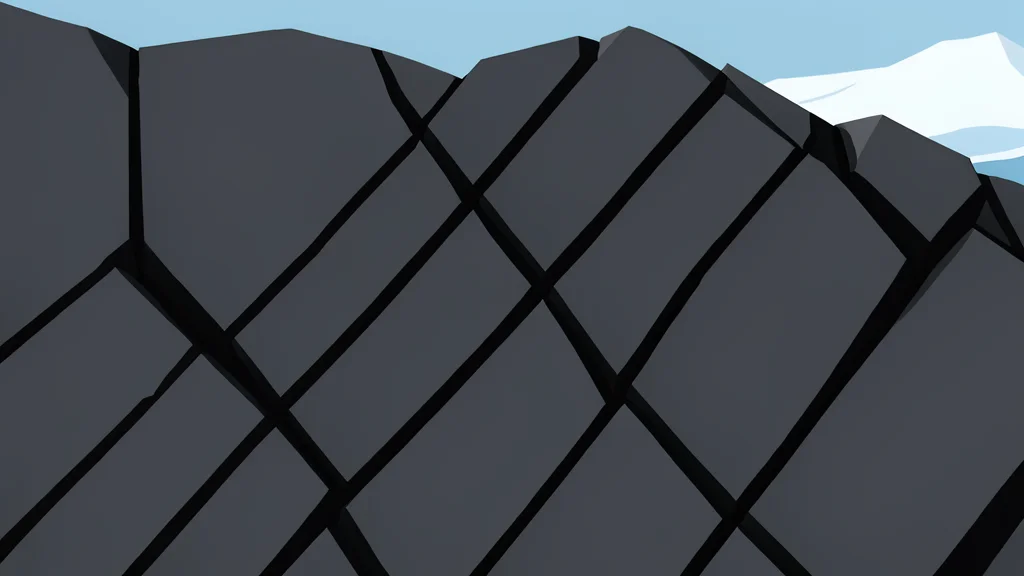
Dalaroo Metals has defined the structural architecture of its Blue Lagoon rare earth project in Greenland, identifying fault sets that control mineralization.
Key points
- Dalaroo Metals collected 354 structural measurements to map fault sets controlling rare earth mineralization at Blue Lagoon.
- The company identified weathered Larvikite as the primary mineral source, with sediments concentrating in surrounding basins.
- Over 200 samples were sent for assay analysis to define source-to-sink pathways in the Greenland project.
Dalaroo Metals has completed a detailed geological mapping program at its 100% owned Blue Lagoon rare earth elements project in southern Greenland. The company collected 354 structural measurements to define the principal architectural features that appear to control mineralization within the area. This work establishes a clear geological framework for the project's intrusive complex and associated alteration zones.
The mapping identified a dominant fault set aligned with the elliptical shape of the Blue Lagoon intrusive complex, alongside a second widespread structural network. Management asserts that this network created the necessary pathways for mineral-rich fluids to flow into the basin. The structural orientations of quartz veins and pegmatites show strong similarities to the adjacent Ilua rare earth pegmatite discovery held by Amaroq Minerals, which features a five-kilometer strike length.
Structural Controls Define Mineral Pathways
The company’s source-to-sink exploration model has been strengthened by the identification of far-reaching alkaline intrusive and altered rocks. These formations, including granites, syenites, aplites, and pegmatites, are significant for their capacity to concentrate rare earth elements. Extensive fenitisation, a hydrothermal alteration process, was also mapped, indicating the presence of a large, chemically evolved intrusive system that likely facilitated mineral transport.
Dalaroo believes the heavily weathered Larvikite at the center of the complex is the primary source of rare earth mineralization. This coarse-grained igneous rock is enclosed by a ring of harder Nunarssuit Syenite, which forms the high ridges surrounding the lower-lying Blue Lagoon. The weathering of these elevated rocks is believed to have transported material into basins where natural traps allowed sediments to accumulate and concentrate.
Sample Assays Support Geological Model
In parallel with structural mapping, Dalaroo collected over 200 rock-chip, stream-sediment, and surface-sediment samples. These samples have been dispatched for multi-element assay analysis to identify principal source-to-sink pathways into the Blue Lagoon basin. The company plans to integrate this new structural data with existing geochemical, geophysical, and bathymetric datasets to refine priority exploration targets.
The geological findings place the Blue Lagoon project within a region of increasing strategic importance for critical minerals. Southern Greenland now hosts several significant operations, including Critical Metals Corp’s 4.7 billion metric tonne Tanbreez rare earths facility, which holds an exploitation licence. As Western nations seek to secure supply chains outside traditional producing countries, detailed geological understanding of the region's resources becomes a key factor for investors and policymakers, as noted in reporting by The West Australian.
Regional Context Enhances Project Value
The Blue Lagoon project benefits from its proximity to established infrastructure and other major rare earth developments in southern Greenland. The identification of multiple generations of intrusive rocks, including dolerite dykes and shallow-dipping aplite sills, adds further prospective corridors for mineral exploration. Two sets of amazonite-bearing pegmatites were also identified, providing additional targets for the company’s ongoing exploration efforts.