Donlin Gold Expansion Raises Tailings Capacity Concerns
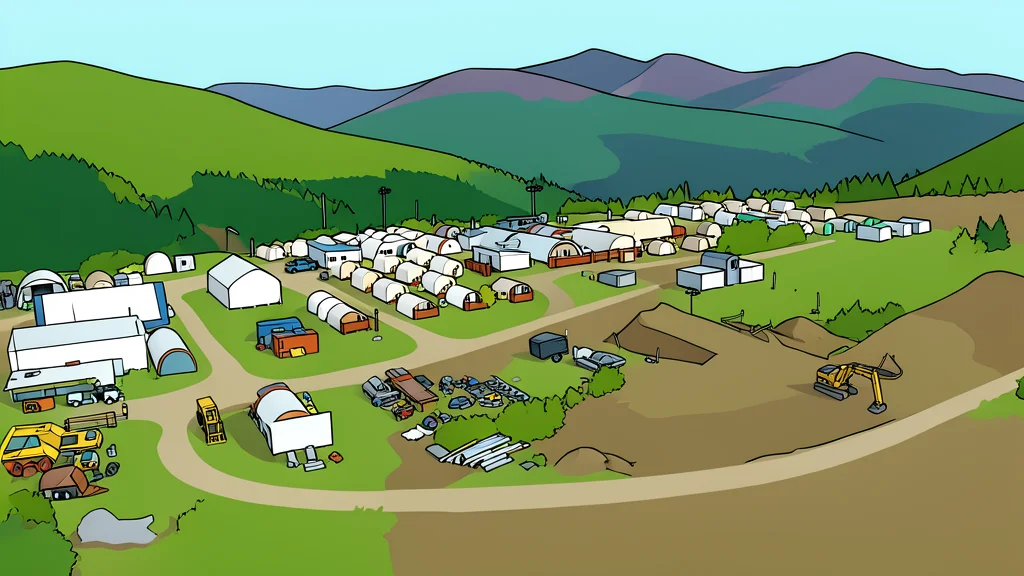
NovaGold’s plan to expand the Donlin Gold mine exceeds current tailings facility capacity, prompting tribal opposition and legal scrutiny of environmental risks in the Yukon-Kuskokwim Delta.
NovaGold Corporation, formed by the merger of Novagold and Paulson Advisers, has outlined ambitions to expand the Donlin Gold mine into one of the largest operations globally. The company’s recent technical reports indicate that the proposed tailings storage facility is currently underbuilt for the intended throughput. This discrepancy has intensified opposition from six Alaska Native tribes who argue that the project’s scale poses unacceptable risks to downstream waterways and subsistence livelihoods.
The core conflict centers on the mine’s waste management capabilities. NovaGold’s documents reveal that the facility lacks the capacity to hold all the waste generated by the planned excavation. Consequently, the company intends to leave 897 kilotons of gold-containing ore unprocessed. This decision highlights a fundamental mismatch between the mine’s production ambitions and its infrastructure, a gap that tribal leaders and environmental advocates say could lead to catastrophic environmental failures if not addressed.
Tailings Facility Lacks Capacity
Technical data released by Donlin last year shows that the mine will generate at least 155 million tons more waste rock than previously estimated. The underbuilt tailings facility cannot accommodate this volume, forcing the company to alter its processing plans. This capacity shortfall is not merely an operational detail but a central safety issue, as it limits the mine’s ability to manage byproducts safely. The company’s strategy now relies on leaving significant ore deposits in the ground, a move that underscores the physical constraints of the current site design.
Tribal Opposition and Legal Challenges
More than a dozen tribes, including the six Kuskokwim River communities, have formally opposed the project through official resolutions. These groups argue that the mine’s expansion threatens the recovery of salmon populations and the stability of communities already devastated by storms. In 2024, a federal court ruled that permitting agencies failed to adequately assess the risks of a tailings dam failure. The court barred construction under the current permits, ordering a new environmental impact statement to evaluate the potential for large-scale spills affecting downstream villages.
John Paulson, through Paulson Advisers, has claimed the mine enjoys strong social license, a position contradicted by the formal resolutions passed by tribal councils and regional health corporations. The tribes maintain that their responsibility to protect future generations supersedes investor profits. They are demanding that federal agencies pause their environmental review until NovaGold completes a new feasibility study in 2027. This study is expected to provide a more detailed scope of the project’s full risks, including those related to seismic activity and extreme precipitation events that the current plans have not fully accounted for.
Regulatory Review Pending Expansion
Federal agencies are preparing to release a draft supplemental environmental impact statement soon. The tribes urge regulators to incorporate the latest technical findings regarding the underbuilt tailings facility and the increased waste rock estimates into this review. The pending analysis must address the specific hazards of a dam failure, a concern highlighted by the court’s 2024 ruling. NovaGold’s stated goal of creating a second, similarly large mine at the same site would further strain the region’s ecological and infrastructural limits, making the accuracy of this environmental assessment critical for determining the project’s viability.