Greenland Mines Seeks License to Double Rare Earth Footprint
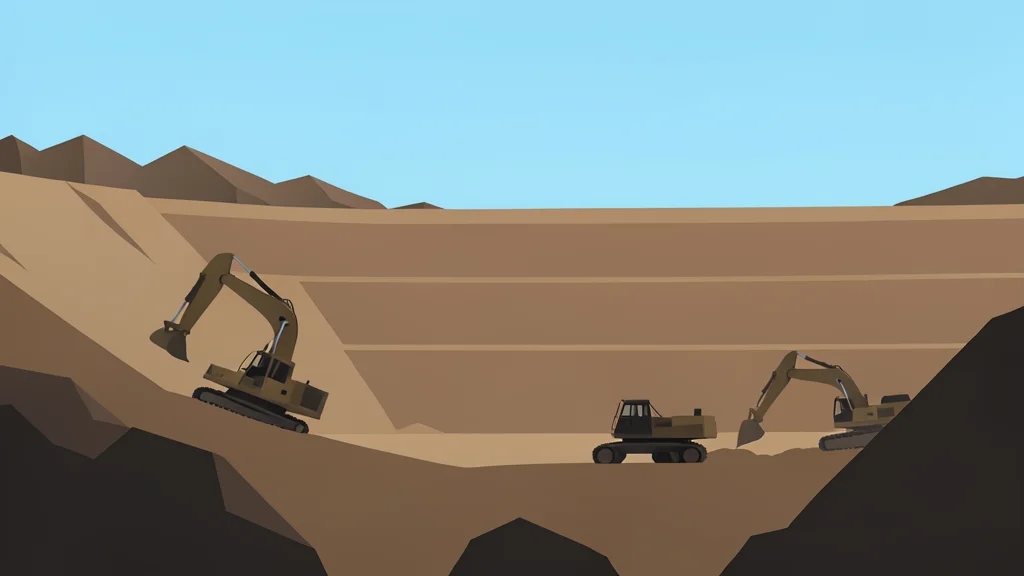
Greenland Mines filed to expand its West Greenland operations, targeting neodymium and praseodymium deposits to reduce Western reliance on Chinese supply.
Key points
- Greenland Mines filed to double its West Greenland footprint, targeting neodymium and praseodymium deposits.
- China controlled 94% of sintered magnet production in 2024, with 60% of global mined rare earths.
- The IEA projects magnet rare earth demand will rise 50% outside China by 2035, requiring $60 billion in investment.
Greenland Mines Ltd. (NASDAQ: GRML) has submitted a license application to the government of Greenland that would more than double its operational footprint in West Greenland. The move targets the Sarfartoq carbonatite-hosted rare earth project, which is enriched in neodymium and praseodymium, two elements critical for high-performance magnets used in electric vehicles and wind turbines.
According to Investing News Network, the filing positions Greenland Mines alongside other Western-aligned producers such as MP Materials Corp. and Critical Metals Corp. in a race to secure supply chains. The company aims to transform a single promising deposit into a full rare earth district, directly addressing the gap between rising demand and concentrated global supply.
China Dominates Global Magnet Supply
Supply concentration remains the primary driver for this expansion. In 2024, China accounted for 60% of mined magnet rare earths, 91% of refined output, and 94% of sintered magnet production. U.S. Geological Survey data indicate that China’s 2025 output is projected to reach 270,000 tons out of 390,000 tons mined globally, representing roughly 69% of the total.
This dominance became a tangible economic risk in April 2025 when China imposed export controls on seven heavy rare earth elements. The International Energy Agency reported that some automakers in the United States and Europe subsequently cut utilization rates or temporarily halted production. Although China suspended a planned expansion of these controls in November 2025, the initial restrictions remain in place.
Demand for Rare Earths Is Doubling
The International Energy Agency states that demand for the four magnet rare earths has doubled since 2015 and is projected to grow by another third by 2030. Permanent magnets account for approximately 95% of rare earth consumption by value, underpinning technologies from AI data centers to aerospace and defense systems.
Outside of China, the agency projects that demand for magnet rare earths will rise by 50% by 2035, with electric vehicles contributing the largest share. Robotics, automation, and digital technologies are expected to add further momentum to this growth trajectory in the coming decade.
Western Supply Gaps Require Investment
The financial implications of supply gaps are significant. The IEA estimates that if full export controls were implemented, $6.5 trillion of annual downstream production outside China would be at risk. Current and planned projects outside China would cover only about 50% of 2035 mining demand and 25% of refining demand.
Closing these deficits requires substantial capital deployment. The IEA calculates that approximately $60 billion in investment is needed to address the shortfall in magnet demand. Greenland Mines’ expansion strategy focuses on advancing high-quality assets capable of supporting these diversified and secure Western critical-minerals supply chains.