USA Rare Earth Outpaces TMC on Near-Term Earnings Potential
USA Rare Earth secures a $2.8B acquisition and government backing, positioning it ahead of The Metals Company in the race for U.S. critical mineral independence.
USA Rare Earth has established a distinct advantage over The Metals Company in the competitive landscape of critical minerals. By completing a $2.8 billion acquisition of Serra Verde, the company has secured the only scaled producer of core rare-earth elements in the Western Hemisphere. This move directly addresses the United States' strategic need to reduce reliance on Chinese supply chains for materials essential to defense and technology sectors.
While both firms benefit from geopolitical shifts, USA Rare Earth's path to commercial profitability is significantly shorter. The company projects that the integrated Serra Verde business will generate an annualized EBITDA of $550 million to $650 million by the end of next year. In contrast, The Metals Company faces more complex challenges in scaling its deep-sea nodule extraction operations, making USA Rare Earth the more immediate candidate for generating substantial returns.
Acquisition Drives Significant Revenue Growth
The financial trajectory for USA Rare Earth has shifted dramatically following the Serra Verde deal. Previously, the company reported only $5.8 million in revenue for the second quarter alongside a $46.3 million operating loss. However, the acquisition introduces a high-volume production capability that fundamentally alters the earnings outlook. The company now anticipates that the combined operations, including its Round Hill project in Texas, will reach approximately $1.8 billion in adjusted EBITDA by 2030.
This projection represents a transition from a pre-revenue speculative entity to a major industrial producer. The integration of Serra Verde’s mining assets provides USA Rare Earth with immediate access to neodymium, praseodymium, dysprosium, and terbium. This diversification allows the company to offer a comprehensive portfolio of critical minerals, strengthening its position against competitors who lack such scaled, Western Hemisphere production capacity.
Government Support Secures Financial Stability
Direct federal backing provides a structural safety net for USA Rare Earth’s operations. The U.S. government holds a roughly 10% equity position, with the option to increase this stake to 16% through warrant exercises. Furthermore, the Department of Defense has injected $750 million into a special-purpose vehicle, supported by a $500 million credit facility from a Tier-1 bank. This financial architecture reduces the capital risk associated with expanding rare-earth processing capabilities.
TMC Faces Scaling Challenges
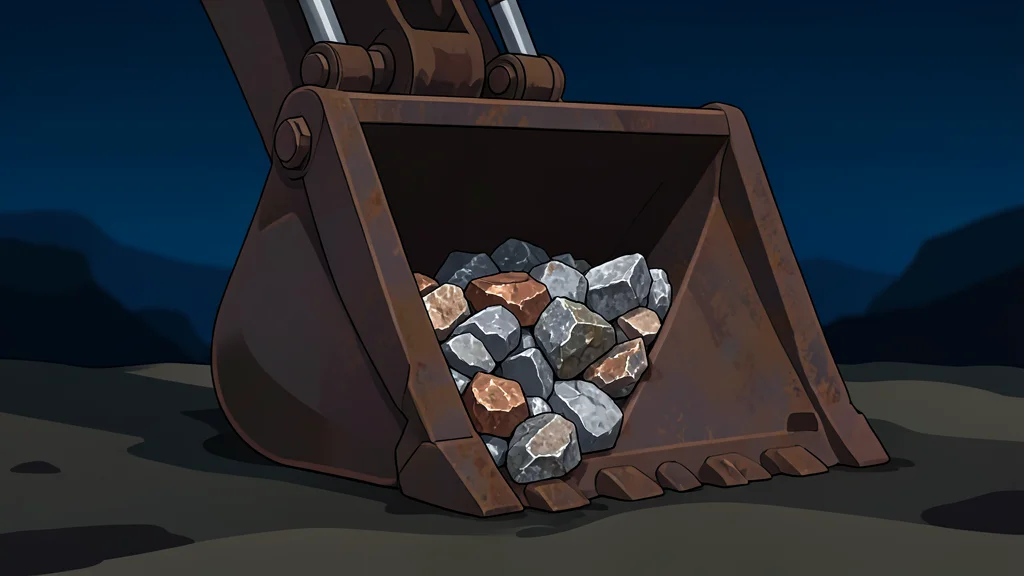
The Metals Company, while also supported by the administration, operates a more complex business model centered on polymetallic nodules from the seabed. Its inventory includes cobalt, copper, manganese, and nickel, which are vital for alternative energy and aerospace. However, the technical and logistical hurdles of deep-sea mining present a longer timeline to commercial viability compared to terrestrial mining. As noted in materials from GN auto stocks, the company’s path to scaling remains more challenging than that of its terrestrial counterparts.