Victoria's Critical Minerals Could Add $7.4B with Minimal Farm Loss

Experts at a Victorian Parliament seminar argue that expanding mining yields high economic returns while occupying negligible agricultural land.
Key points
- Tripling Victoria's mining industry could add $7.4 billion to income with a $0.1 billion loss in agriculture.
- Fosterville Gold Mine output equals 200 years of farming value on the same land area.
- Local processing of antimony and rare earths would retain economic value currently lost to overseas refining.
A seminar hosted at the Victorian Parliament argued that expanding the state's critical minerals sector would generate substantial economic returns with a negligible footprint on agriculture. Dr. David Whittle of the Critical Minerals Consortium and Sandy Gray of Gekko Systems presented data suggesting that mining and farming are not inherently competing land uses, despite public perception.
The discussion centered on the economic trade-offs of developing Victoria’s mineral wealth, including gold, antimony, and rare earths. While the state’s mining sector contributed $3.7 billion to the Gross State Product last year, experts proposed that tripling the industry size could add $7.4 billion to total factor income, with a projected loss of only $0.1 billion in agricultural output.
Economic Value Comparison With Agriculture
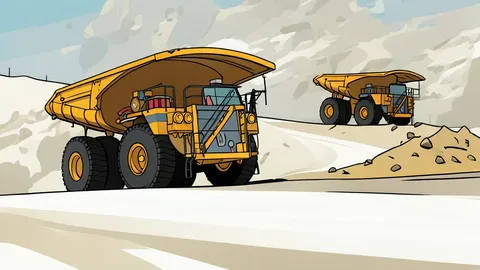
Dr. Whittle emphasized that mining occupies a small land area relative to its economic contribution. Using the Fosterville Gold Mine as a case study, Sandy Gray noted that the value generated from mining for one year equates to 200 years of farming output on the same land. This disparity highlights the high-grade nature of the deposits and the intensive economic efficiency of extraction compared to crop production.
Despite the favorable ratio, Dr. Whittle acknowledged the inherent tension over land use in a state where agricultural productivity is high. He stated that even if the mining industry tripled in size, the impact on overall agricultural production would remain minimal. The argument rests on the premise that the spatial footprint of mining operations is too small to significantly displace existing farming activities.
Downstream Processing Captures Local Value
Sandy Gray identified a significant economic leakage in the current model, where mineral concentrates are shipped overseas for refining. He argued that Victoria could capture more value by developing local processing capabilities for antimony and rare earths. This shift would retain economic value within the state, creating jobs and strengthening the manufacturing base.
Developing downstream supply chains also aligns with strategic national interests in defence and aerospace. By processing minerals locally, the state can support advanced technology sectors while reducing reliance on concentrated international supply chains. Gray described mining as a collaborative project requiring cooperation between companies, government, and communities to ensure economic sense and social acceptance.
Strategic Importance of Mineral Deposits
Global demand for critical minerals is rising as governments seek alternatives to existing supply routes. Victoria’s deposits of antimony and rare earth elements are attracting renewed attention due to their strategic importance. The seminar concluded that balancing economic development, environmental management, and food production requires recognizing the distinct and complementary roles of the mining and agricultural sectors.