Sungrow Stabilizes 500 MW Solar Plant in 40 Milliseconds
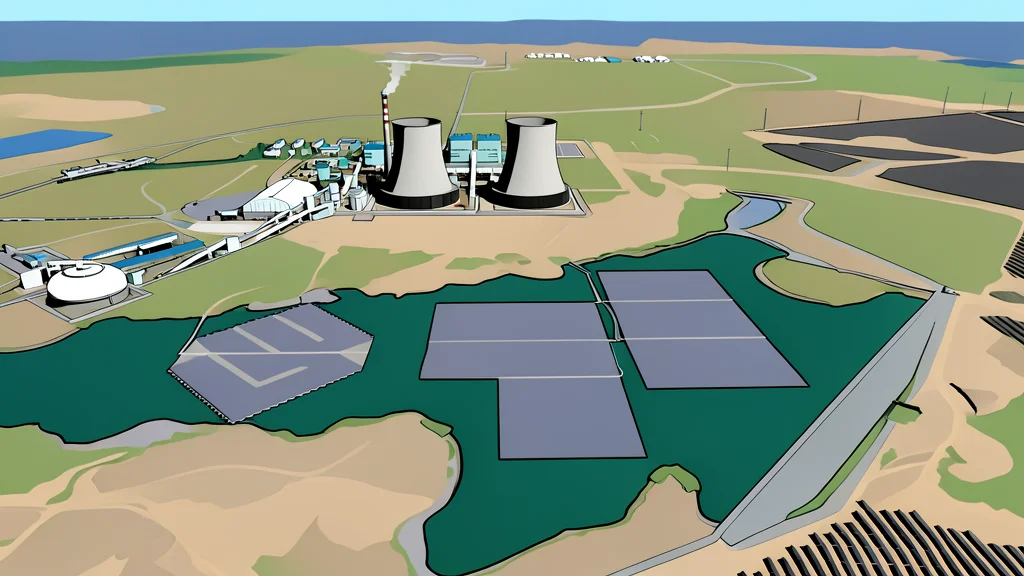
Sungrow demonstrated autonomous oscillation suppression at a Qinghai facility, maintaining grid stability during induced wideband disturbances.
Sungrow, a Hefei-based renewable energy specialist, has completed the world’s first field test of wideband oscillation suppression at a 500-megawatt solar-plus-storage plant. Conducted in Qinghai province in September 2026, the trial successfully reproduced and stabilized rapid electrical fluctuations that typically destabilize renewable power grids. The company’s patented grid-strength adaptation technology identified local grid conditions within 40 milliseconds, allowing the inverters to adjust their control strategy to maintain voltage and frequency stability.
The test addressed a critical reliability gap where unpredictable oscillations often force generating equipment to disconnect or shut down. By deliberately triggering these disturbances under weak-grid conditions, Sungrow engineers validated their ability to keep renewable assets online. This capability is essential for reducing lost generation and ensuring that solar facilities can export electricity even under adverse grid scenarios, moving oscillation control beyond laboratory simulations.
Technical Validation of Grid Support
Sungrow’s grid-forming control strategy demonstrated stable operation across a system short-circuit ratio (SCR) range of 1 to 40. This wide operational envelope allows the plant to mitigate transient overvoltage and actively support grid stability rather than passively following existing conditions. The system’s rapid response time of 40 milliseconds enables it to counteract subsynchronous oscillations before they propagate, protecting filter capacitors and other sensitive components from damage.
Historical Grid Disruption Context
Wideband oscillations have previously caused significant operational failures in large-scale renewable projects. In 2014, Germany’s BorWin1 offshore HVDC project experienced oscillations between 250 and 350 hertz, resulting in damaged filter capacitors and a six-month shutdown. Similarly, a 2019 incident at the UK’s Hornsea offshore wind farm led to widespread disconnections, causing approximately 3.2 percent of system load to be lost and affecting roughly one million users. Sungrow’s recent field test provides a direct technical countermeasure to these historical failure modes.
Future Deployment and Integration
Sungrow plans to continue developing wideband oscillation suppression and grid-forming controls to support stable grid integration of renewable energy. The company aims to strengthen the technical foundation for next-generation power systems by coordinating multiple energy sources. This advancement allows renewable plants to remain connected under extremely weak-grid conditions, thereby increasing the overall amount of electricity that facilities can export to the grid.