Nvidia's 2027 Chip Outlook Lifts Semiconductor Sector
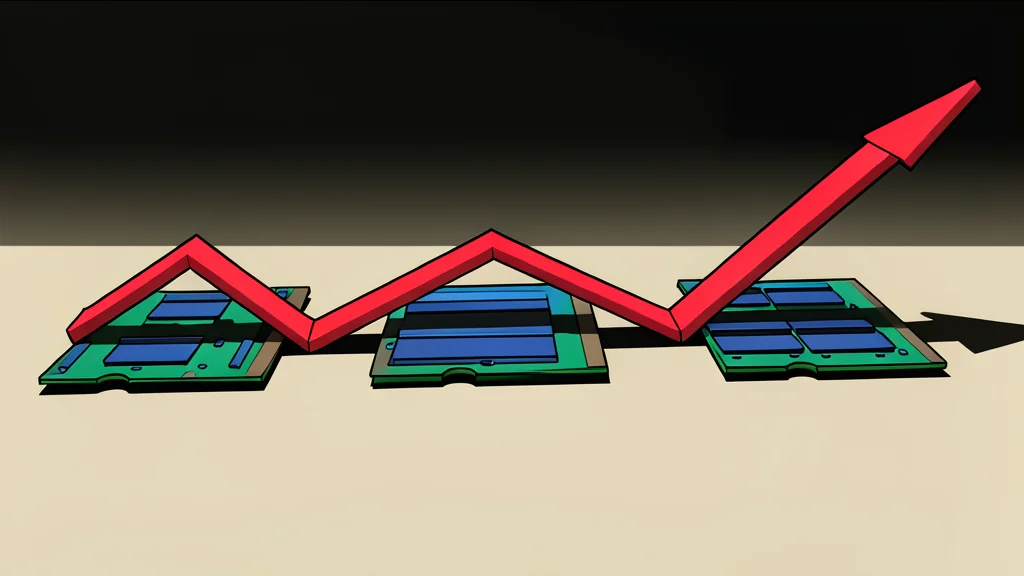
Jensen Huang's projection of doubled chip sales by 2027 drives pre-market gains for Nvidia, Intel, and peers, supported by tight supply constraints and rising memory prices.
Semiconductor equities advanced in Friday's pre-market session following remarks by Nvidia CEO Jensen Huang, who projected the company will sell twice as many chips in 2027 as it does in the current year. This forward-looking statement reinforced investor confidence in sustained artificial intelligence infrastructure spending. The broader tech sector also benefited from a decline in Brent crude prices near $102 per barrel and softening Treasury yields, which reduced discount rates for long-duration growth assets.
Nvidia (NVDA) led the group with a 0.92% gain, followed by AMD (AMD) at +1.30%, Broadcom (AVGO) at +1.17%, and Intel (INTC) at +2.90%. Huang noted that enterprises and governments in nearly every country where Nvidia operates are actively investing in AI capabilities. This demand signal addresses recent market concerns regarding the pace of AI capital expenditure, providing a concrete basis for continued revenue growth rather than speculative optimism.
Nvidia Forecasts Doubled Chip Sales by 2027
Nvidia’s recent financial results show quarterly revenue of $96.2 billion, an 18% increase from the prior quarter. The company has also projected strong growth for its fiscal year ending in January 2028. Huang’s comments on global demand serve as a direct indicator of the backlog for its data center GPUs. By stating that demand exists in almost every operating jurisdiction, the CEO provides a multi-year visibility into the company's order book, which is critical for a business model reliant on high-volume hardware sales.
Supply Constraints Boost Intel And AMD Margins
Intel and AMD are experiencing pricing power due to tight CPU supply across the market. Intel CEO Lip-Bu Tan disclosed that the company can currently meet only about half of customer demand for its processors. Tan warned that memory prices have risen five to seven times and that the supply shortage could worsen. These conditions allow Intel to signal higher prices for certain processor lines, directly supporting gross margin expansion. Intel shares jumped 7.7% on Thursday, partly driven by reports that SK Hynix is exploring a U.S. memory production deal using Intel’s Ohio facility.
AMD benefits from the same supply-side tightness, with demand for its CPU and GPU products remaining ahead of available supply. This dynamic reduces the risk of inventory write-downs and supports stable pricing. The competitive landscape remains favorable as both companies leverage scarcity to maintain revenue per unit. For AMD, this environment validates its positioning in the data center market, where performance and availability are key procurement drivers for large-scale AI deployments.
Broadcom Cites Durable AI Infrastructure Demand
Broadcom is riding the same wave of strong AI infrastructure demand. CEO Hock Tan recently stated that AI demand remains very strong and very durable, explicitly pushing back against concerns over a slowdown in AI development. This consistency in demand supports Broadcom’s custom silicon business, which is tightly coupled with the hyperscaler capex cycles. The company’s ability to secure long-term commitments from major cloud providers insulates its revenue stream from short-term market volatility, distinguishing its earnings trajectory from peers more exposed to consumer hardware cycles.
Market sentiment reflects this structural shift. According to data from GN stocks/chips, Nvidia holds a Strong Buy consensus with an average price target implying 47.85% upside. Broadcom also carries a Strong Buy rating with 49.50% upside potential. Intel, however, maintains a Hold rating with 8.05% upside, reflecting the market’s cautious view on its execution challenges despite the favorable supply environment. These valuations underscore the divergence in investor confidence between pure-play AI leaders and diversified semiconductor manufacturers.