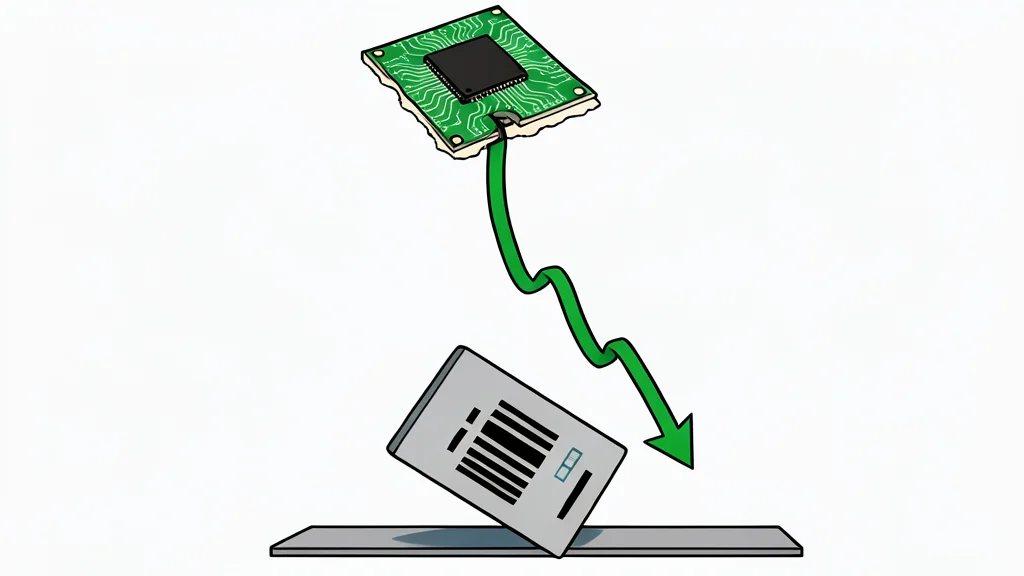
Samsung Electronics Trades Below Peer Average Multiple

Samsung Electronics' stock price reflects a valuation discount relative to its growth profile, despite significant recent returns.
Samsung Electronics (KOSE:A005930) is trading at a price-to-earnings ratio of 12.3x, a level significantly below the broader technology sector average of 19.3x and far beneath the peer group median of 56.7x. According to GN markets/earnings (en-US), this valuation gap suggests the market is pricing the company's earnings power conservatively. Despite a cumulative return of approximately 287.5% over the past three years, the current multiple implies that investors are demanding a substantial risk premium for the company's exposure to cyclical memory markets and heavy capital expenditure.
The company's performance across memory, foundry, and consumer hardware segments relies on efficiently converting large-scale capital spending into durable profit margins. The current discount in the share price may reflect skepticism regarding the sustainability of these margins, particularly given the historical volatility of the semiconductor cycle. While the stock's recent run has lifted its valuation, the low P/E multiple indicates that the market has not yet fully priced in the long-term earnings potential supported by the company's technological scale.
Valuation Metrics Indicate Discount
Comparative analysis places Samsung Electronics in a low-valuation bracket relative to its industry peers. The 12.3x earnings multiple is less than two-thirds of the average technology sector multiple. This disparity highlights a specific divergence between Samsung's current market price and the valuation models that factor in its growth profile, size, and sector risk. The data suggests that the current share price does not fully capture the earnings power implied by its market position, creating a potential undervaluation scenario if the company maintains its operational efficiency.
Investors must weigh this discount against the company's capital intensity. The low multiple may serve as a buffer against the risks associated with the memory cycle, which has historically experienced sharp booms and busts. The valuation framework implies that the current price is on the undervalued side of the yardstick, but only if the market's discount for cycle exposure is justified by the company's ability to generate consistent returns on invested capital.
Market Sentiment Remains Divided
Community narratives regarding Samsung Electronics are split between bullish and bearish perspectives. One view argues that the stock is 50% undervalued, citing the company's superior capabilities compared to competitors like TSMC, SK Hynix, Micron, and Intel. This bullish case posits that Samsung's broad portfolio and technological depth provide a moat that supports higher earnings multiples over time.
Conversely, a bearish perspective suggests the stock is roughly fairly valued, pointing to the historical pattern of memory booms ending within approximately two years. This viewpoint argues that the current price already reflects the peak of the cycle, and that any further upside is limited by the inherent cyclicality of the business. The debate centers on whether Samsung's diversification into foundry and consumer hardware sufficiently mitigates the memory cycle risk to justify a premium valuation.
Operational Efficiency Drives Value
The core driver of Samsung Electronics' long-term value creation is its ability to manage capital intensity. The company's role in memory and foundry segments requires continuous investment in advanced fabrication facilities. The success of this strategy depends on converting these large expenditures into durable profit margins that can support a higher earnings multiple. If the company can demonstrate sustained operational efficiency, the current low P/E ratio may prove to be a temporary discount rather than a reflection of structural weakness.
The separation of the current quarter's results from forward guidance is critical for assessing this potential. The market's current pricing suggests a cautious stance on future earnings growth. However, the gap between the current multiple and the industry average leaves room for re-rating if the company delivers consistent performance. The key factor will be the degree to which Samsung can decouple its earnings from the volatile memory cycle through its foundry and consumer business lines.