US Rejects Rare Earth Swap Amid Trump-Xi Summit
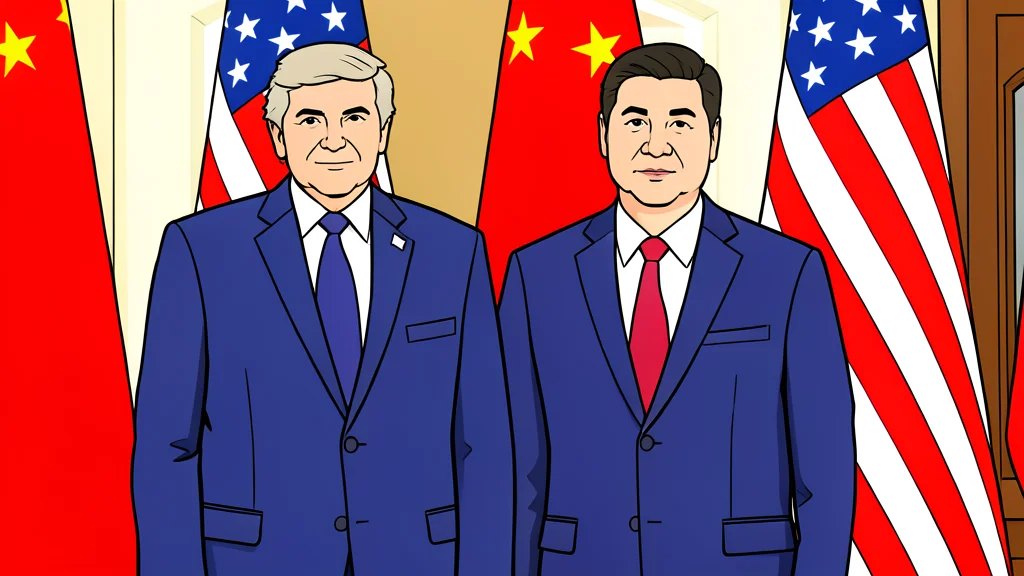
The US administration has explicitly ruled out trading export controls for rare earth supplies ahead of President Xi Jinping's state visit, maintaining strict standards despite diplomatic overtures.
The United States has drawn a firm line around critical mineral negotiations ahead of President Donald Trump’s upcoming state visit by Chinese President Xi Jinping. While artificial intelligence and tariff structures remain central to the bilateral agenda, Washington has explicitly rejected the prospect of exchanging American export controls for rare earth flows. US officials assert that Beijing has not yet met established supply expectations, rejecting any deal that would compromise national security in exchange for mineral access.
This stance contrasts with earlier diplomatic signals suggesting a broader commercial reset. The administration emphasizes that existing commitments from China to supply rare earth minerals to the US and other economies must be honored independently of any new trade agreements. By decoupling mineral access from export control relief, the US aims to maintain leverage in a sector where supply chain resilience is viewed as a strategic imperative rather than a negotiable commodity.
Mineral Supply Expectations Remain Unmet
A senior US official stated that China’s performance regarding rare earth deliveries has not met American benchmarks. The administration expects Beijing to honor prior commitments to supply these critical minerals, which are essential for advanced electronics and defense systems. Rather than offering concessions on export controls for semiconductors or other technologies, the US is pressing for tangible improvements in mineral flow consistency and volume.
This approach reflects a broader strategy to reduce dependency on single-source suppliers for strategic materials. The US views rare earth processing as a critical vulnerability in its industrial base. By refusing to link mineral imports to export control relaxations, Washington seeks to ensure that supply chain diversification is driven by market reliability and geopolitical alignment, rather than reciprocal trade-offs that could weaken technological sovereignty.
Tariff Structures And Trade Truce
Discussions on tariffs are expected to focus on a limited range of non-strategic goods. President Trump referenced the steep tariffs previously imposed on Chinese products, noting that rates had reached 145 percent before being reduced. The administration is considering potential reductions for sectors deemed non-sensitive, although no specific products or percentage cuts have been identified.
The existing trade arrangement, referred to as the Busan truce, will also be reviewed. US officials have not indicated that a long-term agreement on its future has been reached. The focus remains on maintaining pressure on sensitive sectors while potentially easing friction in areas that do not impact national security, aiming to stabilize trade volumes without compromising technological leadership.
AI Competition And Security Priorities
Artificial intelligence is a major strand of the upcoming talks, with senior-level discussions expected in New York prior to the summit. The US has declined to detail its negotiating position, citing the intense competition over advanced chip access and AI technology. Any potential agreements will be subject to strict national security rules, particularly regarding possible Chinese access to the US automobile market.
Additional agenda items include fentanyl precursor chemicals and sanctions on entities supporting Iran. The US expects systemic changes from China in curbing the supply of fentanyl precursors to Mexican cartels. Sanctions against Chinese and Hong Kong entities remain in place, and the administration will not compromise on these measures. This multi-faceted approach ensures that economic discussions are tightly coupled with broader geopolitical and security objectives, as reported by GN auto stocks materials.