D.C. Circuit Rejects Emergency Justification for Michigan Coal Plant
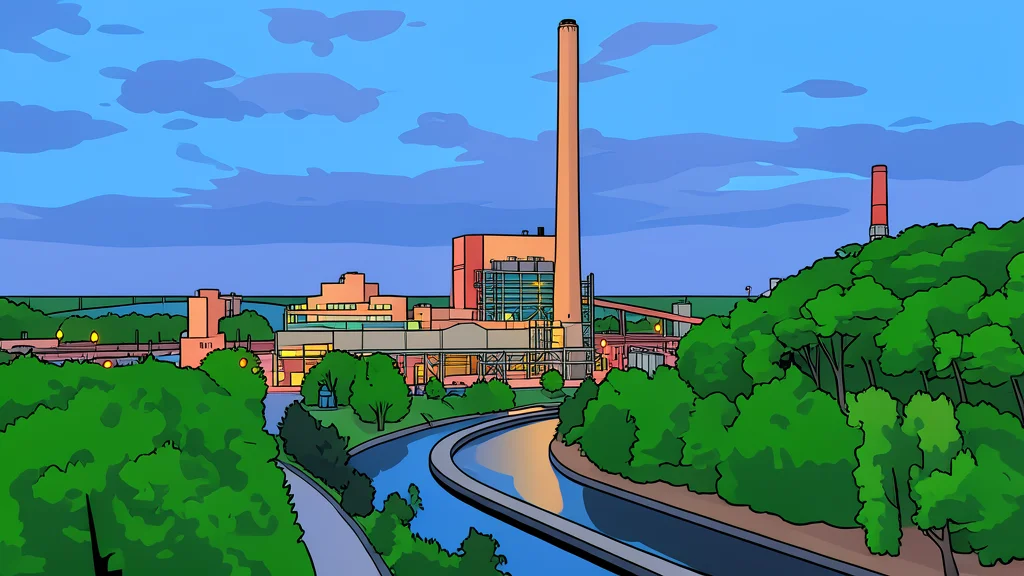
The J.H. Campbell plant in Michigan must close, ruling that the Department of Energy's emergency powers were misapplied to keep the facility operational past its scheduled retirement.
A federal court has ruled that the Department of Energy exceeded its statutory authority when it ordered the J.H. Campbell coal-fired power plant in Michigan to remain operational. The D.C. Circuit Court of Appeals determined that the government failed to demonstrate a genuine emergency justifying the extension of the 64-year-old facility's life. This decision marks a significant legal setback for the current administration's strategy of using short-term emergency powers under the Federal Power Act to sustain fossil fuel generation.
The ruling specifically rejects the argument that data center energy demands and potential grid outages constitute an emergency warranting the override of planned retirements. Judge Cornelia Pillard wrote that such statutes serve as a narrow, last-resort backstop, not a tool for general industrial policy. Consequently, the legal basis for keeping the plant online is invalidated, forcing a re-evaluation of the administration's broader energy emergency declarations.
Pollution and Cost Burden on Consumers
The continued operation of the J.H. Campbell plant has generated substantial environmental and financial liabilities. According to the Environmental Defense Fund, the facility emitted 1,000 tons of nitrogen oxides, 2,000 tons of sulfur dioxide, and 140 tons of particulate matter between May of last year and the end of June. These emissions are estimated to contribute to approximately 100 new asthma cases among the 3,000 residents living in West Olive, Michigan.
Financially, the forced extension of the plant's lifespan has cost $259 million. Consumers Energy Company, the utility operator, is seeking to recover these expenditures from customers across Michigan and ten other states. This transfer of costs from the federal government to private ratepayers highlights the economic inefficiency of maintaining aging infrastructure beyond its planned retirement date.
Legal Precedent for Other Fossil Fuel Sites
The J.H. Campbell case is one of seven similar actions taken by the administration to keep coal plants open. The D.C. Circuit's decision establishes a precedent that a true emergency must exist to justify overriding scheduled retirements. Several other lawsuits concerning similar facilities were on hold pending this ruling, meaning the legal arguments in those cases are likely to face the same scrutiny. The court's finding that the emergency statute is a narrow backstop limits the practical implications of broad national energy emergency declarations.
Legal experts note that the ruling does not overturn the concept of an energy emergency itself but restricts how it can be applied. Ted Kelly of the Environmental Defense Fund stated that while the president can declare an emergency, the actual actions permitted depend on specific facts and legal constraints. This distinction is crucial for the administration's future strategy, as it can no longer rely on general assertions of energy security to justify keeping specific plants online.
Contradictory Policies on Renewable Energy
The court's decision also highlights a strategic contradiction within the administration's energy policy. While invoking emergency powers to keep coal plants running, the government has simultaneously committed approximately $4 billion in payouts to companies to halt offshore wind projects. These cancelled wind projects were capable of powering more than 15 million homes. Critics argue that blocking ready-to-deploy renewable sources in favor of maintaining retired coal infrastructure suggests a pretextual motive to support the coal industry rather than a genuine concern for grid reliability.
The administration may attempt to delay the shutdown by seeking a rehearing or appealing to the Supreme Court. However, the immediate legal effect is the invalidation of the emergency order for the Michigan plant. The ruling forces a clear distinction between political rhetoric regarding energy security and the specific legal requirements for invoking federal emergency powers to override state-level infrastructure plans.