CoreWeave Deploys Engineers to Help Factories Build AI
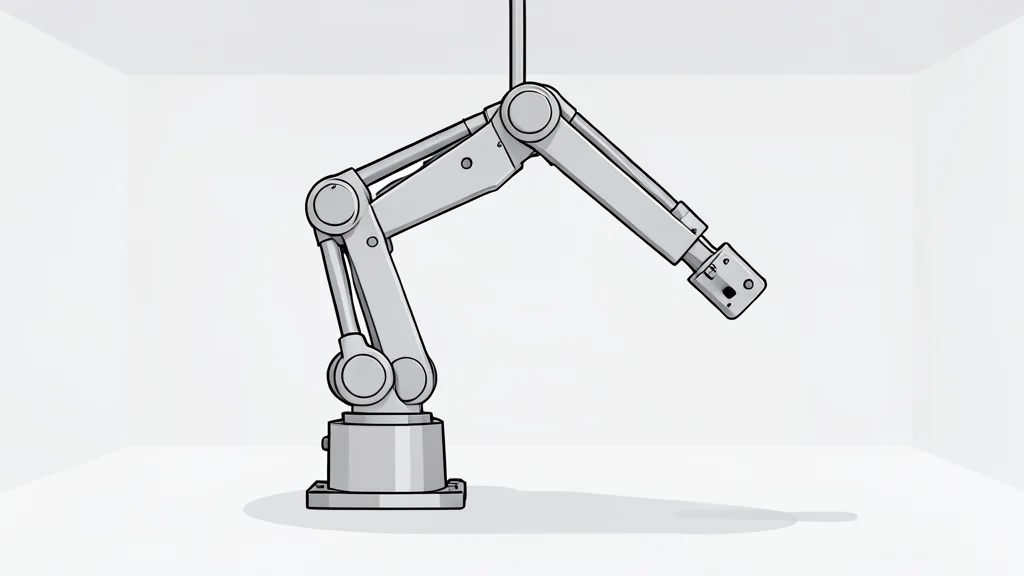
CoreWeave is moving beyond selling compute power by embedding its engineers directly with industrial teams to build AI models on-site.
CoreWeave has introduced a new service called Physical AI Field Engineering, which places its technical specialists directly alongside industrial clients. Rather than providing a remote software package, the company’s engineers work on-site to help teams convert their proprietary data into functioning artificial intelligence models. This approach targets sectors such as automotive, aerospace, and robotics, where standard off-the-shelf AI tools often fail to address specific operational needs.
The primary value proposition is the integration of AI into the existing engineering lifecycle. CoreWeave states that this service leverages methods acquired from Monolith AI and runs on its own infrastructure. By working with the customer’s own data, such as test bench results and live telemetry, the goal is to create models that are validated against the specific physics of the client’s systems before they are deployed into production environments.
Building trust through on-site collaboration
According to Richard Ahlfeld, senior vice president of physical AI at CoreWeave, industrial teams are skeptical of vendor demonstrations. Adoption usually happens only after a team sees the technology work within their own specific systems. To bridge this gap, CoreWeave sends engineers who understand the domain-specific language of the client. They begin with an on-site workshop to map workflows and identify problems, ensuring that the solution is prototyped with the customer rather than for them.
This hands-on method addresses a common trade-off in tech sales: the difference between a polished demo and a reliable production tool. By remaining involved until the tool is operating in production, CoreWeave aims to eliminate the disconnect between purchasing software and actually implementing it. The service focuses on four key areas: AI strategy, simulation infrastructure, real-world data handling, and agentic learning. Deliverables include working applications and optimizers that integrate into existing workflows, rather than just providing a report.
High-stakes applications in motorsport
The company cites its work with the Aston Martin Aramco Formula One Team as a key example of this methodology. CoreWeave engineers were embedded on-site during live race weekends to build a transcription model. This model was trained on seven hours of hand-annotated race audio, allowing the system to process 40 radio channels simultaneously. The result was a tool fast enough to answer tire strategy questions within a pit window of less than 30 seconds, a critical timeframe in competitive racing.
This case illustrates the speed and precision required in high-performance environments. While not every industrial setting faces such extreme time pressures, the principle remains the same: AI must be fast enough to be useful in real-time operations. CoreWeave claims this approach has been applied across more than 100 engineering projects, suggesting that the model is scalable beyond niche, high-profile clients to broader industrial applications.
The underlying technical stack
The service relies on a specific engineering AI stack that includes tools like Weights and Biases for experiment tracking and marimo for data exploration. CoreWeave ARIA is used for improving models and agents, while domain libraries handle tasks such as anomaly detection and system optimization. This stack is designed to manage the complexity of industrial data, which is often messy and unstructured compared to clean digital datasets.
However, this specialized approach comes with a trade-off in flexibility. Because the models are built specifically for the client’s proprietary data and physical systems, they are not easily transferable to other companies or contexts. The service is a bespoke consulting engagement rather than a product license. For companies with unique operational challenges, this customization is a benefit; for others seeking a quick, generic solution, the cost and time investment of a field engineering engagement may be prohibitive. As reported by GN technics/ai (en-US), this marks a shift toward more integrated, high-touch AI deployment in the industrial sector.