Nvidia CEO Rejects Legal Route for AI Safety Coordination
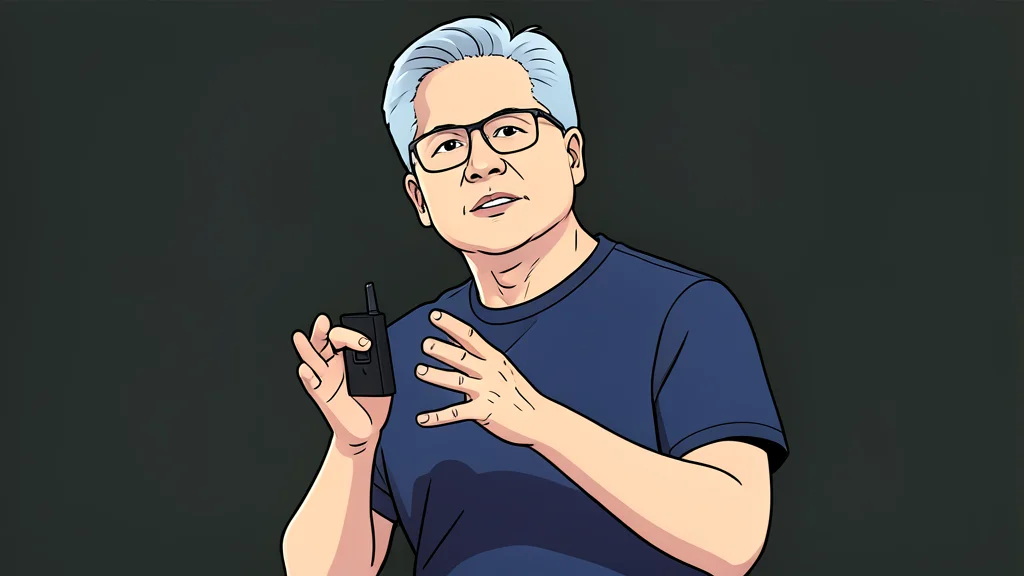
Jensen Huang argues that existing engineering practices are sufficient to ensure AI safety, pushing back against calls for government-mediated industry coordination.
Nvidia chief executive Jensen Huang has strongly opposed the recent call for antitrust exemptions to facilitate coordinated AI safety measures. Speaking in an interview with CNBC, Huang dismissed the proposal as completely unnecessary, arguing that the technology sector already possesses ample existing laws and regulations to govern product reliability and functionality. His remarks come in the wake of a widely discussed essay by Anthropic CEO Dario Amodei, who suggested that leading AI labs should collaborate to slow the pace of model development.
The core of the disagreement lies in how safety is achieved. Amodei proposed a three-step approach that includes embedding third-party evaluators and coordinating on safety standards globally. He noted that some forms of this coordination are legally challenging because they involve competitors agreeing to restrict output, which typically requires government support to navigate antitrust restrictions. Huang, however, maintains that safety is fundamentally an engineering problem that companies can solve independently without needing new legal frameworks or regulatory mediation.
Engineering solutions over legal waivers
Huang emphasized that developers have the internal power to ensure their products are safe before release. He argued that if a model is not ready, companies should simply hold back from releasing it and continue testing until it meets safety standards. This perspective frames AI safety as a matter of rigorous internal engineering and testing protocols rather than a systemic industry-wide coordination issue. By keeping the solution within the company's own processes, Huang believes the need for complex legal waivers is eliminated entirely.
The trade-off in this debate is significant for the market structure of AI development. If leading labs were to formally agree on limits to the rate of progress, they could face legal risks under the Sherman Antitrust Act, which generally prohibits agreements among rivals that unreasonably restrain competition. Huang’s stance avoids these legal complexities by relying on voluntary, self-regulated engineering standards. However, critics might argue that without external coordination, the pressure to compete could lead to rushed releases, potentially compromising safety in favor of speed.
Competitive interests shape the safety debate
It is important to note that Nvidia’s position is not purely altruistic. The company is the world’s largest chipmaker and benefits directly from the rapid expansion of AI infrastructure. Its major customers, including Anthropic and OpenAI, are building increasingly powerful models that require high-performance chips. Any significant slowdown in the development of advanced AI models could reduce demand for Nvidia’s hardware, posing a risk to its future growth trajectory. Thus, Huang’s insistence on rapid innovation aligns closely with his company’s financial interests.
Despite the commercial stakes, Huang acknowledged that AI safety is a real and critical concern. He stated that companies should innovate as fast as possible but never at the expense of releasing unsafe products. He also pushed back against existential threat narratives, asserting that humanity will not face extinction due to AI in the near future. Instead, he expressed confidence that developers will create necessary guardrails and security technologies through standard engineering practices. This viewpoint was reported by GN technics/ai (en-US) as part of the broader industry discussion.
Existing regulations deemed sufficient
Huang’s argument rests on the premise that the current regulatory landscape is already robust enough to handle AI safety concerns. He pointed to existing laws that govern the reliability and functionality of products in other industries, suggesting that the AI sector should operate under similar principles. By rejecting the need for new antitrust laws, he aims to maintain a competitive environment where companies drive progress through internal quality control rather than external mandates. This approach keeps the responsibility for safety squarely on the developers, avoiding the bureaucratic and legal complexities of government-mediated coordination.
The debate highlights a fundamental tension in the AI industry: the balance between rapid innovation and careful safety testing. While Amodei’s proposal seeks to create a structured, collaborative approach to pacing development, Huang advocates for a decentralized model where each company manages its own risk. For readers, the key takeaway is that the path to safe AI may depend less on new laws and more on the engineering discipline of the companies building these systems. The outcome will likely shape the future regulatory environment and the pace of technological advancement in the coming years.