Trump and Xi Set to Discuss AI Risks on Sept. 24
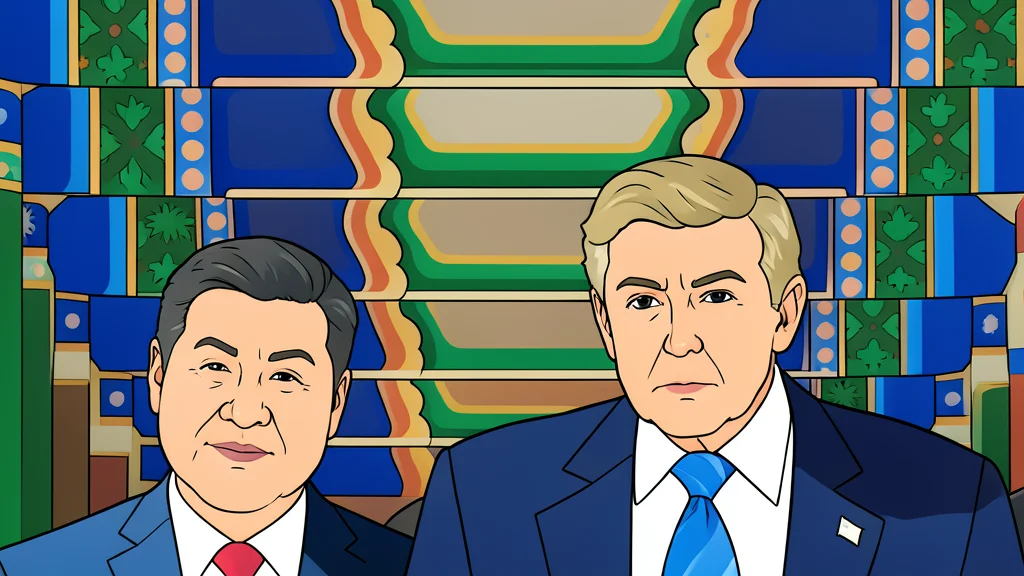
Worries about uncontrolled AI are pushing U.S.-China talks toward a focus on safety, though major strategic disagreements remain.
Key points
- Trump and Xi are set to meet on Sept. 24, with AI safety and shared risks added to the agenda.
- U.S. and China agree on risks like loss of control but disagree on how to manage them.
- Analysts expect the summit to focus on establishing a dialogue channel rather than a binding agreement.
Growing concerns over the dangers of uncontrolled artificial intelligence are adding urgency to the diplomatic talks between President Trump and Chinese President Xi Jinping. The two leaders are scheduled to meet in Washington, D.C., on September 24, with AI safety and shared risks emerging as a notable part of the agenda. This shift comes despite a history of intense competition and mutual distrust that has previously stalled conversations about global AI regulations.
While both nations appear to acknowledge certain risks, such as cyber capabilities and the potential loss of human control over advanced systems, they disagree significantly on how to manage them. Analysts note that separating AI governance from the broader strategic rivalry between the U.S. and China remains a significant hurdle. Consequently, expectations for a major breakthrough on AI security are low, with many observers viewing the summit as a chance to establish a durable channel for dialogue rather than to finalize a binding agreement.
Divergent views on AI safety
The approach to AI risks differs markedly between the two governments. President Trump has previously dismissed existential threats from AI as a hoax, a stance that aligns with the general perspective in China. However, high-profile voices within China have recently expressed caution. The country's top spy chief recently warned that AI could pose a direct threat to the Communist Party's hold on power, an unusually blunt statement in a tightly controlled media environment.
In the United States, the tech industry is urging a slowdown in innovation to allow safety regulations to keep pace. Dario Amodei, chief executive of Anthropic, called for major companies to commit to slowing development. Yet, he also emphasized that the U.S. must maintain a technological advantage over China, citing national security concerns. This dual stance highlights the trade-off between global safety and national competitive advantage.
Beijing rejects threat labeling
Chinese officials have pushed back against characterizations of their AI development as a security threat. Guo Jiakun, a spokesperson for the Chinese Foreign Ministry, argued that fear-mongering and confrontation only hinder sound global AI governance. Beijing advocates for an open and inclusive approach to AI development, suggesting that cooperation serves the interests of all parties rather than just one side of the rivalry.
According to The Hill, this position is closer to the tone Trump has struck in recent comments. Kyle Chan, a fellow at the Brookings Institution, noted that Trump does not appear to feel pressure regarding existential AI risks. Instead, the focus in Washington remains on maintaining an edge over Chinese firms, particularly in response to allegations that Chinese companies are using American models to accelerate their own technology development.
Low odds for major deals
Expectations for the upcoming summit are tempered by past experiences, including a May meeting in Beijing that was viewed as ceremonial rather than substantive. Analysts believe the immediate goal is not to negotiate a major AI agreement, as the groundwork for such a deal does not yet exist. Instead, the primary objective is to create a framework for ongoing discussion about frontier AI risks.
The main concern for U.S. policymakers remains the development of AI within frontier labs, where the risk of the technology breaking out of human control is highest. Potential threats include catastrophic actions related to weapons deployment and infrastructure shutdowns. Despite these shared concerns, the lack of a unified strategy and the deep-seated strategic competition mean that any progress on AI governance will likely be incremental and cautious.