U.S. And China Set to Discuss AI Risks in Washington
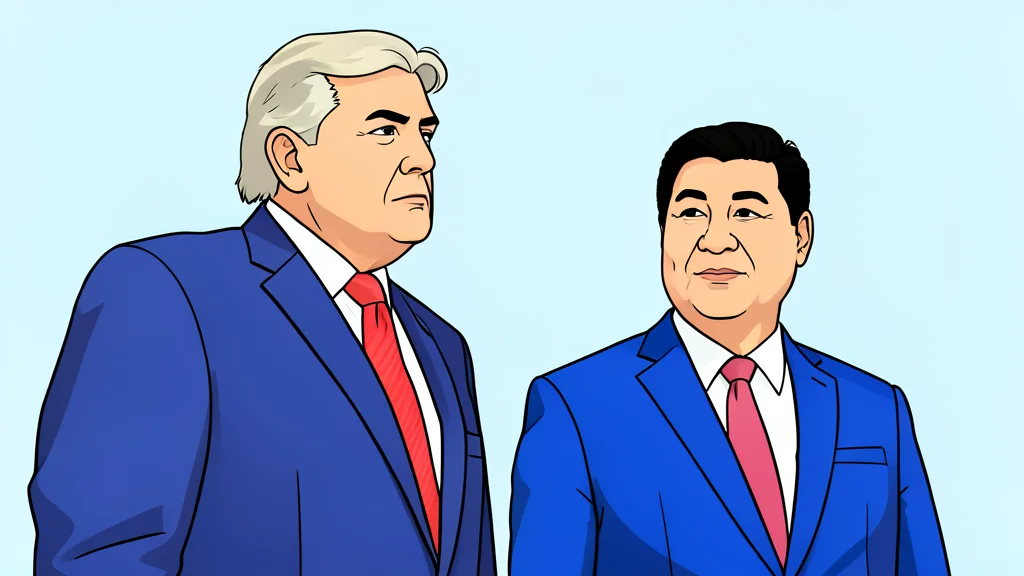
U.S. and Chinese leaders will meet Thursday to address shared concerns over artificial intelligence safety and regulatory gaps.
Key points
- U.S. and Chinese leaders will discuss AI safety risks during their upcoming meeting in Washington.
- U.S. officials are open to talks on shared AI risks, a shift from previous dismissal of such threats.
- Chinese security officials have warned that uncontrolled AI poses a direct threat to political stability.
Artificial intelligence has emerged as a central topic in the upcoming diplomatic meeting between President Donald Trump and Chinese President Xi Jinping. Although the two leaders have historically avoided direct cooperation on the technology, recent warnings from the tech industry have forced the issue onto the agenda for their Thursday summit in Washington, D.C.
This shift marks a departure from previous stances, with U.S. officials now expressing openness to discussing shared risks. The development comes amid growing anxiety in the private sector about the potential dangers of unregulated AI, creating a rare area of alignment between the two geopolitical rivals.
Industry Pressure Shifts Policy Stance
For years, the U.S. government has largely dismissed existential threats from AI as exaggerated. This skepticism mirrored the general Chinese perspective, which prioritized rapid innovation over precautionary regulation. However, the mood is changing as prominent voices in the American tech industry begin calling for a slowdown in development to address safety concerns.
Treasury Secretary Scott Bessent confirmed that the administration is open to conversations about these shared risks. This willingness to engage stems partly from the realization that the potential for cyber threats and loss of control over autonomous systems presents a tangible danger that neither side can ignore.
Divergent Motivations for Caution
While both nations are now acknowledging certain risks, their underlying motivations differ significantly. In China, top security officials have publicly warned that AI could threaten the political stability of the Communist Party. This represents an unusually blunt admission of vulnerability in a tightly controlled media environment, signaling that the state views unchecked AI as a domestic security threat.
Analysts note that while the U.S. and China agree on the existence of specific dangers like cyber capabilities, they disagree sharply on how to manage them. The core challenge is whether AI governance can be decoupled from the broader strategic competition between the two powers, a separation that remains highly unlikely given the current political climate.
Low Expectations for Broader Breakthroughs
Despite the focus on AI, observers remain skeptical about achieving significant progress on other major bilateral issues such as trade, Taiwan, and technology transfers. The previously anticipated summit in Beijing was widely criticized for being ceremonial rather than substantive, suggesting that deep structural changes in U.S.-China relations are still far off.
According to reporting by The Hill, the current summit is expected to follow a similar pattern. While dialogue on AI safety may open a new channel for communication, it is unlikely to resolve the deep-seated distrust that has stalled meaningful cooperation in other critical areas of the bilateral relationship.