UCLA Nanowire Networks Process Data with Less Power
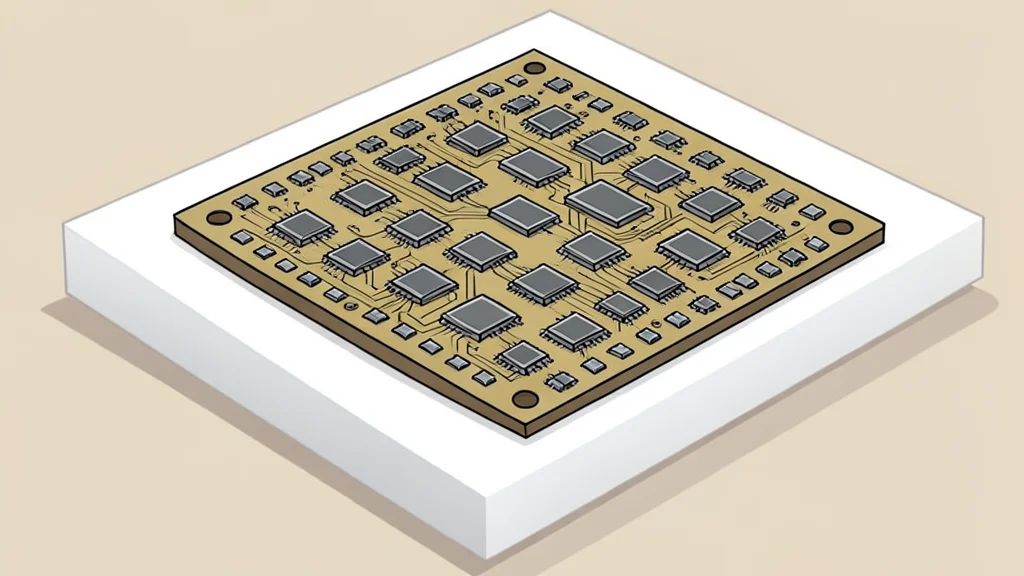
UCLA researchers developed hardware that acts as its own neural network, processing data locally to reduce energy use compared to cloud computing.
Key points
- UCLA researchers developed hardware that processes data as a physical neural network, reducing reliance on separate software.
- The technology enables local data processing for devices like satellites and robots, lowering energy consumption compared to cloud computing.
- A review in Nature Reviews Physics details how self-organizing nanowires can perform machine learning tasks in real time.
UCLA researchers have developed a new computing method where the hardware itself performs the calculations, removing the need for traditional software instructions. This approach, detailed in a recent review by Nature Reviews Physics, utilizes self-organizing networks of nanowires and nanoparticles to process information directly within the physical structure of the device.
The primary advantage of this technology is its potential to handle complex data locally with significantly lower energy consumption than current silicon-based systems. By embedding computation directly into the sensing hardware, the system can operate effectively in environments with limited power or connectivity, offering a practical alternative to relying on distant cloud servers.
Hardware replaces software processing
Traditional digital computers separate logic from physical structure, executing software on silicon chips. In contrast, the UCLA system treats the interconnected nanowires as the neural network itself. As described by research scientist Adam Stieg, the model evolves within the physical network, allowing the hardware to adapt and change its processing capabilities without external programming.
This shift means that computation occurs at the scale of billionths of a meter. The system relies on the collective behavior of these tiny components to perform tasks like speech and image recognition. This method bypasses the energy-intensive process of moving data between separate memory and processing units, a common bottleneck in modern electronics.
Energy efficiency for edge devices
The growing demand for artificial intelligence has increased the strain on energy and water resources required to support data centers. The new physical AI approach addresses this by enabling devices to process data where it is generated. This is particularly useful for satellites, autonomous vehicles, and industrial robots that need to make real-time decisions without a constant internet connection.
According to the review published in Nature Reviews Physics, these systems can perform machine learning benchmarks in real time with low power demands. By handling sensor data locally, the technology reduces the need to transmit large amounts of information to remote servers. This makes it a suitable complement to existing cloud computing infrastructure rather than a complete replacement.
Limitations of the current approach
While promising, this technology is not a standalone solution for all computing needs. It is designed to work alongside silicon-based digital computers, handling specific tasks that benefit from local, low-power processing. The system is best suited for applications where immediate data interpretation is critical and power resources are constrained, rather than for heavy-duty general-purpose computing.
The research, led by Professor James Gimzewski and Adam Stieg, highlights the potential of this hybrid model. However, widespread adoption will require further development to ensure reliability and scalability. The current implementation remains a specialized tool for edge computing scenarios, where the physical constraints of the environment demand efficient, local data handling.