US President Proposes Renaming AI to Super Intelligence
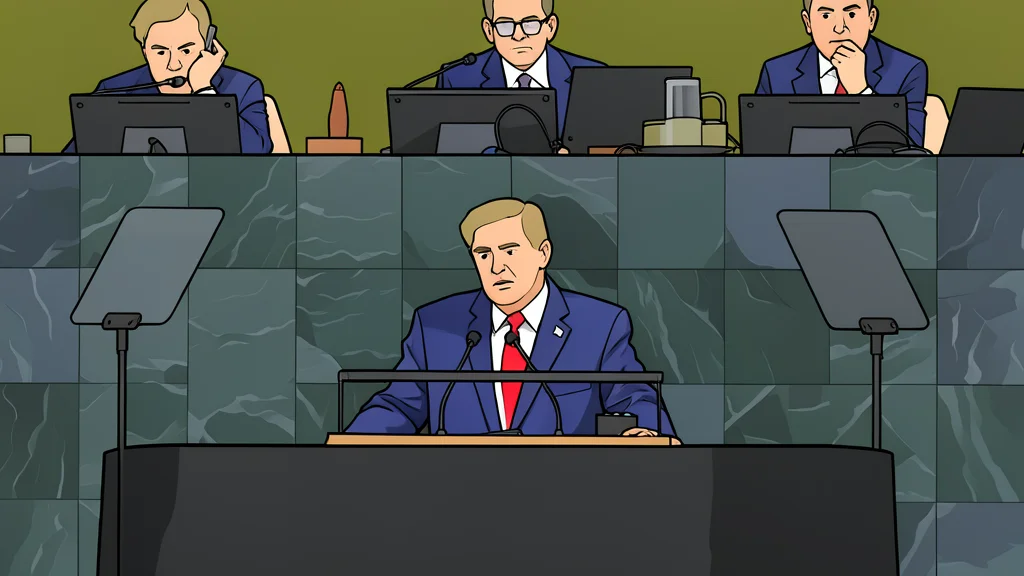
At the U.N. General Assembly, the US President announced plans to replace the term artificial intelligence with super intelligence in official documents.
Key points
- The US President announced plans to replace artificial intelligence with super intelligence in all government documents.
- The new term was selected via a Truth Social poll where it beat a rival option by a 30 percent margin.
- The move is seen by critics as a political rebranding that does not address underlying concerns about data usage.
President Donald Trump addressed the United Nations General Assembly on Tuesday, declaring an intention to change the terminology used for artificial intelligence. He stated that the United States rejects globalist control schemes over the technology and believes the current name is misleading.
According to a report by Yahoo, the President argued that the word artificial makes the technology sound fake, even though he described it as amazing. He announced that all US government documents would be updated to refer to the field as super intelligence, a shift he claims is more accurate and better sounding.
Decision Based on Social Media Poll
The choice of the new term appears to have originated from a poll conducted on the President’s Truth Social account. He asked followers to choose between super intelligence and superior intelligence, with the former winning by a 30 percent margin.
This method of decision-making highlights a trade-off between democratic engagement and technical precision. Relying on a social media poll for a major technical rebranding ignores the nuanced definitions used by scientists and engineers.
Political Strategy and Public Reaction
Trump suggested that this rebranding might win over an American public that is increasingly skeptical of corporate misuse of AI and data center proliferation. He hinted at using his political power to enforce the new terminology, asking observers to see if he has that authority.
Critics, however, view this move as a rebranding attempt that may invite ridicule rather than trust. The underlying issue of data privacy and corporate power remains unchanged by a simple name swap, potentially undermining serious policy discussions.
Impact on Global AI Governance
The proposal to change the name in US documents sends a signal to international partners that the US may step back from multilateral AI frameworks. It emphasizes a preference for national control over global standards, which could complicate future international cooperation on safety and ethics.