Cloud Rendering Lowers Technical Barriers for Indie Film
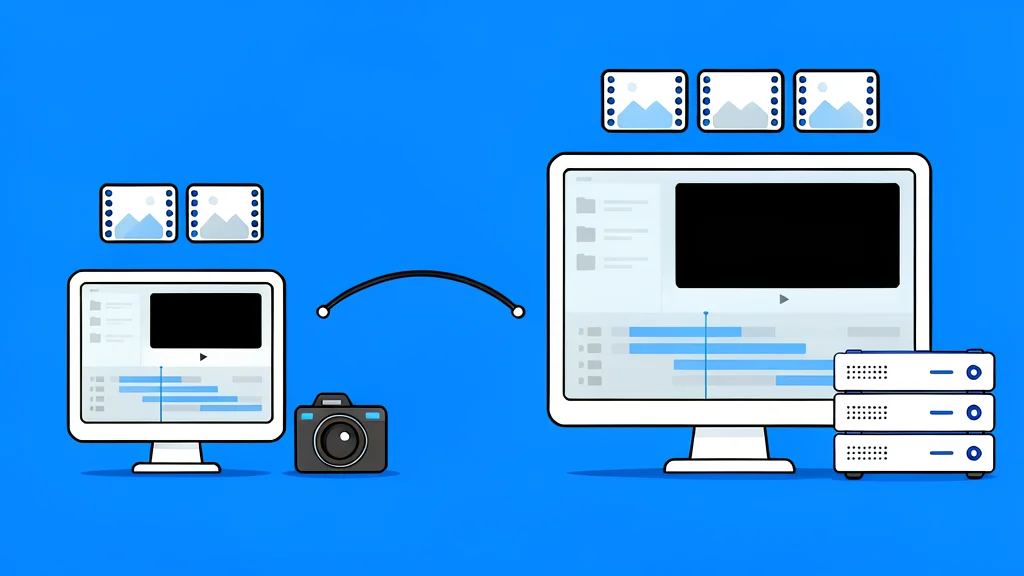
Independent filmmakers are increasingly bypassing expensive local hardware by using remote computing power to handle complex visual effects and animation.
For independent filmmakers, the gap between creative ambition and technical capability has traditionally been defined by hardware costs. Major studios can afford dedicated rendering farms, but smaller teams often face a choice: limit their visual effects or spend a significant portion of their budget on equipment that sits idle for most of the year. Cloud rendering is changing this dynamic by allowing smaller productions to access massive computing power on demand, without the need for permanent local infrastructure.
This shift is particularly relevant in a market where the global 3D rendering industry is projected to grow from $4.5 billion in 2025 to $5.7 billion in 2026. As reported by GN auto tech/hardware, the move toward remote processing is not just about cost savings; it is about democratizing access to the kind of processing speed required for high-resolution textures and complex simulations. However, while the technology removes some physical barriers, it introduces new dependencies on internet stability and data security.
Hardware costs create a significant barrier
Traditional animation and CGI workflows are computationally intensive. A single frame may take minutes or hours to render, and a full sequence can consist of thousands of such frames. For a studio with a dedicated IT department, this is manageable. For an independent team, purchasing enough local workstations to meet a deadline often makes financial sense only if the hardware is reused frequently. Since many indie projects have short production windows, the cost of space, electricity, maintenance, and eventual obsolescence can outweigh the benefits of owning the equipment.
Cloud rendering solves this by decoupling processing power from physical ownership. Artists can continue to build scenes, animate characters, and light environments on their local machines. When the final render phase begins, they submit the work to a remote server cluster. This allows a small team to handle the load of a large-scale production without maintaining a permanent server room. The trade-off is that the production becomes dependent on the service provider's uptime and pricing structures, which can fluctuate.
Remote workflows expand talent pools
The ability to render remotely also facilitates a broader shift in how teams are assembled. Independent filmmakers are no longer limited to hiring local specialists. With cloud-based collaboration tools, a producer in one city can work with a compositor in another and a lighting artist in a third country. This distributed model allows smaller studios to assemble specialized teams for specific tasks, such as fluid simulation or character rigging, without the overhead of full-time salaries for roles that are only needed for short periods.
This flexibility is evident in the broader creative landscape. The 2026 Sundance Film Festival received over 16,000 submissions from 164 countries, illustrating that talent is globally distributed. By leveraging cloud infrastructure, these filmmakers can compete more directly with larger entities that have historically held the advantage in post-production capabilities. The result is a more level playing field where narrative quality and artistic vision can take precedence over the scale of a studio's physical footprint.
Connectivity and security remain key challenges
Despite the advantages, the transition to cloud-based rendering is not without risks. The most critical dependency is internet connectivity. If a production relies on uploading large files for processing or downloading finished renders, slow or unstable connections can create bottlenecks that delay delivery. Additionally, there are security concerns. Sending proprietary assets to third-party servers requires robust encryption and trust in the provider's data handling practices. For independent filmmakers with limited legal and IT resources, assessing these risks can be a complex task.
There is also the issue of cost predictability. While cloud rendering eliminates the upfront capital expenditure of hardware, the operational costs can become difficult to manage if a project runs over schedule or if the team is inefficient with their resource usage. Skilled artists who understand how to optimize their scenes for cloud processing can mitigate these costs, but a lack of technical expertise can lead to unexpected bills. Ultimately, while the technology lowers the entry barrier, it requires a new set of management skills to use it effectively.