DigitalOcean Bills Only for Active AI Agent Compute Time
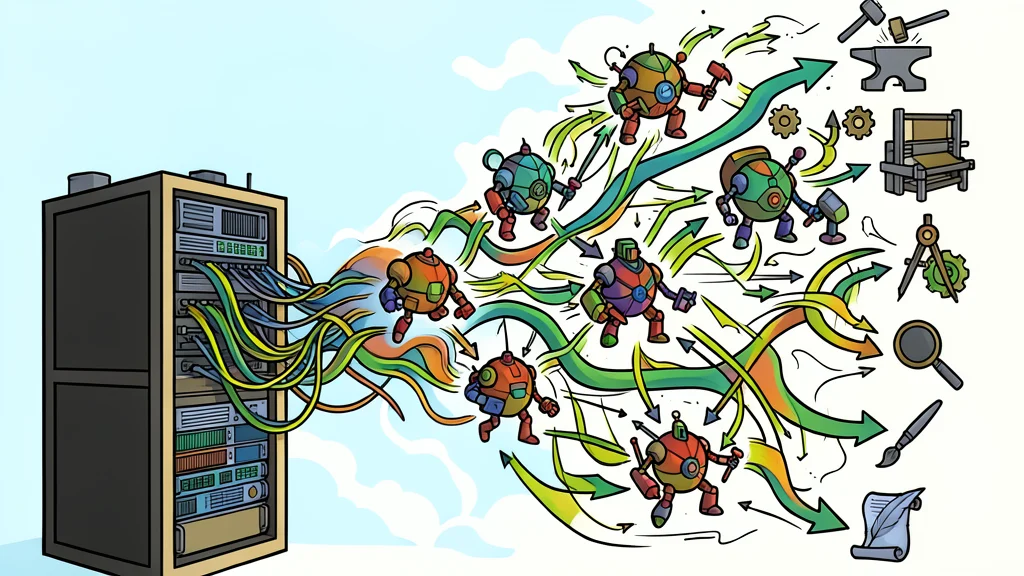
DigitalOcean launches a public preview of agent infrastructure that charges users only when AI agents are actively processing tasks, not while they wait.
Key points
- DigitalOcean launched a public preview of agent infrastructure services on September 22, 2026.
- The new billing model charges only for active CPU usage, not for idle waiting time.
- The system supports over 16,000 tool integrations and handles credential security centrally.
Cloud infrastructure is shifting its focus from virtual machines to autonomous AI agents as the primary interface. DigitalOcean announced a public preview of its managed agent services on September 22, 2026, marking a significant change in how developers access and utilize cloud resources.
This move positions the agent, rather than the server, as the central unit of computation for the next generation of cloud-native applications.
The announcement places DigitalOcean in direct competition with major cloud providers like AWS, Azure, and Google, all of which are developing similar frameworks for agent-based computing. By treating the agent as the front door to the cloud, the company aims to simplify the complex plumbing of infrastructure, allowing developers to focus on building logic rather than managing runtime environments and security protocols.
Architecture splits runtime and gateway
The service is built on two integrated components: the Harness Runtime and the Action Gateway. The runtime uses Firecracker microVMs to create isolated environments for each agent session, supporting various development frameworks. It allows developers to pause and resume sessions without losing context, a feature designed for debugging and parallel experimentation. The Action Gateway connects these runtimes to external tools, providing access to over 16,000 integrations while managing security credentials centrally.
Security is handled by the gateway, which ensures that sensitive tokens are resolved only at the moment of execution and never exposed to the AI model itself. The system also includes a mechanism for human approval on sensitive operations, addressing enterprise concerns about autonomous actions. According to the announcement, the gateway achieves 99.3% accuracy in tool discovery, reducing the risk of agents using incorrect or unsafe tools.
Billing model charges only active usage
A key differentiator for this offering is the shift to active CPU billing. Unlike traditional cloud models that charge for uptime, DigitalOcean only bills customers when agents are actively processing data. There are no charges while the agent waits for model responses or tool results. The pricing is set at $0.044 per vCPU hour for active compute, with additional costs for memory and snapshots. This structure aligns infrastructure costs directly with the utility derived from the agent.
This billing approach addresses the cost inefficiencies of idle agents, which can remain online for extended periods without performing tasks. For developers, this means a more predictable and potentially lower total cost of ownership for agent-based applications. The trade-off is that the infrastructure is tightly coupled to specific agent frameworks, requiring developers to adapt their workflows to the provider's harness-agnostic runtime standards.
Early adopters test the new stack
Companies such as OpenHands, Qencode, and Amplitude are already testing these capabilities. Amplitude noted that the platform allows its engineers to focus on product development rather than infrastructure maintenance. By offloading runtime authority and session management to the cloud provider, the service reduces the operational overhead of maintaining large fleets of agents. This shift suggests that agent infrastructure is becoming a standard component of the cloud stack, similar to how virtual machines became standard in previous decades.