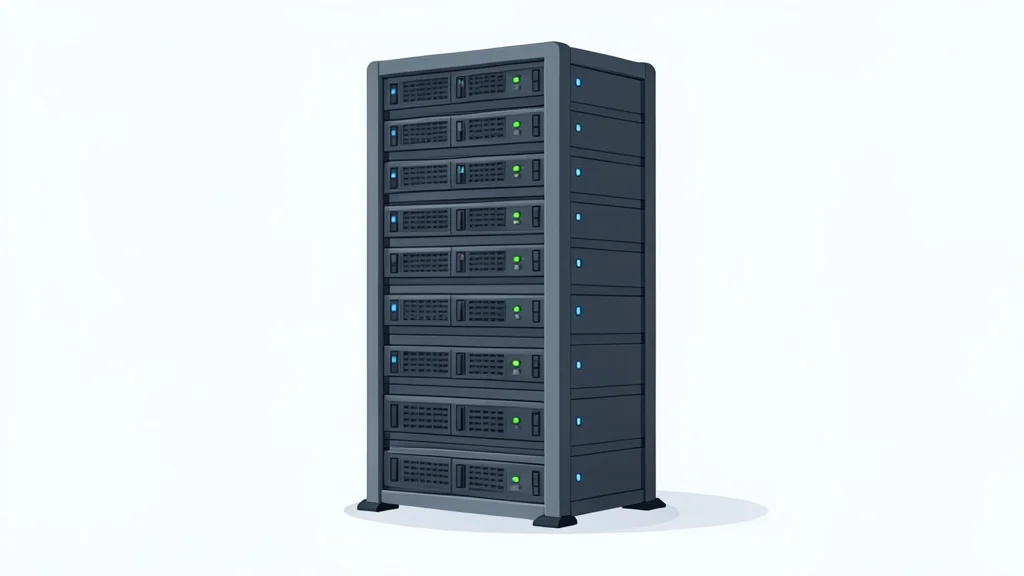
EasyStack Releases EAF for Unified Enterprise AI Infrastructure
A new platform aims to let companies add AI capabilities to their existing cloud systems without starting from scratch, addressing a common hurdle in enterprise adoption.
Enterprises looking to integrate artificial intelligence into their operations face a significant decision: whether to build a separate AI infrastructure or extend their existing cloud environments. EasyStack has launched EAF, a software platform designed to bridge this gap. The product, set for general availability on September 30, 2026, allows companies to evolve from traditional cloud-native setups to AI-native foundations without discarding their current hardware or software investments.
The core value of EAF lies in its approach to integration. Rather than treating AI as an add-on layer, the platform embeds AI capabilities directly into the cloud foundation. This means organizations can manage diverse hardware, including chips from NVIDIA, Hygon, and Huawei, within a single unified system. The goal is to reduce the complexity and cost associated with maintaining parallel infrastructure stacks for data and AI workloads.
Unified Management of Mixed Hardware
One of the primary challenges in enterprise AI is the fragmentation of hardware. Companies often possess a mix of different accelerator types, which can lead to inefficient resource usage. EAF addresses this by providing unified management across multiple chipset architectures. It supports heterogeneous AI accelerators, allowing a single cloud environment to handle diverse hardware components seamlessly.
The platform employs multi-layer inference optimization and virtual partitioning to improve how these resources are utilized. This includes tracking inference token usage and enabling automated cost allocation across departments. By treating different chipsets as part of a cohesive pool, EAF helps enterprises avoid the inefficiencies of siloed hardware management, ensuring that computing power is directed where it is most needed.
Flexible Deployment Models for Growth
Recognizing that AI adoption is rarely a one-size-fits-all process, EAF offers three distinct deployment models. These range from a single-node appliance for initial testing to high-availability converged setups and large-scale disaggregated environments. This structure is designed to support a smooth transition from proof-of-concept validation to multi-tenant production workloads.
This flexibility is crucial for organizations that need to scale their AI capabilities gradually. The platform supports fine-tuning features, allowing businesses to adapt their models as their needs evolve. By providing a clear path from small-scale experiments to large-scale production, EAF reduces the risk associated with major infrastructure overhauls.
Preserving Existing Investments
A key trade-off in many AI initiatives is the potential loss of prior investments in specific hardware or open-source models. EAF is designed to preserve these assets by operationalizing mainstream open-source technologies. It is licensed on a per-AI-card basis and is not tied to specific hardware vendors or proprietary models, giving enterprises greater flexibility in their technology choices.
The platform completes EasyStack’s broader product portfolio, working alongside its cloud foundation and agentic platforms to offer end-to-end delivery. According to EasyStack, the company serves more than 2,000 enterprise customers worldwide, with a presence in Southeast Asia, China, Europe, and the Americas. The launch underscores a shift in the market toward solutions that allow companies to adopt AI on a foundation they already trust, rather than forcing a complete rebuild.