Industrial 5G Routers Bridge Legacy Serial Devices to Cloud
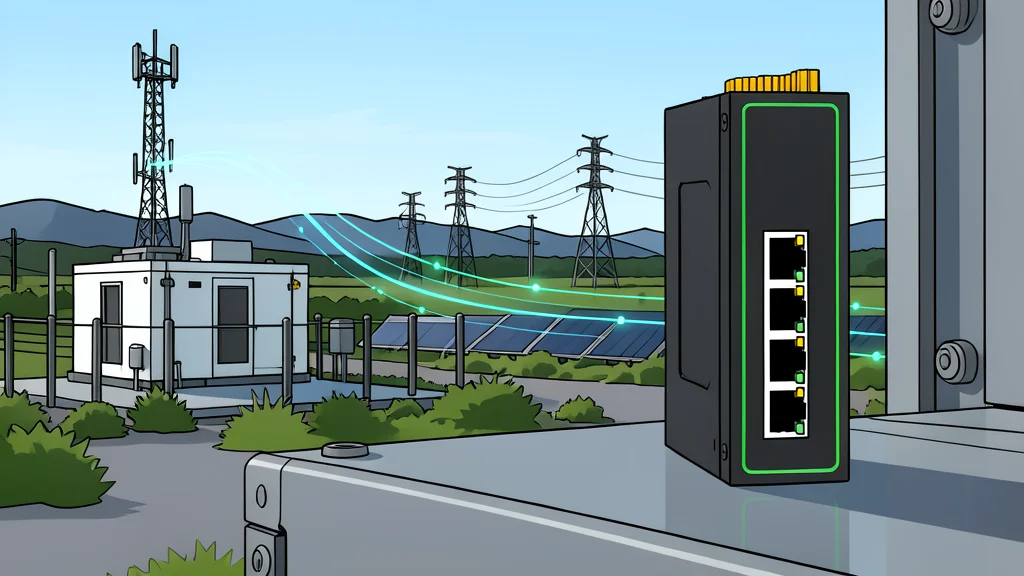
New connectivity standards allow older factory equipment to join IP networks without full hardware replacement, but require careful testing of data flows.
Key points
- Industrial routers bridge legacy serial devices to IP networks, avoiding costly hardware replacements.
- Cellular resilience depends on active failover mechanisms like dual-SIM and heartbeat detection.
- Secure remote access requires defined boundaries to limit exposure of operational equipment.
Industrial connectivity projects are often mistaken for simple upgrades, but they frequently involve bridging decades-old machinery with modern cloud infrastructure. The core challenge is not just speed, but how to connect serial-based legacy equipment while maintaining stable cellular links and secure remote access across distributed sites.
According to a report from newswire.com, evaluating industrial 5G routers requires looking beyond raw radio performance. The critical question is whether the device can preserve existing operational technology, manage variable cellular conditions, and provide the visibility needed for daily management without forcing costly hardware replacements.
Legacy Serial Interfaces Remain Critical
Most industrial sites still rely on a mix of Ethernet and older serial standards like RS-232 and RS-485. Replacing these working assets solely to support cloud connectivity adds significant cost and project risk. Modern routers mitigate this by converting serial data into IP traffic, allowing older protocols like Modbus RTU to function within a modern network architecture.
This approach reduces the need for additional conversion hardware in control cabinets. However, the presence of serial ports is not enough; the end-to-end data flow must be tested with the specific field equipment. Understanding device addressing and polling behavior remains essential to ensure data integrity before and after conversion.
Cellular Resilience Requires Active Management
While 5G offers lower latency, industrial availability depends on factors like signal interference and operator coverage. For unattended sites, routers must detect degraded paths and execute defined recovery actions. This often involves dual-SIM failover, heartbeat detection, or automatic redialing to maintain operational continuity when conditions change.
These mechanisms improve resilience but do not guarantee uninterrupted service. The trade-off is that recovery thresholds and failover behavior must be rigorously tested against the application's tolerance for delay. Relying on standard radio access alone is insufficient; a deliberate link strategy is required to sustain operations during network fluctuations.
Secure Remote Access Boundaries
Connecting operational equipment to wide-area networks increases the site's security exposure. Remote engineers and cloud services require access, but this access must be strictly limited to prevent unauthorized entry. Defining these boundaries before deployment is crucial to maintaining control over who can interact with the machinery.
Layered security controls are necessary to protect both the local operational technology and the upstream cloud services. The catch is that security configuration is not a one-time task; it requires ongoing validation of interfaces, carrier settings, and environmental requirements for each specific deployment to ensure the communication path remains robust and safe.