GAC Begins Assembly in Cambodia Amid Capacity Concerns
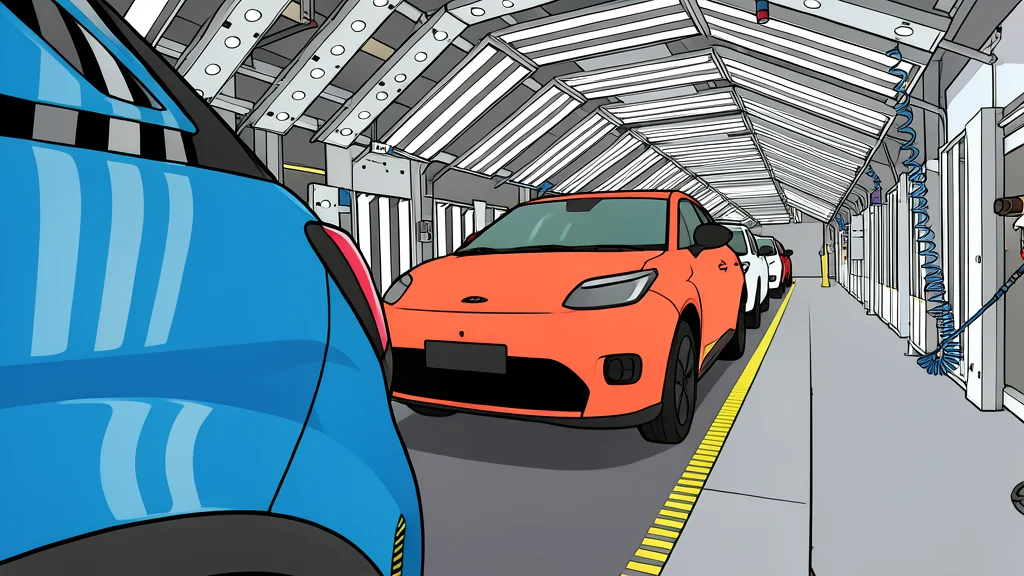
GAC has started vehicle assembly in Cambodia, but Prime Minister Hun Manet warns that the country may already have too much production capacity.
Key points
- GAC has started assembling vehicles in Cambodia through a local partner, with a capacity of 20,000 units per year.
- Prime Minister Hun Manet warned that Cambodia may have too much assembly capacity, urging a review of new projects.
- The plant produces SUVs and people carriers, aiming to serve the domestic market which has only one million registered light vehicles.
Guangzhou Automobile Group has officially begun assembling vehicles in Cambodia, marking a significant expansion of its global manufacturing footprint. The production launch follows the recent inauguration of a new facility in Kampong Chhnang province, where the first locally built models have now rolled off the line. This move aligns with GAC’s broader strategy of partnering with local firms to distribute its electric and hybrid vehicles without owning the factories directly.
However, the timing of this launch coincides with a public warning from Cambodian Prime Minister Hun Manet. During the ceremony, the Prime Minister questioned whether the nation can realistically absorb the volume of cars that have been licensed for assembly. This caution highlights a growing tension between attracting foreign automotive investment and ensuring that the domestic market can actually support the new industrial capacity.
Local partnership drives new assembly
The new facility is operated by TH Automotive, a subsidiary of Cambodia’s TH Group, which serves as GAC’s strategic partner in the region. Under this model, GAC supplies the vehicle kits and technical standards, while the local partner handles the actual assembly and investment. This structure allows GAC to maintain control over quality and branding without the heavy capital burden of building and owning a factory, a method the company also used recently in Austria.
The plant has an annual capacity of approximately 20,000 vehicles, with the majority of output intended for the domestic market. The initial lineup includes several compact SUVs and people carriers, available in both internal combustion and new-energy electric versions. This approach aims to reduce logistics costs and tariffs while strengthening GAC’s position as a leading Chinese brand in the Cambodian market.
Prime Minister warns on oversupply
Despite the celebration of the new production line, Prime Minister Hun Manet emphasized the risks of unchecked industrial growth. He noted that Cambodia currently has ten operating vehicle assembly plants with a combined capacity of about 35,000 units per year, with several more under construction. This rapid expansion has raised concerns about whether the market is large enough to sustain all these facilities without leading to closures or financial failure.
The Prime Minister directed the Council for the Development of Cambodia to carefully assess market demand before approving any new projects. He argued that securing numerous investment licenses is counterproductive if the factories subsequently fail or close, undermining the sector's resilience. This warning serves as a check on the rush to build automotive infrastructure in a market that still relies heavily on motorcycles for daily transport.
Market size limits growth potential
The fundamental challenge facing GAC and its competitors is the scale of the Cambodian vehicle market. According to recent government figures, the country has about one million registered light vehicles, a number that is dwarfed by the seven million motorcycles and tricycles on the road. For a plant with a capacity of 20,000 units, capturing a significant share of this small market requires aggressive pricing and strong consumer confidence in electric vehicles.
GAC claims that its brand has seen rapid growth in the country over the past three years, but it still faces stiff competition from established names like Toyota and Hyundai. The success of this new assembly line will depend on whether Cambodian consumers are ready to switch from two-wheeled transport to cars, or if the existing fleet of imported vehicles will continue to dominate. The trade-off for GAC is clear: lower production costs in exchange for dependence on a volatile and limited market.