A Niche Murder Mystery Finds a Home on the New Switch
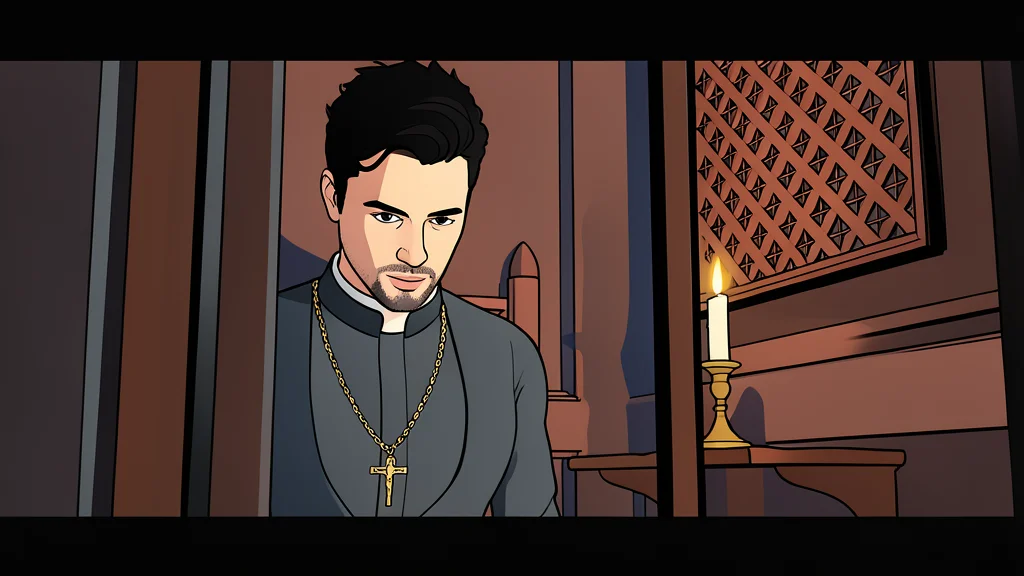
A low-budget Romanian priest thriller tests the boundaries of what counts as a game on Nintendo's latest hardware.
The library of games available for the Nintendo Switch 2 has recently been dominated by major titles and well-known indie hits. However, a new release signals a shift toward smaller, experimental projects that attempt to leverage the console's improved hardware. What Have You Done, Father? is one such title, offering a dark narrative set in 1940s Romania that feels out of step with the platform's usual family-friendly reputation.
According to a review by GN technics/gaming (en-US), the game is less a traditional interactive experience and more a cinematic walking simulator. It features a murder mystery involving priests, drugs, and potential demonic activity, but players have very little agency. The core loop involves traversing small environments, collecting items, and solving a total of two puzzles during a two-hour runtime.
The narrative drives the experience
Despite its mechanical simplicity, the story is the primary draw. The plot follows Father Mathias, an unlucky protagonist pulled into a situation far beyond his usual comfort zone. Reviewers noted that the writing effectively hooks the audience, with plot twists that manage to surprise the player until the very end. The creative premise and setting provide a solid foundation, even if the execution is constrained by financial limitations.
The visual presentation reflects the game's modest budget. While the lighting and level design receive praise for their decent quality, the character models appear artificial and the framerate is underwhelming for the Switch 2's capabilities. The audio design is similarly uneven, with voice acting that is competent when present but sparse overall, leaving some dialogue sections feeling unpolished.
Limited interactivity defines the gameplay
The most significant trade-off of the title is its lack of player agency. With only two puzzles in the entire game, the interactive elements are minimal. The experience relies heavily on scripted prompts and item collection, which can feel frustrating for players expecting traditional puzzle-solving or combat mechanics. The brief runtime and limited interactivity suggest the material might have been better suited for a film or visual novel format.
A niche recommendation for specific audiences
Ultimately, the game is a tough recommendation for the average player. It rewards those who appreciate strong storytelling and atmospheric settings over mechanical depth. For others, the combination of high expectations for the new hardware and the low-budget production values may prove disappointing. The title offers credit for its creativity and care, but it remains a niche choice best enjoyed at a discount.