Chinese Robot Dancers Reach AGT Final with Human Lead

A team of Unitree humanoid robots joins a human dancer in the America's Got Talent final, highlighting both technical strides and mechanical limits.
Key points
- Wu Yufei performs in the AGT final with Unitree robots, a group called Homies.
- Robots are good at power moves but struggle with flexibility and improvisation.
- China's humanoid robot market is projected to reach $2 billion this year.
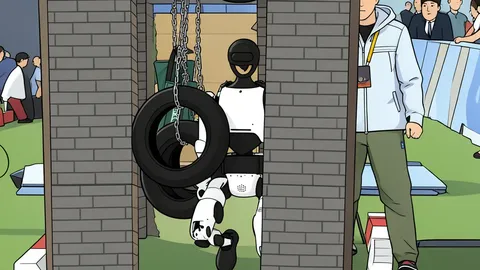
Chinese street dancer Wu Yufei has secured a spot in the final of America's Got Talent alongside a crew of humanoid robots. The 27-year-old performer, who has danced solo for 13 years, now performs with machines built by Unitree, a robotics firm from China. This partnership marks a significant moment for the group, known as Homies, as they prepare for the high-stakes competition this week.
The collaboration has transformed Wu’s perception of the machines, which he initially viewed as cold and lifeless. After months of rigorous training, he describes a sense of team spirit emerging between the human and robotic performers. The story, reported by The Hindu, highlights how this blend of human artistry and mechanical precision is redefining the boundaries of stage performance.
Training robots requires extensive human input
Creating these dance routines is a complex process that involves capturing human movements, running computer simulations, and transferring the data to the robots. Fang Zhenghua, the art director behind the performances, likens the work to creating a soul. He noted that while he was initially skeptical of AI in dance, working with engineers changed his perspective. The process relies heavily on technical troubleshooting, especially during live performances where real-time adjustments are critical.
Liu Zhiquan, a commercialization lead at motion-capture firm BridgeDP, explains that perfecting a short 30-second routine can take days or even weeks. This timeline reflects the need for fine-tuning and the necessity for dancers to compromise on certain moves. If the human partners are not tech-savvy, the number of re-takes increases significantly, making the collaboration a demanding exercise for both parties.
Robots excel at power moves but lack flexibility
Wei Wegers, from the Shanghai-based dance studio Limit Crew, designs routines that play to the robots' strengths. He notes that machines are particularly good at rotating moves, or power moves, because these actions primarily involve adjusting motor power and arm torque. However, routines requiring high body flexibility are extremely difficult for the robots to execute. Wei and his team actively avoid movements that might look like mechanical errors to the audience.
Entertainment serves as a proof of concept
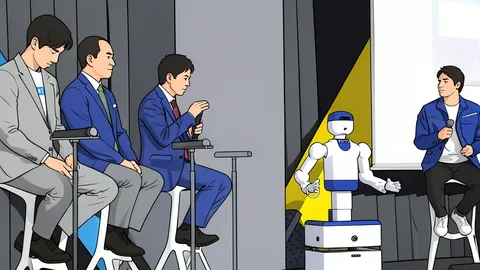
While the general public views robot dancing as pure entertainment, industry insiders see it as a critical opportunity to demonstrate robotic capabilities. Guo Renjie, founder of Zeroth, explains that high-skill dances allow companies to showcase design, reliability, and technical prowess. A recent Morgan Stanley report forecasts that China's humanoid robotics market could reach $2 billion in value this year, with Chinese firms accounting for over 97 percent of global shipments in the first half of 2026.
Despite this growth, the industry faces scrutiny from investors and policymakers regarding commercial viability. Many companies are still struggling to find practical uses for humanoids beyond the stage. Executives in the sector have publicly acknowledged that the technology is still years away from a transformative moment, where robots become genuinely useful to ordinary people in daily life. The AGT final serves as a visible test of how far the technology has come and how much work remains.