Japan Targets 10 Million Robots by 2040 to Fill Labor Gaps
Japan aims to deploy 10 million AI robots by 2040 to mitigate labor shortages, starting with hospital trials in Nagoya.
Key points
- Japan aims to introduce 10 million AI-powered robots by 2040 to address labor shortages caused by demographic decline.
- Zeals Co. is testing its 5 million yen D1 robot in hospitals, focusing on data collection and real-world utility validation.
- Insurance providers are creating specific policies to cover liability and cyber risks associated with autonomous robot operations.
Japan is preparing to integrate artificial intelligence-driven robots into a wider range of industries as the country confronts a deepening labor shortage. Driven by an aging and shrinking population, the government has set an ambitious target to introduce 10 million such robots by 2040, aiming to sustain economic productivity in sectors where human workers are increasingly scarce.
This shift is already visible in the healthcare and manufacturing sectors. According to reporting by kyodonews.net, companies are moving beyond theoretical concepts to practical deployments, though the technology remains expensive and requires significant adaptation to real-world conditions.
New Humanoid Robots Enter Hospital Trials
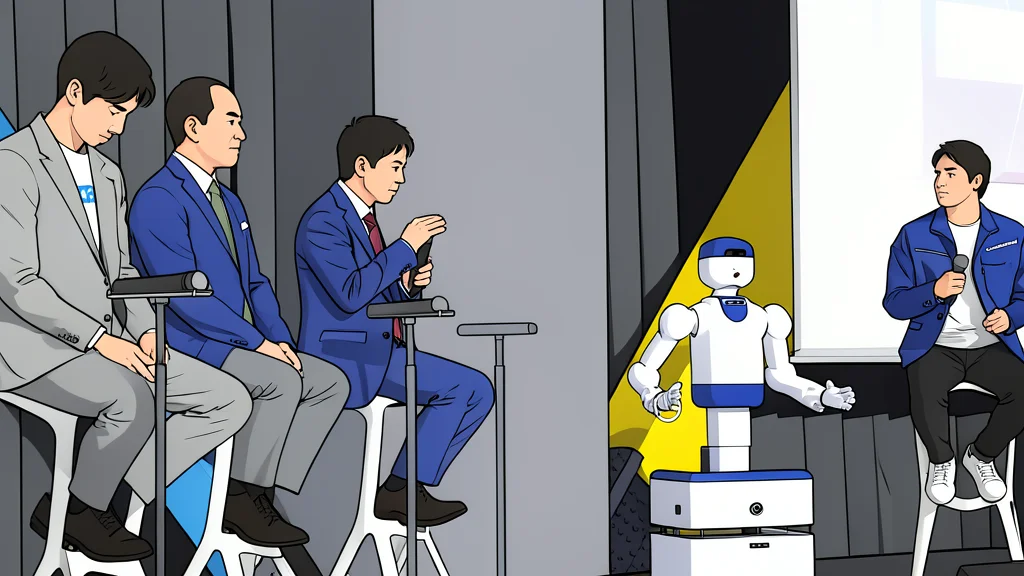
Tokyo-based startup Zeals Co. recently unveiled its D1, a wheeled humanoid robot designed for indoor environments. Standing 129 centimeters tall, the device features two arms capable of carrying up to five kilograms and a camera system for facial recognition and communication. Its primary goal is to assist with routine tasks in facilities like hospitals.
In late August, the D1 underwent a trial at Juko Osu Hospital in Nagoya, where it performed duties such as guiding visitors and clearing dining tables. Zeals CEO Masahiro Shimizu emphasized that the purpose of these trials is to gather training data and verify that the robot is genuinely useful in actual work settings rather than just demonstrating capabilities in a controlled environment.
High Costs and Supply Chain Dependencies
The financial barrier to entry remains significant. The D1 starts at a price of 5 million yen, approximately $32,000. To make this affordable for businesses, Zeals is partnering with leasing and trading companies, with a production target of 100 units by March 2027. The company aims to achieve a cumulative operating time of 10,000 hours across its fleet to refine the software.
Currently, Zeals purchases key components from manufacturers in the United States and China, as these nations lead in AI robot development. While the startup develops its own operating software and AI technology, it plans to transition to using only Japan-made components in the future. This dependency on foreign parts is a trade-off that reflects the current state of Japan's domestic robotics supply chain.
Insurance and Corporate Adoption Strategies
As robots take on more responsibilities, the question of liability becomes critical. Mitsui Sumitomo Insurance has begun offering tailored coverage for D1 users, addressing risks such as physical harm to people or property and potential data breaches from cyber-attacks. The insurer expects demand from hotels, healthcare providers, and logistics firms.
Corporate adoption is also taking an unconventional approach. Kakuichi Co., a Nagano-based steel and energy provider, plans to hire a humanoid robot as a 'new graduate' in April 2027. The company will deploy the robot across manufacturing and sales departments to train it through practical experience. CEO Riu Tanaka noted that the process is as much about fostering employees who can effectively use the technology as it is about the robot itself.