Hyundai Tests Humanoid Robots in European Car Plants
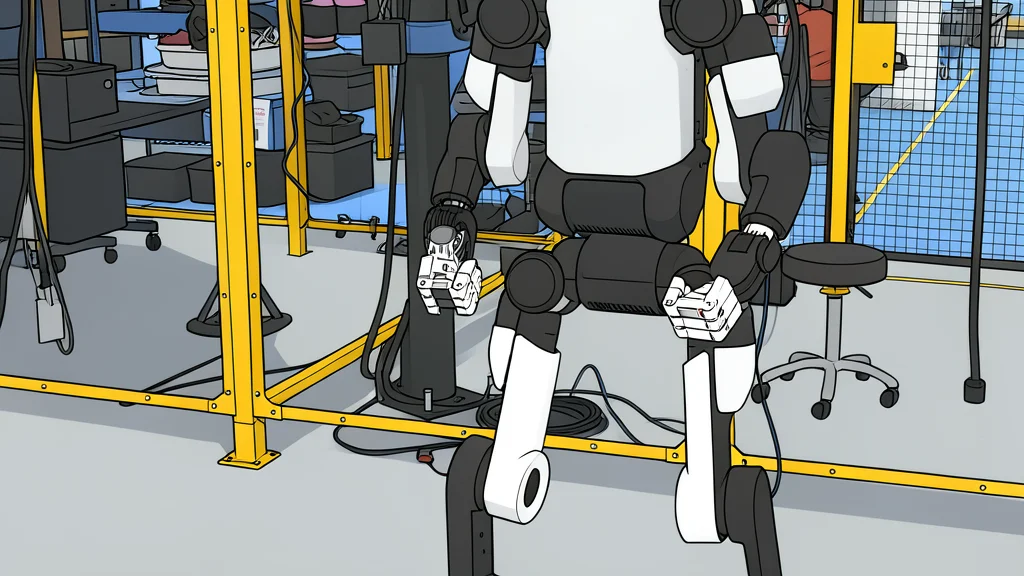
Hyundai is moving beyond lab demos to test Boston Dynamics' Atlas robot in its Czech factory. This shift to real-world validation could determine which company leads the industrial robot race.
The focus of the global humanoid robot industry is shifting from laboratory demonstrations to practical application on factory floors. Hyundai Motor Group is considering deploying Boston Dynamics' Atlas robot at its manufacturing plant in the Czech Republic. This move follows planned rollouts in the United States and marks a significant step toward integrating these machines into actual vehicle production.
According to reports from GN auto tech/robotics, the Czech site is Hyundai's only finished vehicle production base within the European Union. By testing the robot there, the company aims to gather operational data across different geographic and regulatory environments. This strategy allows Hyundai to validate performance beyond its home market, addressing critical questions about reliability and safety in diverse industrial settings.
Real Data Drives Robot Improvement
Industrial humanoids must do more than repeat simple tasks; they need to handle variables while maintaining high safety and efficiency standards. Accumulating real-world data is essential for training these systems to respond effectively to unpredictable situations. Hyundai’s global production network provides a unique advantage by exposing the robots to a wide variety of work environments. This rapid data collection helps stabilize performance and improves the success rate of complex operations.
The company plans to open a dedicated robotics factory in the U.S. in 2028, with an annual capacity of 30,000 units. A separate application center will also launch this year to validate robots using manufacturing data before they join the production line. This virtual verification system is designed to streamline the transition from testing to deployment, reducing the risk of errors in live operations.
Competitors Lack Industrial Focus
The market for industrial humanoids currently lacks a clear leader. Chinese firm Unitree has shipped large volumes of robots, but their revenue is primarily driven by research, education, and consumer markets rather than industrial applications. Similarly, Tesla is still in the preparation stage for its Optimus robot, with mass production timelines yet to be fully realized. This gap gives Hyundai a potential head start in establishing a proven track record in automotive manufacturing.
However, relying solely on internal demand from Hyundai and Kia is not enough for long-term viability. To secure external customers, the company must prove that its robots can deliver consistent value in third-party facilities. The trade-off of early deployment is the need for rigorous validation and ongoing support, which requires significant investment in infrastructure and data processing.
Timeline for Mass Deployment
Full-scale field deployment of the Atlas robot is scheduled for 2028, starting in Georgia, U.S. The rollout is expected to expand to Kia’s Georgia plant in late 2029. Initial tasks will focus on parts sequencing, where safety improvements have been validated. Broader component assembly is planned for 2030, indicating a phased approach that prioritizes proven use cases before scaling up.