Smartphone Sensor Detects Uranium via Red-To-Green Color Shift
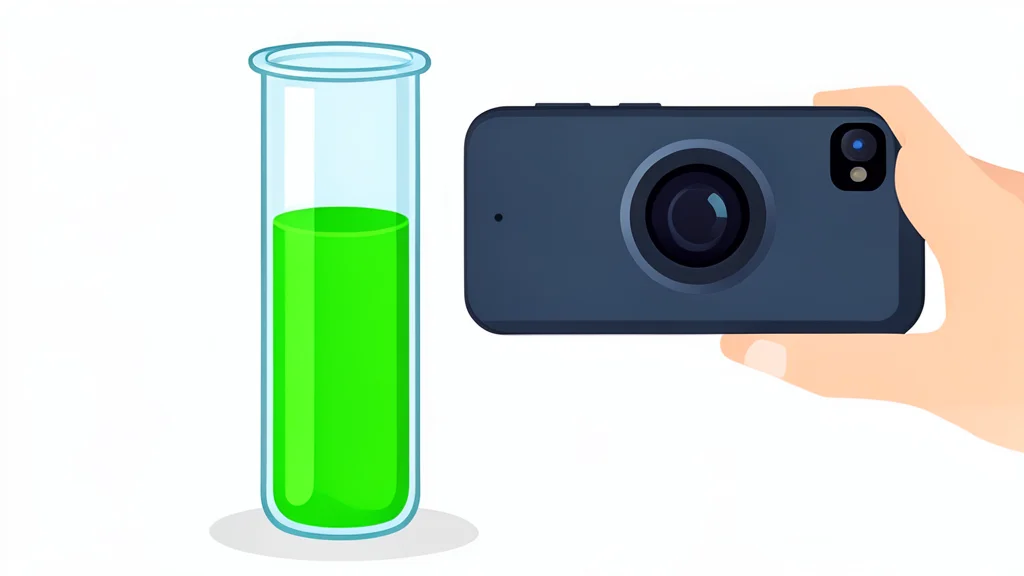
Researchers developed a sensor that turns water samples from red to green in the presence of uranium, allowing for quick detection using only a phone camera.
Key points
- A new sensor called EuZn-PMA detects uranium by shifting fluorescence from red to green.
- The color change can be quantified using a smartphone camera, removing the need for lab equipment.
- Uranium ions bind to the sensor's ligands, blocking red emission and creating a green signal.
Detecting uranium in water supplies has traditionally required expensive laboratory equipment and trained technicians. A new fluorescent sensor offers a simpler alternative by converting the presence of radioactive uranyl ions into a visible color change that can be analyzed with a standard smartphone camera.
The device, developed by researchers at Guangdong University of Petrochemical Technology, is designed for rapid on-site monitoring. It addresses a critical gap in environmental protection by providing a portable tool for identifying contamination at lakeshores or wellheads without relying on specialized spectrometers.
Dual-metal design creates optical signal
The sensor material, named EuZn-PMA, is a metal-organic coordination polymer that uses two different metals for specific functions. Europium acts as the signaling center, emitting a distinct red light, while zinc helps structure the polymer and enhances overall brightness. This combination allows the material to produce a stable and readable optical signal.
According to corresponding author Suhua Wang, the goal was to create a system that is both highly sensitive and intuitively readable. The design philosophy prioritizes visual simplicity, ensuring that the sensor provides clear feedback even in field conditions where complex laboratory instruments are unavailable.
Chemical binding triggers color transition
In clean water, the sensor emits a sharp red fluorescence when illuminated with ultraviolet light. This occurs because energy from the organic ligand is transferred efficiently to the europium ions. The red color serves as the baseline state, indicating the absence of significant uranium contamination.
When uranyl ions enter the solution, they bind to specific sites on the ligand, disrupting the energy transfer to europium. This binding causes the red emission to fade while simultaneously triggering a new green fluorescence at 513 nanometers. The result is a smooth, visible shift from red to green as the uranium concentration increases.
Practical trade-offs for field use
The primary advantage of this approach is accessibility, as it reduces the need for high-cost infrastructure. However, the method relies on a specific chemical interaction that may be affected by other substances in complex water samples. The accuracy of the smartphone-based quantification also depends on consistent lighting and camera calibration.
While the sensor offers a promising solution for rapid screening, it is not a replacement for rigorous laboratory analysis in all scenarios. The trade-off is a move from high-precision instrument data to a rapid, visual approximation that prioritizes speed and portability over absolute laboratory-grade certainty.