China Fires Four Orbital Rockets in 45 Hours to Boost Satellite Fleets
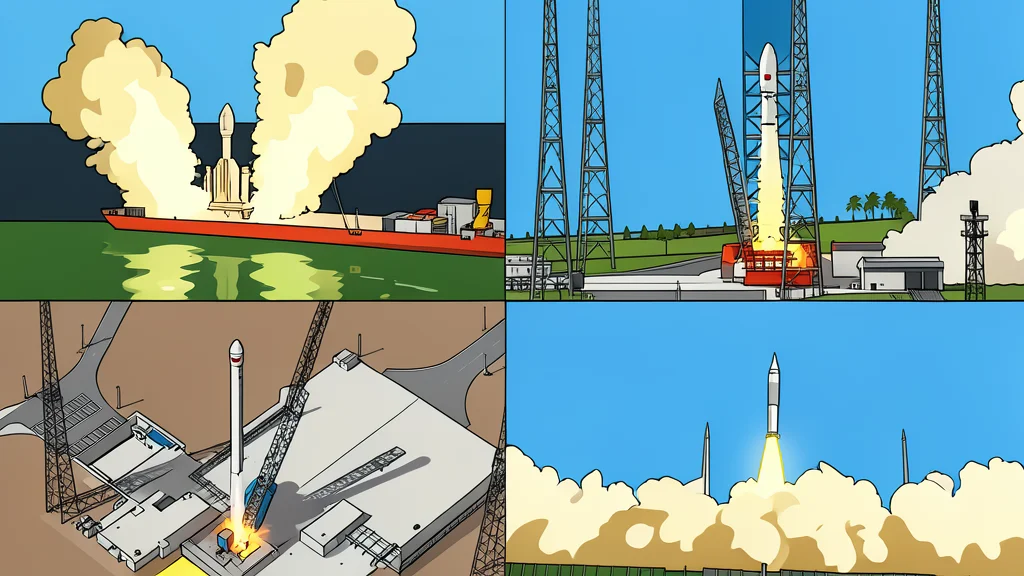
China executed four successful orbital launches in under two days, deploying satellites for major broadband networks and Earth observation.
Key points
- China launched four orbital rockets within 45 hours, successfully deploying satellites for broadband and observation.
- The launches included diverse vehicles like methane-fuelled and solid-fuel rockets from land and sea platforms.
- None of the recent rockets attempted stage recovery, though China has successfully tested reusable landings previously.
China completed a rapid-fire sequence of four orbital rocket launches within a 45-hour window, marking a significant surge in space activity. All missions were successful, deploying satellites into low Earth orbit for commercial broadband networks and government Earth observation programs. The pace of these launches highlights the country's expanding capacity to conduct frequent space operations.
According to The Indian Express, the sequence began on September 15 with a methane-fuelled Zhuque-2E rocket lifting off from the Jiuquan Satellite Launch Center. This vehicle carried ten satellites for the Qianfan constellation, a project aimed at establishing a vast broadband network. Later that same day, a different type of rocket launched from a sea platform off Shanghai, further adding to the growing fleet in orbit.
Diverse launch vehicles power the push
The four launches utilized a variety of propulsion systems and launch sites, demonstrating the breadth of China's space industry. The roster included a solid-fuel rocket launched from a coastal platform and a state-operated Long March 12 vehicle from Hainan Island. These different platforms allow operators to choose the most suitable method for specific satellite payloads, from heavy broadband constellations to specialized radar satellites.
The final launch in the sequence involved a Kuaizhou-11 rocket, which placed two Earth-observing radar satellites into orbit. This mix of commercial and state-run vehicles shows a maturing sector where different companies and agencies collaborate to meet diverse satellite deployment needs. The variety in fuel types and launch methods reduces dependency on a single launch platform.
Reusability remains a work in progress
While the recent flurry of activity showcased launch frequency, none of the rockets in this specific sequence attempted to land their first stages for reuse. This is a notable trade-off, as reusability is currently the key driver for reducing launch costs in the global space industry. China has made strides in this area, with two different vehicles successfully landing their first stages in earlier tests.
However, no Chinese rocket stage has yet completed multiple orbital missions, meaning the country still relies heavily on expendable hardware for these high-volume deployments. The focus on launching large numbers of satellites for constellations like Qianfan and SatNet suggests that current priorities lie in building out network coverage rather than optimizing for cost-efficiency through reusability. This approach allows for rapid deployment but may limit long-term sustainability if launch costs remain high.
Massive constellations reshape orbital landscape
The primary goal of these recent launches was to populate two massive broadband megaconstellations: Qianfan and SatNet. Together, these networks are planned to comprise tens of thousands of satellites, aiming to provide global internet coverage. The Qianfan program alone expects to have around 15,000 active satellites, while SatNet targets roughly 13,000.
Deploying such large numbers of spacecraft requires a consistent and reliable launch cadence, which this 45-hour sequence demonstrates. The expansion of these low Earth orbit networks will significantly increase the number of objects in space, raising considerations for space debris and traffic management. As these constellations grow, the demand for launch services will only intensify, driving further development in China's space infrastructure.