Hexcel Launches Vented Aluminum Honeycomb for Space Launch
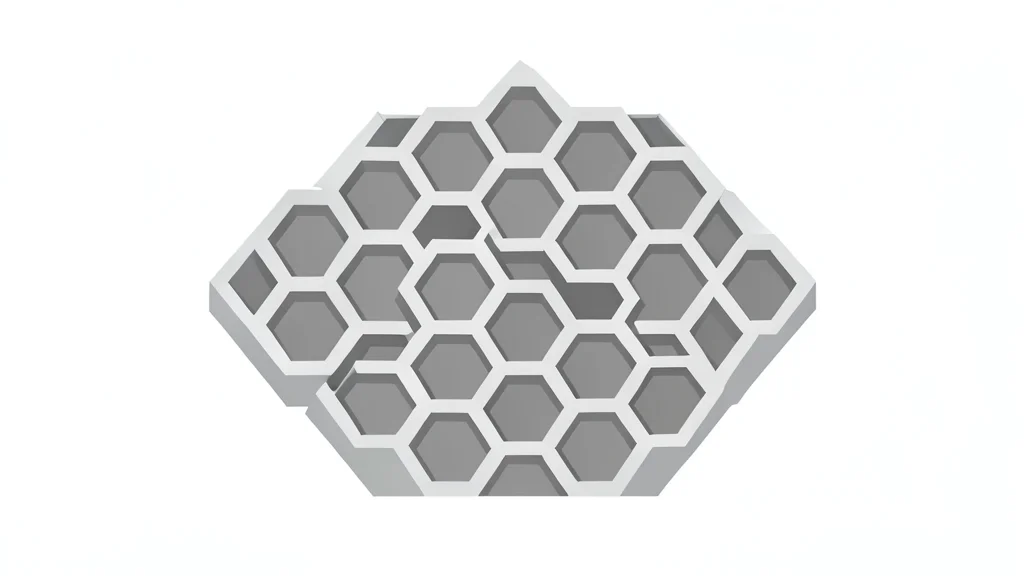
The new core material integrates venting channels to manage pressure during ascent, reducing the need for complex machining in composite structures.
Key points
- Hexcel’s new honeycomb core integrates venting channels to release trapped gases during rocket ascent.
- The material’s enhanced flexibility reduces the need for extensive machining and splicing in complex structures.
- Made from 5052 aluminum, the core supports service temperatures up to 177 degrees Celsius.
Hexcel has introduced a new high-density aluminum honeycomb core designed to simplify the manufacturing of complex aerospace structures. The material, known as Vented Flex-Core, targets the growing demand for lighter and more efficient components in modern space launch systems.
The primary advantage of this innovation is its integrated venting capability. Traditional honeycomb cores often trap air and moisture during the curing process, which can lead to defects or require extensive post-processing. By allowing gases to escape through the core itself, this new design helps manufacturers produce cleaner composite parts with fewer steps.
Reducing manufacturing complexity
Creating curved or contoured parts from standard honeycomb usually requires significant machining and splicing. This adds time, cost, and potential weak points to the final structure. The new Flex-Core material is engineered to be more flexible and formable than conventional hexagonal honeycomb, allowing it to conform to complex shapes with minimal modification.
This flexibility means manufacturers can reduce or eliminate the need for cutting and joining pieces together. For companies building large-scale launch vehicles, this translates to lower production costs and the ability to create larger, more continuous structures that are structurally stronger at the joints.
Managing pressure during ascent
A critical feature of the new core is its ability to manage pressure differentials. During rocket ascent, rapid changes in altitude and temperature can cause trapped gases within sandwich structures to expand. Without a way to escape, this pressure can delaminate or damage the composite layers.
The integrated venting channels provide a controlled path for these gases to exit the structure. This is particularly important for launch vehicles that face extreme thermal and mechanical loads. By addressing this issue at the material level, Hexcel aims to improve the reliability and safety of these high-stress environments.
Material specifications and trade-offs
The core is made from 5052 aluminum alloy and features a corrosion-resistant coating. It is rated for service temperatures up to 177 degrees Celsius. While this makes it suitable for engine nacelles and other high-heat areas, it is not intended for the extreme temperatures found directly inside combustion chambers.
The material comes in both vented and non-vented configurations, giving engineers flexibility depending on the specific application. The trade-off for the improved formability and venting is a specialized cell architecture that differs from standard hexagonal patterns. This may require updated manufacturing processes for facilities not previously equipped to handle this specific core type.