Viasat Completes Trio of High-Capacity Satellites for Global Coverage

The final Viasat-3 satellite is now operational, finishing a three-unit network designed to boost connectivity for aviation and maritime sectors.
Key points
- Viasat-3 F2 and F3 are fully operational, covering the Americas and Asia-Pacific respectively.
- The F1 satellite is active but delivers significantly less capacity than expected due to an antenna issue.
- The constellation uses adaptive beamforming to adjust signal strength based on user demand and location.
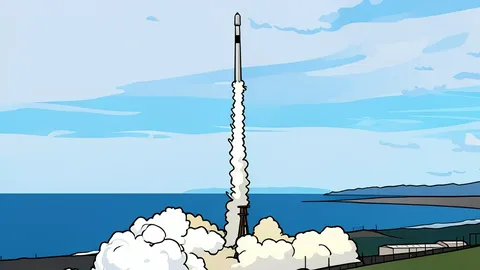
Viasat has officially finished deploying its latest generation of high-capacity satellites. The final unit, designated ViaSat-3 F2, entered service late last week, marking the completion of a three-satellite constellation. This milestone ends a multi-year deployment cycle that began in 2023 and concludes with the network fully operational.
The constellation now covers two major regions simultaneously. The F2 satellite handles the Americas, while the F3 unit, which became active in late August, serves the Asia-Pacific region. Together, these two fully functional satellites provide the backbone for Viasat’s current broadband and enterprise services, adding significant data throughput to the network.
One satellite delivers reduced capacity
Despite the completion of the trio, the network does not yet deliver its maximum theoretical potential. The first satellite in the group, F1, launched in 2023, suffered a technical issue with its antenna deployment. As a result, this unit is operational but delivers only a fraction of the capacity originally planned for it.
This performance gap creates a trade-off for the system. While the constellation is complete, the total available bandwidth is less than the sum of its parts. Users in regions covered by the F1 satellite may experience lower speeds or limited access compared to those in areas served by the newer, fully functional units.
Adaptive beams improve user speeds
The primary technological advantage of this generation lies in its beamforming capability. The satellites can dynamically allocate signal strength based on where demand is highest. This allows the system to boost speeds for users in crowded areas while maintaining coverage in remote zones, a feature Viasat describes as a key differentiator for commercial clients.
According to reports from Via Satellite, this adaptive approach aims to improve resilience against interference and optimize cost efficiency. By focusing power where it is needed most, the network seeks to offer higher performance on both forward and return links, which is critical for latency-sensitive applications like video conferencing and real-time data transfer.
Solar and thermal systems face tests
Operating these high-power satellites in space presents significant engineering challenges. The units must generate substantial electricity to power their transponders and dissipate the resulting heat. Viasat claims its technology sets new standards for solar power generation and thermal management, which are essential for running what it calls economical data centers in orbit.
The ability to manage these energy and heat constraints determines the long-term viability of the platform. If the systems can maintain efficiency over the satellite's lifespan, the network can support the heavy data loads required by aviation, maritime, and government customers without requiring frequent maintenance or early replacement.