China Plans Two Launches as SpaceX Pauses Routine Flights
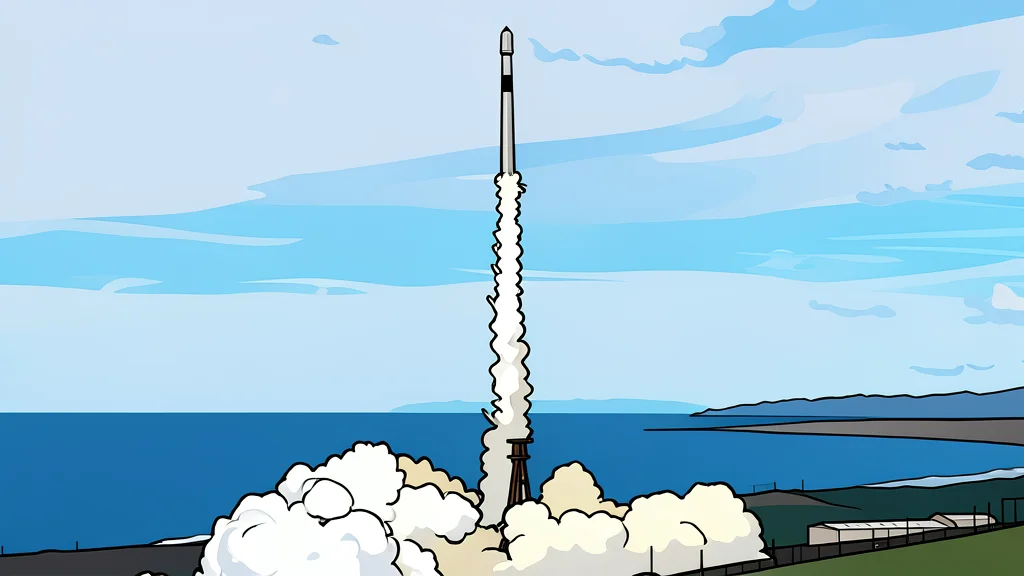
China is scheduled for two consecutive rocket launches this week, while SpaceX holds off on its standard cadence to prepare for a major Starship test.
Key points
- China is scheduled for two Long March rocket launches on Wednesday and Thursday, both with undisclosed payloads.
- SpaceX is delaying its usual launch cadence to prepare for the first full orbital flight of its Starship vehicle on Monday.
- Rocket Lab will launch an Electron rocket from New Zealand on Friday to deploy a radar satellite for Earth observation.
China’s state-owned aerospace agency is preparing for a busy start to the week, with two separate rocket launches scheduled within 24 hours. The China Aerospace Science and Technology Corporation (CASC) will fly a Long March 8A from Hainan island on Wednesday, followed by a Long March 6A from Shanxi province on Thursday. Both missions are keeping their payloads under wraps, a common practice for launches that may involve military or sensitive commercial technology.
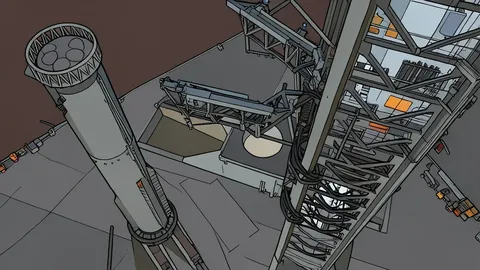
In contrast, SpaceX is taking a break from its usual rapid-fire launch schedule. While the company typically operates with high frequency, it has no immediate launches planned for the next few days beyond a classified mission on Saturday. This pause allows engineers to focus on a significant upcoming milestone: the first full orbital flight of the Starship vehicle, which is targeted for Monday. This shift in priorities highlights a temporary divergence in pace between the two leading spacefaring nations.
China maintains steady launch cadence
The upcoming flights continue a trend of consistent activity from Chinese launch providers. Last week alone, multiple Chinese companies, including private firms like Landspace and Orienspace, successfully delivered satellites to orbit. These missions support a growing network of communication and observation satellites, including the Qianfan broadband constellation and various radar imaging systems. The diversity of launch sites, ranging from the coastal platforms in Hainan to the desert bases in the north, demonstrates the logistical depth of the country’s space infrastructure.
Astronomy Magazine notes that this consistency is part of a broader strategic goal to expand China’s presence in low Earth orbit. By launching regularly, CASC and its commercial counterparts are building operational experience and testing new rocket variants. The undisclosed payloads for this week’s missions add an element of uncertainty, but the regularity of the flights underscores a commitment to maintaining launch capability regardless of specific mission details.
SpaceX prepares for orbital milestone
SpaceX’s current quiet period is largely driven by the preparation for the Starship’s 14th flight. Unlike previous suborbital test hops, this mission aims to achieve a full orbit and deploy 26 Starlink V3 satellites before re-entering the atmosphere. This is a critical step for the company’s vision of a fully reusable, heavy-lift vehicle. The trade-off for this focus is a temporary reduction in the number of Falcon 9 launches, which are otherwise the workhorse of the company’s commercial and government payload delivery services.
However, SpaceX will not be completely idle. A Falcon 9 is scheduled to launch a classified mission for the U.S. Space Force on Saturday from Vandenberg Space Force Base. This flight will serve as a readiness check for the booster and upper stage, ensuring the vehicle remains operational before the more complex Starship test. The ability to switch between routine commercial work and high-stakes developmental flights is a key advantage in maintaining a competitive edge in the launch market.
Global launch activity remains active
Beyond the major U.S. and Chinese players, other nations continue to contribute to the global launch cadence. Rocket Lab is scheduled to launch an Electron rocket from New Zealand on Friday, carrying a synthetic aperture radar satellite for a Japanese Earth-observation company. This mission is part of a larger constellation designed for urban planning and disaster response, highlighting the growing demand for specialized satellite data. Meanwhile, Russia’s Roscosmos has also maintained its schedule, launching navigation and cargo spacecraft to the International Space Station.
The overall picture is one of a space industry that is increasingly global and diversified. While the U.S. and China dominate the headlines with their high-volume launch programs, smaller providers and other national programs are filling specific niches. The upcoming week serves as a snapshot of this dynamic environment, where strategic pauses for major tests coexist with the relentless routine of commercial satellite deployment and national security missions.