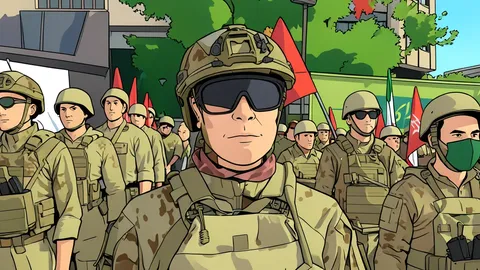
Ethiopian Rebel Groups Form Alliance for Survival Coalition

Seven armed factions have united to challenge the Addis Ababa government, citing ongoing conflict and economic collapse across multiple regions.
Key points
- Seven rebel groups have formed the Alliance for Survival to challenge the current government.
- The coalition includes Fano, OLA, and TPLF, spanning six of Ethiopia's twelve regions.
- Federal authorities have not yet responded to the announcement of the new alliance.
Seven Ethiopian rebel groups have announced the formation of a new political and military coalition named the Alliance for Survival. According to the group, the alliance aims to remove the current government in Addis Ababa and establish a transitional administration to address what they describe as a national crisis.
The coalition brings together major armed factions operating in Ethiopia’s most populous regions, including the Fano militia in Amhara, the Oromo Liberation Army (OLA), and the Tigray People's Liberation Front (TPLF). These groups accuse Prime Minister Abiy Ahmed’s administration of presiding over widespread conflict and economic hardship, arguing that the country is at risk of disintegration.
Coalition spans multiple regions
The new alliance includes groups based in six of Ethiopia’s twelve regional states, covering Oromia, Amhara, Tigray, Ogaden, Afar, and Benishangul-Gumuz. This geographic spread represents a significant expansion of coordinated opposition beyond single ethnic or regional grievances. Federal authorities have not yet issued an official response to the announcement of this unified front.
History of armed confrontation
Ethiopia has experienced years of sustained armed conflict, particularly in Oromia and Amhara. The Fano group, which initially fought alongside federal forces during the Tigray war, turned against the government after refusing orders to disarm. The OLA has been engaged in hostilities with state forces since 2018, while tensions in Tigray remain high despite the 2022 peace agreement.
Recent months have seen renewed concerns over the stability of the peace deal, with both sides accusing one another of violations. This development follows reports of a potential alliance between the TPLF and neighboring Eritrea, prompting the prime minister to assert confidence in the nation's defensive capabilities and sovereignty.
Political context and elections
The formation of this coalition occurs shortly after a general election in which Abiy Ahmed’s Prosperity Party retained a parliamentary majority. The vote was marked by limited opposition participation and the exclusion of Tigray, a region with six million inhabitants. According to BBC Africa, the Fano and OLA groups rejected the election results, viewing the process as illegitimate due to the prevailing security situation.